

More news on this day
GOL Airlines is jolting the global aviation market with the announcement of a new nonstop route between Rio de Janeiro and New York, a landmark move that thrusts Brazil’s largest budget carrier into the long-haul big leagues and promises to reshape how travelers move between South America and the United States.
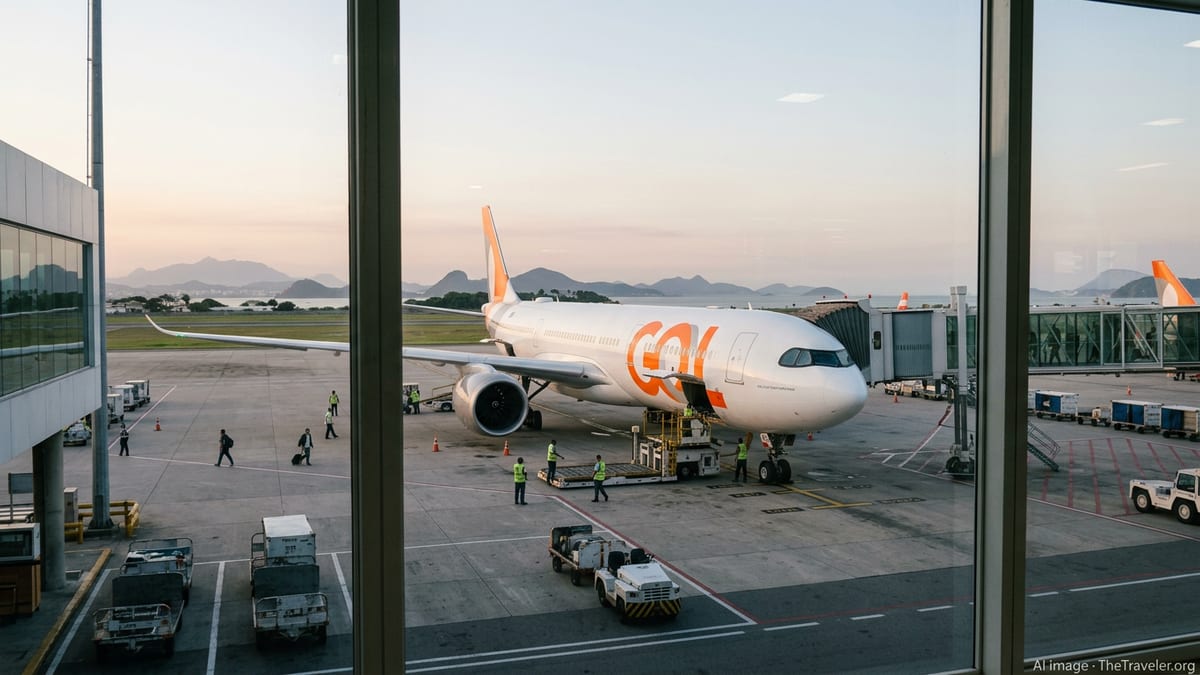
A Budget Carrier Takes the Long-Haul Leap
The new route, linking Rio de Janeiro’s Galeão International Airport with New York’s John F. Kennedy International Airport from July 8, 2026, marks GOL’s first foray into true long-haul flying. For two decades, the airline has built its business on dense domestic and regional networks operated exclusively with single-aisle Boeing 737s. Now it is stepping onto a much larger stage with a widebody aircraft and a flagship transcontinental service.
Industry observers say the shift is striking because GOL emerges from a period of financial restructuring and Chapter 11 protection in the United States with an unexpectedly bold growth plan. Rather than retreat, the airline is using its reset to pivot toward higher-yield international markets and diversify beyond short- and medium-haul routes that have long defined Brazil’s low-cost model.
The Rio–New York launch instantly places GOL in more direct competition with full-service rivals that already link Brazil to North America. It also signals confidence that demand for premium leisure and business travel between the two hemispheres will keep climbing through the 2026 peak summer season and beyond.
Why Rio Is GOL’s New Global Gateway
GOL’s choice of Rio de Janeiro as the springboard for its long-haul strategy is highly symbolic and sharply calculated. Galeão has spent years vying to reclaim international traffic that migrated toward São Paulo’s busy Guarulhos hub. By anchoring its first widebody route in Rio, GOL aligns itself with local authorities keen to revive the city’s status as a major intercontinental gateway.
The carrier already operates more than 30 routes from Rio, feeding in traffic from across Brazil’s vast domestic market. Cities such as São Paulo, Brasília, Salvador and Porto Alegre will be timed to connect seamlessly with the New York service, turning Rio into a powerful transfer node rather than just an endpoint for beach-bound tourists. This hub strategy is intended to channel travelers from secondary Brazilian cities that currently require at least one international connection to reach the US Northeast.
For Rio itself, the new link strengthens ties with New York across finance, media, entertainment and technology. Tourism officials expect the route to boost inbound flows from the United States, especially for marquee events such as Carnival, New Year’s Eve on Copacabana Beach and the city’s growing calendar of conferences and cultural festivals.
Inside the Aircraft That Signals a New Era
The Rio–New York route will be operated with Airbus A330-900neo aircraft, a significant milestone for a company long associated with Boeing single-aisle jets. GOL is introducing five A330neo family aircraft, initially in a wet-lease arrangement with Spain-based operator Wamos Air as part of a broader international expansion that also includes planned services from Rio to Paris and Lisbon.
The A330neo brings increased range, fuel efficiency and passenger comfort compared with older widebodies commonly used on South Atlantic crossings. While detailed cabin configurations have yet to be fully disclosed, aviation analysts expect a mix of lie-flat or recliner-style premium seating and a large economy cabin designed to appeal to both price-sensitive travelers and higher-spend customers who might previously have gravitated to legacy carriers.
Operating three weekly frequencies to New York in the first phase allows GOL to test demand and fine-tune its product without overcommitting capacity. If load factors and yields meet expectations, the airline has leeway to increase frequency and replicate the model on additional North Atlantic routes, solidifying its new long-haul identity.
Competitive Shockwaves Across Brazil–US Skies
GOL’s entry into the Rio–New York corridor instantly adds pressure to incumbent carriers that have traditionally dominated Brazil–US traffic. Delta, American, United and LATAM have all leveraged their global networks and alliance partnerships to capture premium and corporate contracts on routes linking major Brazilian cities with New York and other US hubs.
The presence of a large, aggressively priced Brazilian carrier on a nonstop Rio–JFK route could reset fare structures for both leisure and business travelers. Analysts expect introductory pricing to be particularly sharp as GOL seeks to stimulate demand and draw customers away from indirect routings via São Paulo or other hubs. That competition is likely to ripple into connecting markets throughout Brazil, where passengers now gain an additional option for reaching the US East Coast.
The move also highlights shifting dynamics among Brazil’s three main airlines. Azul has built a powerful long-haul presence from Campinas and Belo Horizonte, while LATAM’s intercontinental strength has centered on São Paulo. By choosing Rio and betting on widebodies, GOL is carving out a distinct third pillar in Brazil’s international portfolio, creating what many see as the most competitive landscape the country’s aviation market has ever experienced.
A Game Changer for Travelers and Tourism
For travelers on both sides of the equator, the new service is more than just another flight on the departure board. It offers a simpler, often faster way to move between one of the world’s most visited coastal cities and the primary gateway to the United States. Fewer connections mean reduced travel time, lower risk of missed flights and a smoother experience for families, business travelers and group tours.
Tourism stakeholders in Brazil argue that the route will help diversify inbound flows beyond São Paulo and showcase Rio as a year-round city break, cruise embarkation point and cultural hub. The ability to tap into GOL’s domestic network also makes it easier for US visitors to pair Rio with destinations such as the Amazon, the Pantanal wetlands or the beaches of the Northeast in a single itinerary.
Travel agencies and corporate travel managers are already eyeing the new option as a way to build more flexible itineraries and negotiate sharper corporate deals. If GOL succeeds in delivering reliable operations and competitive pricing, its Rio–New York service could quickly become a template for additional Brazil–US routes, amplifying the country’s global connectivity and giving travelers a powerful new bridge between the Americas.