

More news on this day
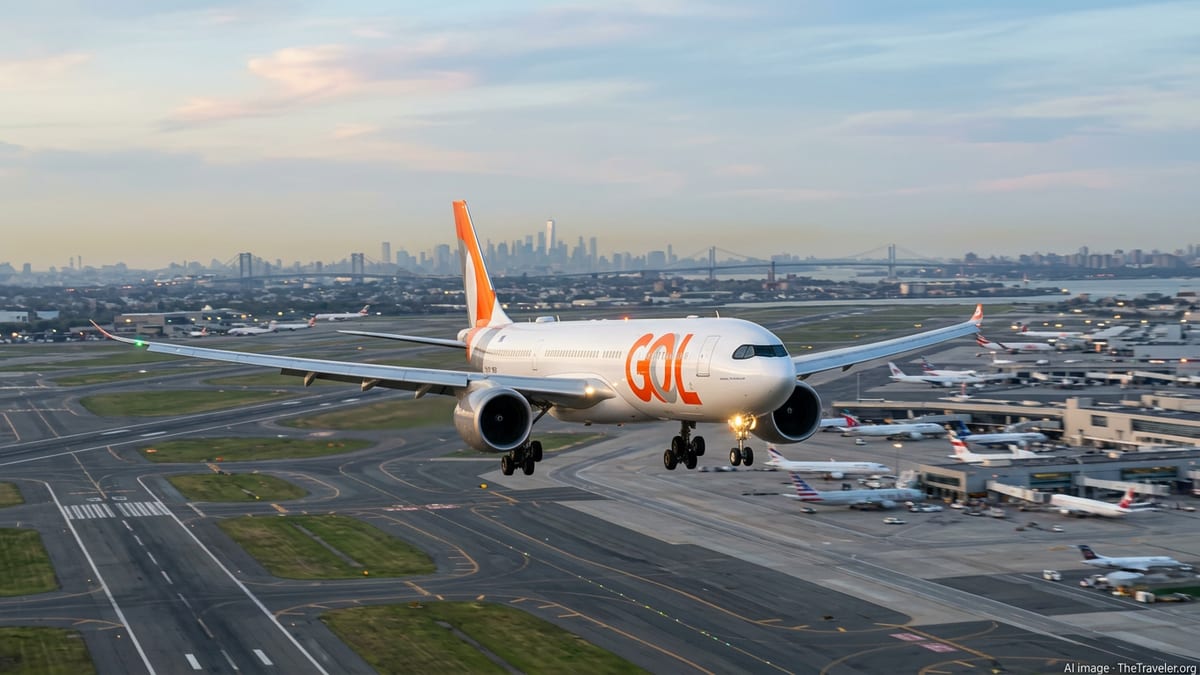
Brazilian low cost carrier GOL is preparing to launch its first true long haul route, a new nonstop link between Rio de Janeiro’s Galeão International Airport and New York’s John F. Kennedy International Airport, a move set to strengthen transcontinental connectivity at the United States’ busiest international gateway.
Get the latest news straight to your inbox!
Strategic Leap Into Long Haul From Rio
GOL Linhas Aéreas will inaugurate nonstop service between Rio de Janeiro Galeão (GIG) and New York JFK on July 8, 2026, operating three times per week during the initial season through October 22, 2026. The flights mark the airline’s first foray into long haul widebody operations after more than two decades focused on domestic and regional Boeing 737 services across Brazil and South America.
The route is being launched as part of a broader international expansion strategy that follows GOL’s restructuring and exit from US Chapter 11 proceedings in 2025. The carrier has committed to leasing up to five Airbus A330neo aircraft, with the Rio to New York operation serving as the inaugural long haul route connecting Brazil directly with North America under this new phase.
Rio’s city government has partnered with the airline to help bring the New York link to Galeão, reinforcing efforts to rebuild the airport’s long haul network and support the city’s ambition to attract more international visitors. For GOL, anchoring its long haul debut in Rio rather than São Paulo underscores a bet on the city’s global tourism pull and the growth potential of its international market.
By selecting JFK, GOL is tying its long haul strategy to the United States’ leading international gateway, where passenger volumes and connecting options across North America and Europe are unmatched. The move positions the Brazilian carrier to compete not only for point to point leisure and visiting friends and relatives traffic, but also for connecting passengers using JFK as a springboard to onward destinations.
Schedule, Aircraft and Onboard Experience
According to schedules filed with sales partners, GOL’s Rio–New York flights will depart Galeão in the evening and arrive at JFK the following morning, with northbound flight times around ten hours. Southbound services are planned to leave New York in the morning and reach Rio early in the evening, allowing passengers to connect onwards to domestic GOL flights throughout Brazil the same night.
The route will be operated with Airbus A330-900neo aircraft configured in a two class layout. While detailed cabin specifications have yet to be fully unveiled, the widebody type is expected to offer a dedicated premium cabin suitable for overnight transcontinental travel, as well as a high density economy cabin consistent with GOL’s low cost model. The A330neo’s fuel efficiency is a core part of making the long haul operation financially viable for a carrier traditionally oriented toward shorter sectors.
Initial frequencies are set at three round trips per week, a level that allows GOL to test demand and adjust capacity while it ramps up its long haul fleet. Industry observers expect that if the route performs strongly during the July to October 2026 season, the airline could extend the schedule or increase weekly frequencies in subsequent seasons as additional aircraft are delivered.
For passengers, the new service offers a nonstop alternative to itineraries that currently require a connection via São Paulo, Panama City or other hubs. The timing of the flights is designed to capture both leisure travelers seeking full days on the ground and business travelers who prefer overnight long haul segments with daytime arrivals.
JFK’s Role as America’s Busiest International Gateway
New York’s John F. Kennedy International Airport is the largest international gateway in the United States by passenger volume, handling tens of millions of international travelers each year and supporting an extensive network of long haul services to Europe, Latin America, the Middle East, Africa and Asia. GOL’s entry adds another South American carrier to JFK’s roster and deepens the airport’s already dense connectivity to Brazil.
The new Rio service will complement existing Brazil routes from other carriers that link JFK with São Paulo and seasonal or limited Rio operations. By adding a low cost option from Galeão, GOL is expected to place downward pressure on fares in the Brazil–New York market and make the route accessible to more price sensitive travelers, particularly students, expatriates and Brazilian visitors planning shopping and tourism trips to the New York area.
JFK’s position as a major connecting hub will be central to the route’s potential. Even without a deep alliance partnership in place, GOL can benefit from passengers using interline or self connect options to reach other US cities, as well as the dense network of transatlantic flights that depart the airport. For international visitors from Europe or Asia, the new link opens an additional one stop pathway to Rio via New York.
Airport stakeholders in New York have welcomed the additional long haul service as part of efforts to diversify JFK’s airline mix and solidify its status as a global super hub. With terminal redevelopments progressing and international facilities being upgraded, the airport is positioning itself to handle increased long haul traffic from both full service and low cost players.
Tourism and Economic Impact for Brazil and the US
The launch of GOL’s Rio–New York route is expected to have a tangible impact on tourism flows between Brazil and the United States. Direct flights historically stimulate demand by reducing travel time, simplifying itineraries and bringing greater fare competition. Travel industry analysts anticipate a rise in inbound visitors to Rio from North America, as well as increased outbound Brazilian tourism and shopping travel to New York City and the broader US Northeast.
Brazilian officials have framed the new route as a tool to support Rio’s international tourism recovery, with an eye on major events, cultural festivals and the city’s enduring draw as a sun and beach destination. Easier access from the United States also supports business links in sectors such as energy, technology and creative industries, where Rio and New York host important corporate and cultural hubs.
On the US side, tourism bodies point to the potential boost for hotels, retail and attractions in New York and surrounding regions as more Brazilian travelers gain direct access at competitive prices. The service also enhances options for US travelers heading to Brazil for leisure or for major conferences and trade fairs, who will now be able to fly directly into Rio without backtracking through other hubs.
Beyond visitor numbers, the route carries symbolic weight as a sign of renewed aviation and economic ties between Brazil and the United States after a period of pandemic related disruption and airline restructuring. For GOL, success on the New York link could underpin further long haul expansion to other North American and European gateways in the coming years.
Positioning GOL in a More Competitive Long Haul Landscape
By stepping into the long haul arena with the A330neo, GOL is repositioning itself in a competitive landscape that includes both Latin American full service carriers and global low cost rivals experimenting with transatlantic and transcontinental models. The Rio–New York route serves as a test case for whether a Brazilian low cost carrier can profitably sustain widebody operations in a market where fuel costs, airport charges and competitive pressures are high.
The choice of a high profile, high demand city pair gives the airline its best shot at early success. The corridor between Brazil and the New York metropolitan area has deep cultural, tourism and business ties, and demand tends to be resilient across economic cycles. If the new service proves sustainable, GOL’s long haul ambitions could extend to additional cities such as Paris, Lisbon or London, which have already been signaled as future possibilities from Galeão.
For travelers and the wider industry, GOL’s move underscores how post restructuring carriers are reshaping their networks to capture value on strategic long haul routes. JFK’s status as America’s busiest international gateway is central to that calculus, offering Brazilian passengers a direct link not just to New York but to a vast web of onward global connections from a single highly connected hub.