

More news on this day
Brazilian carrier GOL Linhas Aéreas has announced its first-ever long-haul route, a new nonstop service linking Rio de Janeiro’s RIOgaleão – Tom Jobim International Airport and New York’s John F. Kennedy International Airport from July 8, 2026, in a move expected to significantly deepen tourism and business ties between Brazil and the United States.
A Strategic Leap Into Long-Haul for GOL
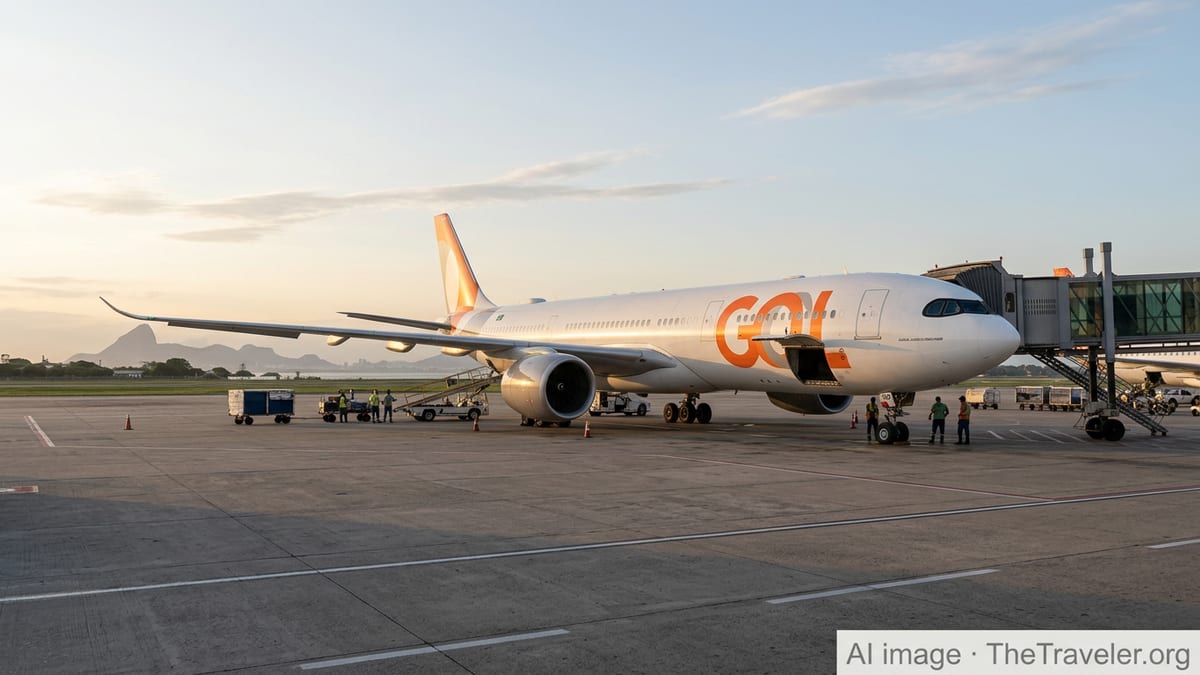
The new Rio de Janeiro to New York service marks a turning point for GOL, traditionally a domestic and short-haul regional operator built around a single-family Boeing 737 fleet. The airline will deploy wide-body Airbus A330 aircraft on the route, signaling a decisive shift in its business model and fleet strategy as it enters the competitive long-haul market.
Starting July 8, 2026, GOL plans to operate three weekly nonstop flights between RIOgaleão (GIG) and New York’s JFK, with tickets already available through the carrier’s sales channels. The launch follows months of positioning Galeão as GOL’s main international gateway, supported by state and city-level incentives aimed at restoring Rio’s prominence on the global aviation map.
For GOL, the Rio–New York corridor offers a high-profile opportunity to diversify revenue beyond Brazil’s domestic market, where margins are often thin and competition intense. By entering a route already served by North American carriers, the airline aims to capture a share of premium and leisure traffic while leveraging strong brand recognition at home.
Executives have framed the move as the start of a broader long-haul strategy centered on Rio, with the A330-900neo fleet expected to open additional destinations in North America and Europe over the next few years, subject to market performance and aircraft deliveries.
Boost to Brazil–US Tourism and Business Travel
The new nonstop link is expected to stimulate two-way tourism flows between Brazil’s most iconic coastal city and the United States’ largest metropolitan area. Tourism authorities in Rio de Janeiro project that additional seat capacity and a Brazilian-flag option on the route will encourage more US visitors to choose Rio for holidays, events and cruise departures.
For Brazilian travelers, particularly those based in Rio and Brazil’s Southeast, the GOL flight provides another nonstop option to reach New York without transiting through São Paulo or other US hubs. This is especially attractive for leisure travelers heading to New York for shopping, cultural experiences and onward connections to other US cities.
Business travel is also expected to benefit. The corridor connects two major financial and corporate centers, creating new opportunities for companies with operations in energy, technology, finance and creative industries. The presence of a Brazilian carrier on the route is likely to stimulate more competitive fares and schedule choices, especially when combined with existing US airline services.
Industry analysts note that the timing aligns with a broader recovery and expansion of transcontinental traffic between South and North America. As visa policies, currency movements and global demand evolve, an additional nonstop option from Rio positions both destinations to capture a larger share of international travel to and from Brazil.
Strengthening Rio de Janeiro’s Role as an International Hub
The Rio–New York launch is a cornerstone in efforts to reposition RIOgaleão as a major international hub after years of losing long-haul traffic to São Paulo. Local authorities have partnered with GOL to attract new routes and encourage airlines to base wide-body operations at Galeão, citing the city’s tourism appeal and existing domestic connectivity.
GOL has been building a robust network of domestic and regional flights into Rio, enabling smooth connections from secondary Brazilian cities to the new transcontinental service. Travelers from markets such as Belo Horizonte, Brasília, Salvador and Recife will be able to connect in Rio onto the New York flight on a single ticket, opening new one-stop routings to the US.
Improved connectivity is expected to benefit not only inbound leisure tourism, but also convention and MICE travel. Rio has been actively marketing itself as a destination for international conferences, sporting events and cultural festivals, and enhanced air access is seen as a crucial lever in attracting large-scale gatherings.
Airport stakeholders argue that the new long-haul operation will help justify further investments in terminal infrastructure, retail, lounges and ground transport links, aimed at elevating Galeão’s profile as a modern gateway for South America.
Fleet Upgrade and Passenger Experience on the A330
To support the New York service, GOL is introducing Airbus A330 aircraft into its fleet, a major departure from its long-standing single-aisle Boeing 737 operation. The wide-body jets will offer increased range, capacity and cabin comfort, positioning GOL to compete more directly with established international carriers on transcontinental routes.
The A330s are expected to feature a multi-class configuration with a dedicated premium cabin, enhanced legroom seating and upgraded in-flight entertainment and connectivity options. This represents a step up from GOL’s typical short-haul product, reflecting the demands of an overnight, eight to ten-hour flight between Brazil and the US East Coast.
Industry reports suggest that the airline will emphasize reliability, simplified connections and competitive pricing as its main selling points, while also working to align onboard service standards with international expectations. The shift to wide-body operations will require new technical, operational and crew training capabilities for the carrier.
For passengers, the introduction of a Brazilian low-cost hybrid operator on the route may translate into more fare choices, with a mix of bundled and unbundled services, while still offering the comfort associated with larger aircraft cabins on long-haul sectors.
Competitive Landscape and Future Growth Prospects
GOL’s entry onto the Rio–New York route injects fresh competition into a market already served seasonally or year-round by North American airlines. These carriers connect Rio and other Brazilian cities to US hubs such as New York, Miami, Atlanta and Dallas, giving travelers multiple options for reaching the United States.
The presence of a Brazilian carrier operating nonstop from Rio to JFK may prompt rivals to reassess capacity, schedules and pricing on Brazil–US routes. Increased competition can be positive for consumers, typically leading to more promotional fares and improved service offerings, particularly during peak travel seasons.
Looking ahead, aviation observers will be watching load factors, yield performance and connecting traffic through Galeão to gauge the route’s sustainability. If the Rio–New York service proves successful, GOL is expected to consider additional long-haul destinations, potentially linking Rio to other major North American and European cities.
For now, the launch of the direct Rio–New York flights marks a new chapter for Brazil–US aviation ties, reinforcing Rio de Janeiro’s global connectivity and offering travelers on both sides of the equator another nonstop bridge between two of the world’s most recognizable urban destinations.