

More news on this day
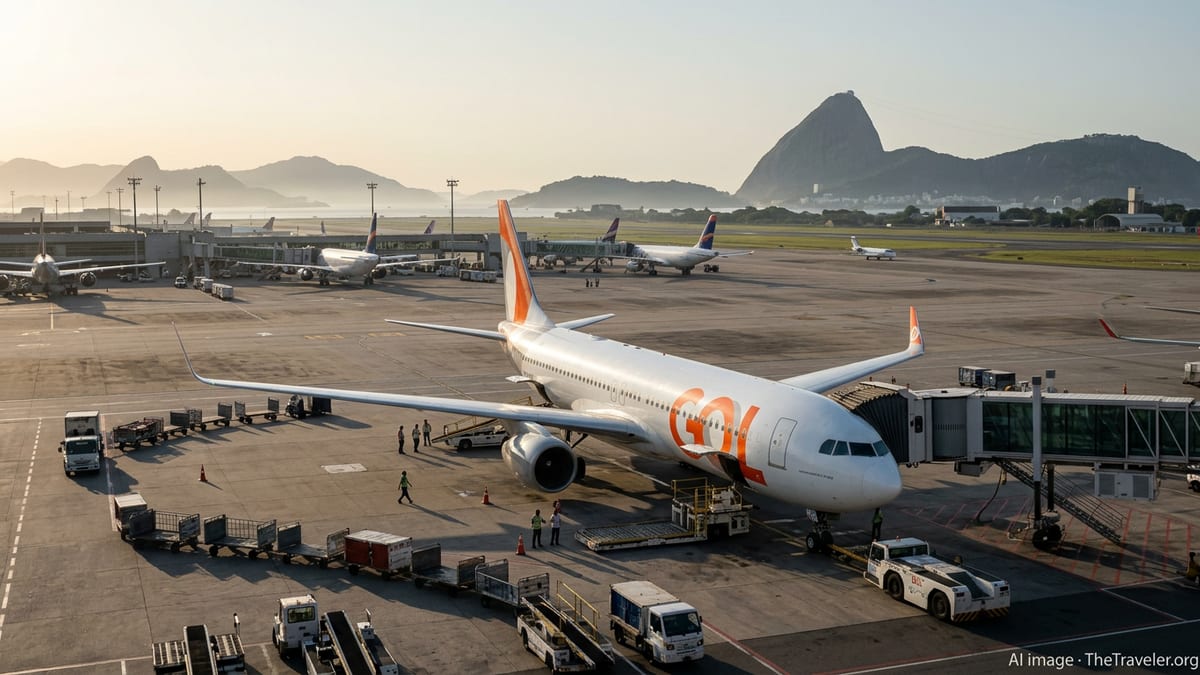
GOL Linhas Aéreas’ newly announced long-haul strategy, which includes planned nonstop routes from Rio de Janeiro to Paris and Lisbon following its upcoming Rio–New York launch, is emerging as one of the most closely watched developments in Brazil’s aviation and tourism landscape.
Get the latest news straight to your inbox!
A New Phase in GOL’s International Expansion
Publicly available information on GOL’s network plans indicates that the airline is preparing a pivot from its traditional short and medium-haul focus to a broader long-haul portfolio serving Europe and North America. Recent announcements around the Rio de Janeiro to New York route from July 2026, using widebody aircraft, have been accompanied by repeated references in industry coverage to future transatlantic services to Paris and Lisbon from Rio de Janeiro.
Data compiled by aviation analysts and specialist media show that GOL has committed to incorporating Airbus A330neo aircraft into its fleet to support these longer sectors between Brazil and major markets such as Rome, Paris, Lisbon, London, New York, Miami and Orlando. This marks a significant evolution for a carrier historically built around a single-type Boeing 737 operation, and suggests that Rio de Janeiro’s Galeão International Airport is being positioned as the core platform for long-haul growth.
Reports indicate that, in this context, nonstop connections from Rio to Paris Charles de Gaulle and Lisbon Humberto Delgado are among the top contenders for the airline’s initial European deployment from its home market. While detailed launch dates and frequencies for the Europe routes have not been formally publicised at the same level as the Rio–New York service, industry coverage consistently treats Paris and Lisbon as part of GOL’s next-wave long-haul strategy out of Rio.
For Brazil’s tourism industry, the strategic implications extend beyond new city pairs. The planned European links, bundled with increased North American connectivity, point to a more diversified entry network for international visitors, easing the traditional concentration of long-haul capacity through São Paulo.
Strengthening Rio de Janeiro as an International Gateway
Travel trade reporting on the Rio–New York launch emphasises that the new route has been developed alongside local authorities to reinforce Rio de Janeiro’s standing as an international hub. The same structural logic is likely to underpin the move into Paris and Lisbon, with widebody departures from Galeão designed to capture and redistribute both inbound and outbound flows across GOL’s extensive domestic network.
According to route-mapping data, GOL currently operates dozens of domestic services into Rio, linking the city with Amazon gateways, northeastern beach destinations and southern urban centres. Direct long-haul flights from Rio to Paris and Lisbon would allow European visitors to reach popular Brazilian destinations on a single carrier, with a straightforward connection in Galeão instead of a domestic transfer from São Paulo or another hub.
From a destination-management perspective, this hub strategy could rebalance tourist arrivals within Brazil. Easier access through Rio may encourage longer multi-stop itineraries that combine the city’s established attractions with secondary destinations such as Foz do Iguaçu, the Pantanal or lesser-known coastal regions. Regional tourism boards stand to benefit from the additional feed generated by European long-haul arrivals funneled through Galeão into domestic spokes.
For Rio itself, a stronger role as a long-haul gateway can also support airport investment, hospitality development and conference and events promotion, as airlines and tourism partners gain confidence that the market can sustain year-round widebody operations to multiple continents.
Impact on European Demand and Traveler Behavior
Current schedules show that European travelers already enjoy direct or one-stop options between key Brazilian cities and hubs such as Paris and Lisbon, served primarily by European carriers and Brazil’s existing long-haul operators. The addition of GOL-operated nonstop flights from Rio to both cities would expand capacity and introduce fresh competitive dynamics on these high-demand leisure and visiting-friends-and-relatives markets.
Published fare trackers and booking platforms indicate that Lisbon has become an increasingly important gateway for South America in recent years, with Portugal’s flag carrier and partners channeling traffic to Brazil through Humberto Delgado Airport. GOL’s pursuit of slots in Lisbon, reported in specialist aviation outlets, suggests that the Brazilian carrier aims to secure a foothold in this flow, offering European passengers an alternative onboard product and different schedule timings that may better align with connections across Brazil.
In Paris, the presence of a large Brazilian diaspora in France and strong leisure ties underline demand for more seat capacity between the French capital and Brazil’s major cities. A Rio–Paris nonstop under GOL’s code would tap into these flows, potentially leveraging alliances and codeshare arrangements to distribute passengers across Europe while providing Brazilians with more choice and potentially sharper pricing.
As new nonstop options come online, traveler behavior typically shifts in favor of direct routes that cut connection times and reduce uncertainty. For Brazil’s inbound tourism, that can translate into higher trip volumes, a greater proportion of first-time visitors and a higher likelihood that travelers will consider multi-destination itineraries, given the time saved on long-haul legs.
Tourism Revenue, Seasonality and Regional Spillover Effects
For Brazil’s tourism economy, additional nonstop connectivity from Europe often correlates with increased visitor spending, longer stays and more resilient demand across low and shoulder seasons. Economic studies on air connectivity and tourism, cited widely in policy discussions, highlight that each new long-haul route can inject substantial incremental revenue into local economies through hotel bookings, dining, tours and ground transportation.
Direct flights from Rio to Paris and Lisbon could be particularly important in smoothing traditional seasonal peaks. European holidaymakers traveling for Brazil’s summer, as well as Brazilians visiting Europe during northern hemisphere vacation periods, would gain more flexibility in terms of departure days and flight times. This flexibility tends to encourage more spontaneous travel and return visits, strengthening year-round load factors and supporting more sustainable route economics.
The benefits are not confined to Rio de Janeiro. As domestic connections improve and marketing campaigns highlight Brazil’s diversity beyond the marquee cities, secondary and tertiary destinations can capture a larger share of international arrivals. Coastal towns, ecotourism hubs and cultural centres in Brazil’s interior may all see incremental growth if itineraries become easier to structure around a Rio arrival and departure on GOL-operated flights to Paris and Lisbon.
In turn, this wider dispersion of visitors can support local employment and infrastructure upgrades, while helping to alleviate pressure on Brazil’s most heavily visited urban and beach destinations during peak periods.
Competitive Pressures and Risks for Brazil’s Aviation Sector
GOL’s long-haul ambitions emerge against a backdrop of intense competition and financial pressure in Brazil’s airline industry. Public filings and business media coverage note that the carrier entered court-supervised restructuring in early 2024 to address high debt and pandemic-related headwinds. Launching capital-intensive long-haul operations to Paris, Lisbon and other distant markets therefore carries execution risk, even as it promises strategic rewards for tourism.
Market observers point out that GOL will be competing not only with foreign airlines, but also with Brazilian rivals already active on Europe and North America routes. These incumbents benefit from established brand recognition, frequent-flyer bases and joint ventures in Europe and the United States. To succeed, GOL will need to balance pricing, schedule convenience and onboard product quality on the Rio–Paris and Rio–Lisbon sectors while maintaining reliability across its domestic feeder network.
Industry analysis also underscores the importance of aircraft utilisation and network flexibility. If demand softens on one long-haul route, the ability to redeploy widebody aircraft to another market, or adjust seasonal capacity, will be crucial to preserving financial stability. For tourism stakeholders, this means that sustained benefits from the new routes depend on consistent performance over several seasons rather than short-lived inaugural boosts.
Despite these uncertainties, the direction of travel for Brazil’s connectivity is clear. With GOL preparing to deploy widebody aircraft from Rio and signalling Paris and Lisbon as key targets, Brazil’s tourism industry is likely to gain new tools to attract visitors, diversify itineraries and strengthen the country’s profile as a year-round long-haul destination.