

More news on this day
Air travellers across Europe, the Americas and other major markets are set to gain a powerful new tool in the fight against lost luggage, as Google’s Find Hub service is integrated into WorldTracer, the baggage-tracing backbone used by hundreds of airlines and airports worldwide.
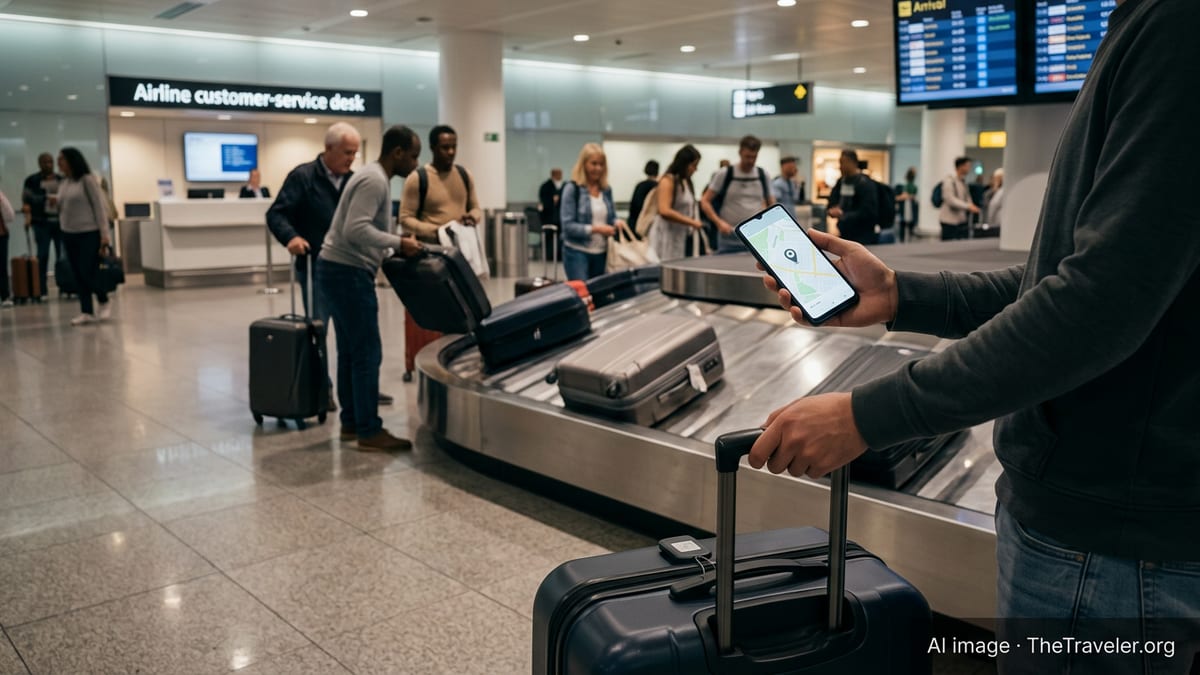
How Google’s Find Hub Now Talks to WorldTracer
The new integration allows airlines to pull passenger-approved location data from Google’s Find Hub directly into WorldTracer, the industry system used to log and track delayed or mishandled bags. Instead of relying solely on barcodes, routing tags and manual updates from airports, airline agents can now see live location information from compatible Bluetooth tracker tags or built-in luggage hardware associated with a missing bag.
Practically, it starts in the Find Hub app on an Android phone. If a traveller has placed a supported tag in their checked suitcase, they can open Find Hub, select the missing item and tap the new “share item location” option. The app then generates a unique, secure URL that contains encrypted location details for that bag, updated as the tracker is detected by nearby devices on Google’s crowd-sourced network.
That link is handed to the airline, usually by pasting it into an online baggage-claim form or the carrier’s mobile app, or by sharing it with an airport agent who adds it to the WorldTracer file. From there, WorldTracer associates the live location feed with the specific mishandled bag record, so baggage teams can use both traditional barcode data and real-time tag signals to pinpoint where a suitcase has gone astray.
Because WorldTracer is already embedded in airline back-office workflows at thousands of airports, the Find Hub integration means front-line staff do not need new tools or specialist hardware. The location feed appears inside the systems they already use, shortening the time between a passenger reporting a lost bag and staff obtaining actionable location data.
Global Airlines Onboard Across Europe, the Americas and Beyond
At launch in early March 2026, more than ten major airlines have confirmed they will accept Find Hub tracking links as part of their baggage recovery process. The list includes carriers with extensive European and transatlantic networks, such as the Lufthansa Group brands, along with Scandinavian Airlines, Turkish Airlines, Saudia, Ajet, Air India and China Airlines. Google has also signalled that additional partners, including Qantas, will join in the near future, with more airlines expected to follow as the technology matures.
Because WorldTracer underpins baggage tracing for hundreds of full-service and low-cost carriers, the benefits extend far beyond the initial launch partners. Many airlines in the Americas, including large US and Latin American operators, already rely on WorldTracer for daily operations. As SITA rolls out the Find Hub integration across its infrastructure, these carriers will be able to accept passenger-generated links even if they have not yet actively marketed the feature.
For travellers, the result is a more consistent experience on multi-leg and codeshare itineraries that span continents. A bag tagged in Europe that goes missing in North America, for example, can still be tracked through a single WorldTracer case file, with Find Hub data following the suitcase as it moves between handling agents and airports.
The integration also supports NetTracer, another major baggage platform used by certain airlines, broadening coverage further into regional and niche markets. In effect, Google and SITA are plugging a consumer-facing locator network into the industry’s shared plumbing, creating a bridge between what passengers see on their phones and what airlines see in their operational dashboards.
What Travellers Need to Use the New Feature
To take advantage of the WorldTracer integration, travellers must first ensure their luggage is equipped with a compatible tracker. That can be a third-party Bluetooth tag that works with Google’s Find Hub network, or newer suitcases from brands such as Samsonite that have Find Hub-ready hardware built directly into the shell. The tracker is paired with the traveller’s Android device before departure, and added as an item in the Find Hub app.
If a checked bag fails to appear on the carousel, the passenger reports it as missing in the usual way at the airport or through the airline’s digital channels. When prompted, they open Find Hub, generate the “share item location” link for the bag’s tracker, and paste or provide that link as part of the lost baggage report. Some airlines are building the option directly into their apps, while others will accept the URL via standard online forms or in-person at the desk.
From that point, there is no need for the traveller to constantly monitor the dot on a map. Baggage agents can see the same location information within their systems, guiding searches behind the scenes. Passengers should, however, keep their phone connected to the internet and ensure that Find Hub is allowed to run in the background, so that the tag’s latest position can be uploaded to the network whenever it is detected.
It is also worth noting that Find Hub’s rollout itself has been staged by region. While coverage across Europe and North America is now widespread, some markets and devices may not yet support the full feature set. Travellers planning complex itineraries are advised to check that Find Hub and their chosen tracker are active and functional before relying on them for baggage recovery.
Privacy, Security and Time Limits on Location Sharing
Google and SITA have both stressed that the Find Hub and WorldTracer link is designed with strict privacy controls. The shared URL only includes location data for the specific tracker selected by the passenger and does not grant airlines access to the broader Find Hub account or other devices. All data transmitted via the link is encrypted in transit and at rest within the supporting systems.
To avoid indefinite tracking of personal belongings, the shared link automatically expires after seven days. Location sharing is also cut off as soon as the traveller’s phone detects that the tagged luggage has been reunited with its owner, using proximity signals from the tracker. If a passenger wishes to stop sharing earlier, they can revoke the link at any time from within the Find Hub app, instantly removing airline access.
These controls are intended to address concerns about persistent tracking of individuals or their possessions by third parties. Airlines receive detailed location information only for the limited period when the bag is missing, and only for the item explicitly authorised by the passenger. The WorldTracer integration respects these boundaries, handling the Find Hub data as another piece of evidence in a baggage file rather than a persistent surveillance tool.
For travellers wary of sharing precise locations, one option is to wait until it is clear that a bag is genuinely mishandled, for instance after several hours with no update from the airline, before activating the feature. The system is designed to be flexible, allowing travellers to decide when the additional visibility is worth the limited and time-bound privacy trade-off.
What This Means for the Future of Baggage Recovery
The Find Hub and WorldTracer integration is the latest sign that consumer tracking technologies are moving from the margins of travel into the centre of airline operations. Early adopters of Bluetooth luggage tags have long reported that they could often locate their bags more accurately than airline systems, watching a suitcase sit in a foreign terminal while official records showed it as “location unknown.” By plugging the passenger’s view into the airline’s tools, that gap begins to close.
For carriers, the feature promises operational gains as well as customer goodwill. Faster identification of where a bag has been left behind can reduce courier costs, minimise compensation payouts and improve on-time performance by preventing aircraft delays caused by last-minute baggage searches. For travellers, the benefit is more emotional but no less real: reassurance that if a bag goes astray, someone on the other side of the counter can finally see what their phone has been showing all along.
The move also raises competitive pressure on airlines and ecosystems that have yet to embrace similar integrations. Apple’s Find My network has already been adopted by dozens of carriers for AirTag-based bag tracking, and now Android users have an equivalent path built into the backbone systems that power global baggage handling. As more airlines, airports and luggage brands sign on, lost baggage may never be entirely eliminated, but its resolution could become faster, more predictable and far less opaque than travellers have long endured.