

More news on this day
Google has unveiled a new real-time baggage tracking capability that plugs directly into airline systems, promising to transform how airports locate and return lost luggage at a time when mishandled bags remain one of air travel’s most frustrating pain points.
How Google’s System Works With Existing Airline Tools
At the heart of Google’s new approach is Find Hub, an Android feature that turns a passenger’s Bluetooth luggage tracker into a live data feed that airlines can use inside their own baggage tracing platforms. Instead of relying only on barcode or RFID scans taken at a handful of checkpoints, baggage agents can now see a constantly updating map of where a missing suitcase last pinged.
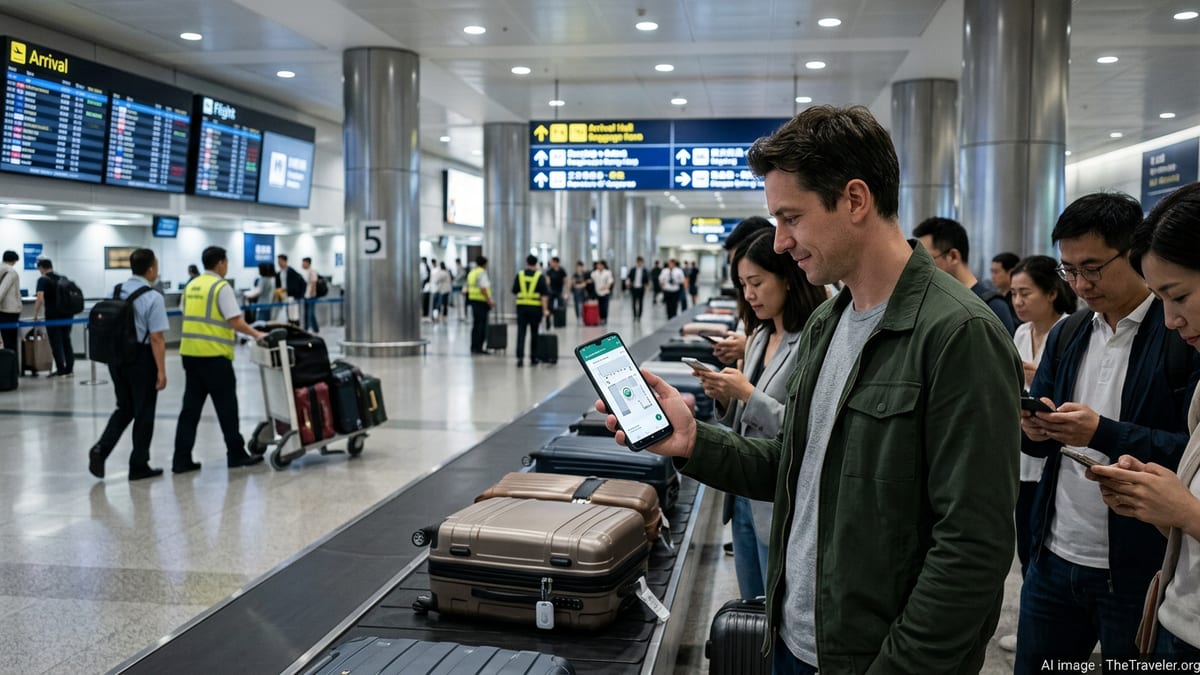
When a bag fails to appear on the carousel, travellers using a compatible tracker open the Find Hub app, select their luggage and generate a secure, time-limited link. That link is pasted into the airline’s baggage claim form or shared through its mobile app. On the airline side, Google has worked with aviation technology providers to integrate those links with systems such as WorldTracer and NetTracer, which are already used by hundreds of carriers to manage delayed and lost bags worldwide.
The result is a hybrid model that layers passenger-sourced location data on top of traditional airport scans. Baggage teams can still see where a bag was last checked into the airline network, but now they can also see whether it is sitting in a back room 300 metres away, loaded to the wrong aircraft on a distant stand or still in the departure terminal at the origin airport.
Google and its partners say the system has been designed to slide into the workflows baggage agents already know, rather than force airlines to rip out and replace their existing infrastructure. For airports, that reduces integration costs and makes it more likely the new tools will actually be used during busy operations.
From Days Of Guesswork To Minutes Of Certainty
Lost luggage recovery has long been hampered by information gaps. Once a suitcase disappears behind the check-in belt, most passengers and many frontline agents are largely in the dark, depending on intermittent scan events and phone calls between stations to narrow down where a bag might have gone astray. Bags routed onto the wrong flight, stranded during tight connections or mis-sorted in busy transfer hubs can take days to locate.
By contrast, Google’s real-time sharing turns the passenger’s own tracker into a roaming beacon inside the airport ecosystem. If a suitcase with a compatible tag is left behind in a corner of a baggage hall or diverted to another carousel, the Find Hub network continues to pick up its signal as other Android devices pass nearby. When baggage agents open the shared link, they see that updated location in near real time, even if the bag has not been scanned again by airport equipment.
Industry observers note that this shift has the potential to compress search windows dramatically. Instead of agents starting with a list of possible airports and flights, they can begin with a specific zone or building where the tracker last reported. That can mean the difference between a same-day reunion and a multi-day wait, particularly during peak travel seasons when global mishandled baggage volumes typically spike.
For airlines, faster resolution does more than keep customers happy. Each delayed bag carries a significant handling cost, from compensation and delivery fees to time spent by staff on manual tracing. If real-time tracking can shave even a small percentage off the number of bags classified as lost, carriers stand to save millions of dollars each year while improving satisfaction scores in a highly competitive market.
Airlines, Tech Providers And Early Adoption
Google has been rolling out the baggage tracking capability in partnership with a growing list of airlines and travel technology firms. Carriers in Europe, the Middle East and Asia, including large network airlines and low-cost operators, have begun accepting Find Hub links as part of their standard lost baggage workflows. Several major airline groups, which together handle tens of millions of checked bags annually, are among the early adopters.
On the technology side, airport software specialists such as SITA and Reunitus have integrated Google’s share-location feature directly into their baggage recovery platforms. For frontline staff, that means a familiar interface with a new layer of data rather than a separate tool they must learn. The systems automatically associate a passenger’s shared tracker link with their baggage claim record, keeping the new data aligned with existing bag tags and routing details.
Meanwhile, luggage makers and tracking tag brands are racing to ensure their products work seamlessly with Find Hub. Suitcase manufacturers have begun offering models with built-in compatible trackers, while third-party tag makers tout extended battery life and louder alerts designed specifically for crowded baggage halls. The combined ecosystem is intended to make it easy for frequent travellers to bring their own tracking hardware while airlines provide the software bridge into their back-end systems.
Analysts say this collaborative model marks a shift from previous attempts at smart luggage, where proprietary tags and airline-specific apps sometimes left passengers locked into one carrier or one piece of hardware. By tapping into an open, phone-based network that many travellers already use for locating keys and backpacks, Google’s system aims to scale more quickly across borders and brands.
Privacy, Security And Passenger Control
Any system that shares live location data raises questions about privacy and data protection, particularly in heavily regulated environments such as aviation. Google has emphasised that the new baggage tracking tool is opt-in and controlled from the passenger’s device. Travellers choose when to generate a link and which airline receives it, and links automatically expire after a set period, typically seven days.
The shared locations are encrypted, and passengers can revoke access at any time within the Find Hub app. Once the phone detects that the tagged suitcase is back in close proximity to its owner, sharing is designed to shut off automatically, cutting off a potential avenue for long-term tracking. Airlines, for their part, see only the bag’s tracker location and associated baggage record, not a broader history of the traveller’s movements outside the baggage search window.
Data specialists point out that this architecture mirrors a wider trend in travel technology, where sensitive information is increasingly compartmentalised and time-limited. Rather than centralising all location history in one place, companies are turning to short-lived tokens and encrypted links that serve a single operational purpose, such as reuniting a traveller with their bag.
Regulators are expected to watch the rollout closely, particularly in jurisdictions with strict privacy laws. For now, the combination of user consent, limited retention and technical safeguards has helped the system win approval from airline compliance teams wary of introducing new data flows into already complex security environments.
What It Means For Future Airport Operations
Beyond individual lost baggage cases, Google’s real-time tracking capability hints at a broader reshaping of airport operations. If enough passengers travel with compatible tags and choose to share their data, airlines and airports could gain a powerful new source of insight into where bags tend to bottleneck or go astray inside terminals and baggage halls.
Aggregated and anonymised, those signals could help planners redesign choke points, adjust staffing at peak times or fine-tune connections at major hubs. Baggage systems suppliers are already experimenting with predictive analytics that use historical scan data and live operational feeds to forecast where disruptions might occur. Adding a layer of crowd-sourced tracker locations could sharpen those predictions further.
For travellers, the immediate impact will be more tangible. Instead of queuing at a counter with little information beyond a printed claim form, passengers may increasingly arrive armed with a live dot on a map showing that their missing suitcase is, for instance, still sitting at the departure airport or circling on a carousel one level below. In practice, that means fewer long waits at baggage offices and more confidence that someone knows where the bag actually is.
As airlines compete to position themselves as more reliable and tech-forward, integration with tools like Google’s Find Hub is likely to become a differentiator. What began as a way for passengers to track their own bags is now evolving into a shared platform between travellers and airlines, one that could quietly redefine expectations for how quickly lost luggage is found in the years ahead.