

More news on this day
Republican leaders in Congress have announced a two-track strategy to fund the Department of Homeland Security and bring an end to a record partial government shutdown that has strained airport operations and raised concerns about national security.
Get the latest news straight to your inbox!
Two-Track Plan Emerges After Weeks of Stalemate
The new strategy is being advanced by House Speaker Mike Johnson of Louisiana and Senate Majority Leader John Thune of South Dakota, who issued a joint statement on Wednesday detailing a path they say will fully fund Homeland Security. Publicly available information indicates that the announcement follows weeks of intra-party disagreement between House and Senate Republicans over how to approach the shutdown.
According to coverage from multiple outlets, the plan would rely on a bipartisan Senate funding measure to restore most Department of Homeland Security operations through the end of the current fiscal year. That approach contrasts with earlier efforts in the House, where Republicans pushed short-term funding extensions that did not secure enough support to become law and left the shutdown in place.
The shift represents a notable change of course for House Republican leaders, who only days earlier had resisted the Senate framework. The new joint approach reflects mounting pressure to end the shutdown as travel disruptions grow and Homeland Security personnel work without pay or face uncertainty around future compensation.
How the Dual-Path Funding Strategy Would Work
At the core of the strategy is a division between routine Homeland Security functions and the most contentious areas of immigration enforcement. Reports indicate that Republicans intend to move forward with the Senate legislation to fund most Homeland Security components, including the Transportation Security Administration and the Federal Emergency Management Agency.
Under the plan, funding for Immigration and Customs Enforcement and the U.S. Border Patrol would be handled separately through a second track that uses budget reconciliation procedures. That mechanism allows a simple majority vote in the Senate on certain fiscal measures, avoiding the need to overcome a filibuster but constraining the legislation to items that meet strict budgetary rules.
Republican leaders describe the approach as a way to reopen shuttered or curtailed operations quickly while preserving leverage to pursue longer-term immigration and border security priorities. Publicly available analysis notes that this separation is designed to sidestep an impasse with Democrats over enforcement tactics and oversight, which has been at the heart of the funding dispute.
If successful, the two-track strategy would mean immediate relief for many Homeland Security employees and travelers, while leaving a separate, higher-stakes fight over immigration policy to unfold over the coming months through reconciliation legislation.
Travel and Security Impacts Driving Urgency
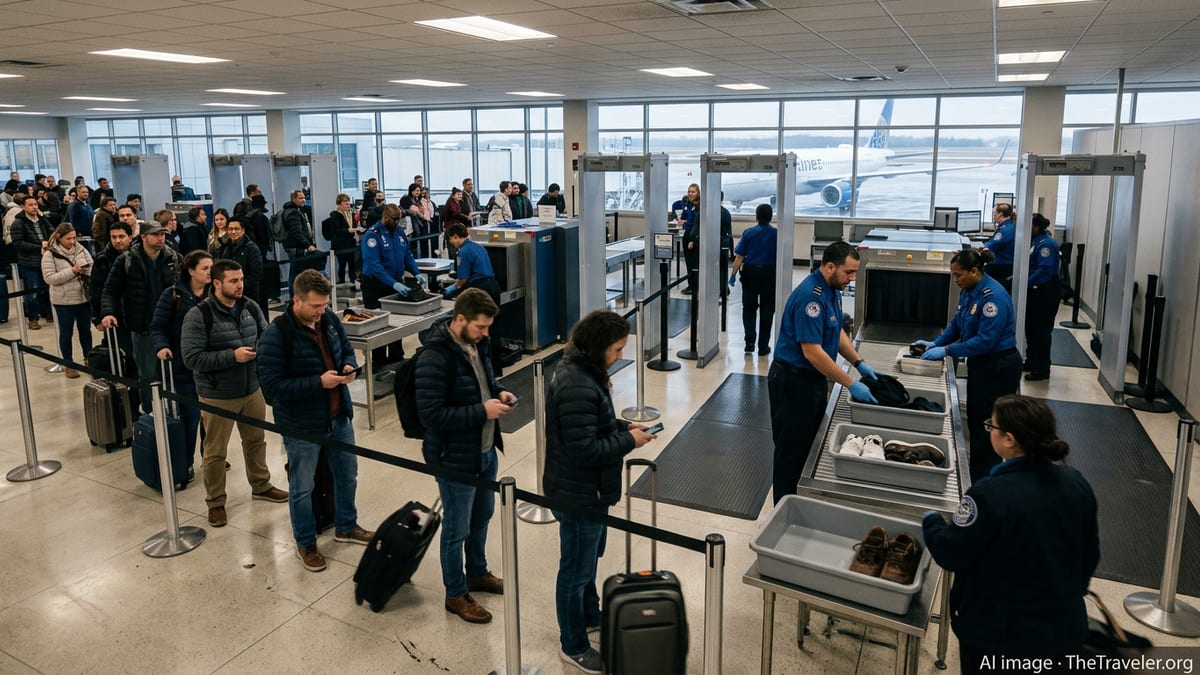
The Homeland Security shutdown, now in its sixth week, has hit the travel sector especially hard. Coverage from national and regional outlets describes long lines and sporadic delays at major airports as security staffing levels are strained and employees face prolonged uncertainty over pay.
The Transportation Security Administration has been operating under tightened conditions, with contingency plans and overtime adjustments attempting to keep checkpoints running. Aviation and travel industry groups have warned that extended disruptions could erode traveler confidence, particularly if new rounds of absences or slowdowns materialize during peak periods.
Beyond airports, the shutdown has affected a range of Homeland Security functions, from certain grant programs and administrative services to elements of domestic security and disaster preparedness. While many front-line security and emergency personnel remain on duty, the funding lapse has complicated planning, training, and procurement at a time when national security challenges are already heightened.
For travelers and tourism-dependent regions, a swift reopening of fully funded Homeland Security operations could ease some immediate concerns. However, analysts note that lingering policy battles over immigration enforcement could still shape future staffing levels, procedures at ports of entry, and the overall traveler experience.
Political Divisions and the Path Ahead
The two-track plan has emerged against a backdrop of sharp divisions not only between Republicans and Democrats, but also within the Republican Party itself. Earlier in the standoff, House conservatives pushed for an approach that tied Homeland Security funding to broader demands on immigration policy, voter identification rules, and related priorities, a stance that complicated efforts to reach a cross-chamber agreement.
Reports indicate that Senate Republicans were initially more open to a bipartisan framework that separated immediate funding needs from more expansive policy changes. That divergence culminated in a period when the Senate advanced one plan while the House pursued a different, short-term measure, prolonging the shutdown as lawmakers left Washington for a scheduled recess.
The new joint announcement from Johnson and Thune suggests a closer alignment between the two Republican-led chambers, at least on the basic outline of how to proceed. Even so, observers note that the reconciliation track for Immigration and Customs Enforcement and Border Patrol funding could face resistance from both conservative Republicans, who may seek tougher measures, and Democrats, who strongly oppose expanded enforcement without additional safeguards.
Democratic cooperation will also be necessary to move the bipartisan Senate funding vehicle for most of Homeland Security. Early reactions described in national coverage suggest that Democrats are weighing whether to accept the partial funding approach or continue pressing for changes to enforcement practices as a condition of ending the shutdown.
Uncertain Timelines for Reopening and Travel Recovery
Republican leaders have not provided a precise timeline for when legislation implementing the two-track strategy might reach the House and Senate floors. Their joint statement referenced action in the coming days, but the complexity of the legislative process and ongoing negotiations introduce uncertainty about when a final agreement will be ready for the president's signature.
Travel industry watchers note that even a relatively swift resolution could take time to translate into a full restoration of normal operations. Employees who have worked without pay or under intense strain may require time to stabilize finances and staffing schedules, and some travelers could remain cautious about future disruptions.
For now, airlines, airports, and tourism businesses are closely tracking developments while continuing to advise passengers to arrive early and prepare for potential delays at security checkpoints. The outcome of the two-track plan will likely shape not only the immediate end of the Homeland Security shutdown, but also the broader debate over how immigration and border security policy intersects with the smooth movement of people and goods across the United States.