

More news on this day
Edinburgh Airport chief executive Gordon Dewar has announced he will step down at the end of 2026, drawing a line under a 14-year tenure that saw Scotland’s busiest airport grow from a regional hub into an international gateway and navigate some of the most turbulent years in modern aviation.
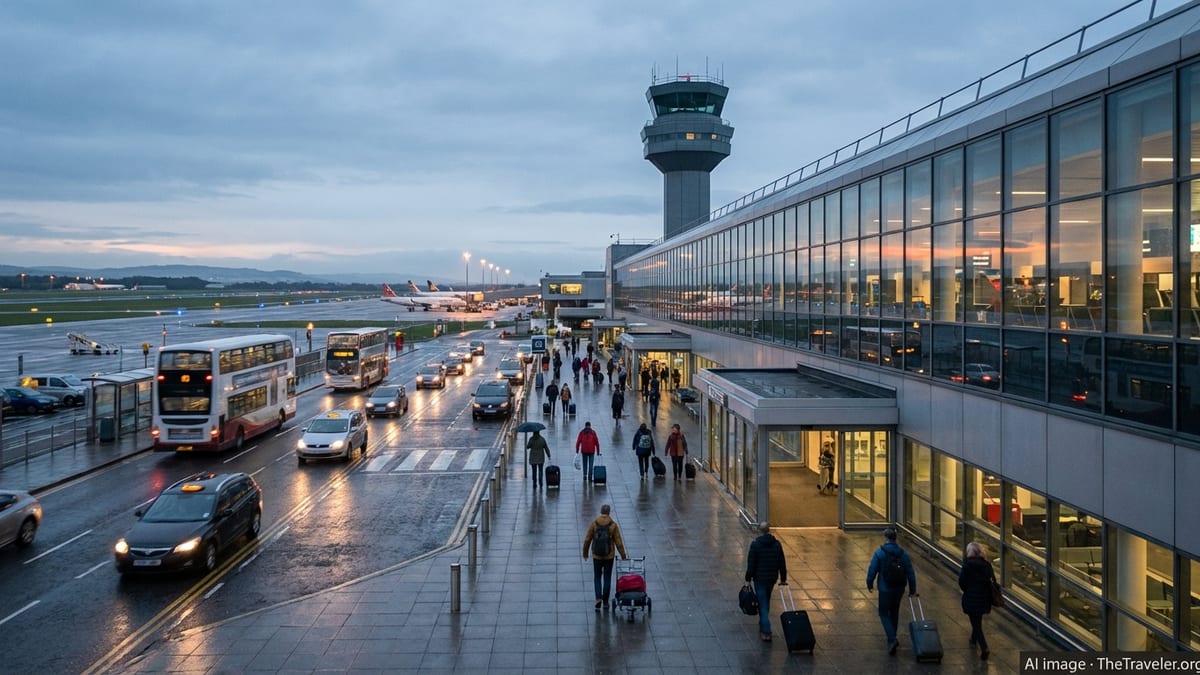
End of an Era at Scotland’s Busiest Airport
Dewar’s decision, confirmed this week by Edinburgh Airport’s owners, marks one of the most significant leadership changes in UK aviation in recent years. Appointed chief executive in 2012 following the airport’s sale to Global Infrastructure Partners, he has been at the center of a period defined by rapid expansion, infrastructure investment and unprecedented disruption.
During his time in charge, annual passenger numbers rose from just over 9.1 million in 2012 to almost 17 million in 2025, an increase of about 85 percent. The airport cemented its status as Scotland’s primary international gateway, overtaking rivals on both sides of the border in terms of growth and route development while branding itself as the place where Scotland meets the world.
Edinburgh Airport has confirmed that Dewar is expected to remain in post until late 2026, giving the board time to conduct an international search for his successor and ensuring continuity as major investment and airfield projects progress. The long notice period is seen within the industry as a sign of a carefully managed transition rather than a sudden exit.
For airport staff, airlines and local businesses that have built close working relationships with Dewar over more than a decade, the announcement signals the start of a new chapter for an airport that has become a key economic engine for Edinburgh and the wider Scottish economy.
From Local Executive to Long-Serving Airport Chief
Born and raised only a few miles from the runway, Dewar returned to Edinburgh in 2012 as chief executive after earlier roles with BAA, FirstGroup and Arriva. Aviation insiders often point to that local connection as a defining feature of his leadership, shaping a strategy that placed the airport’s role in Scotland’s economy at the center of decision-making.
His appointment followed the airport’s separation from the former BAA group and its acquisition by Global Infrastructure Partners. He arrived with a mandate to increase connectivity, compete directly with other UK hubs and prove that Scotland’s capital could sustain a larger network of direct international services.
Under his stewardship, Edinburgh Airport expanded its portfolio of long haul destinations and strengthened medium haul links across Europe and beyond. Direct services to North America, the Middle East and major European hubs grew steadily, helping the city capture a larger share of inbound tourism and business travel. Carriers including low cost, legacy and long haul operators increased their presence as passenger demand rose year after year.
Industry colleagues frequently credit Dewar with blending commercial pragmatism and political advocacy. As a visible spokesperson for Scotland’s aviation sector, he argued consistently for policies aimed at improving connectivity, including calls to reform or reduce Air Passenger Duty and safeguard airport competitiveness after Brexit.
Passenger Growth and Infrastructure Overhaul
The headline growth in passenger numbers during Dewar’s tenure was underpinned by a rolling program of investment in terminal facilities, airfield capacity and supporting infrastructure. The airport’s owners committed to what they describe as the most ambitious capital programme in its history, with funds channelled into security, stands, taxiways and passenger amenities.
Terminal upgrades sought to ease pinch points created by rising demand, particularly during the busy summer months and the peak festival and New Year periods when Edinburgh attracts visitors from around the world. Additional stands and aircraft parking, along with improved airside road systems, were introduced to increase resilience during periods of high traffic.
One of the most visible projects now under way is a multi million pound rehabilitation of the main runway. Due to complete in March 2026, the scheme includes a full asphalt overlay of the 1.6 mile strip, the replacement of around 1,200 airfield lights with more energy efficient LEDs and upgrades to weather monitoring equipment designed to improve de icing and winter operations.
The runway project, which is being delivered while the airport remains in operation, is regarded as a cornerstone of the long term plan to safeguard capacity. It is intended to support projected growth in passenger volumes over the next decade and beyond, as well as align the airport’s operations with tightening sustainability and safety expectations.
Navigating the Pandemic and a Volatile Market
No period in Dewar’s career at Edinburgh was more testing than the arrival of the COVID 19 pandemic in 2020. The airport, like its peers worldwide, saw passenger numbers collapse to a fraction of normal levels as travel restrictions and public health measures took hold. For months at a time, aircraft stood idle on the apron and terminal halls that had bustled with activity fell largely silent.
The crisis forced deep cost cutting, renegotiation with suppliers and a complete reappraisal of traffic forecasts. Dewar has previously described those months as the most challenging the airport has ever faced, in which the immediate priority became safeguarding the core of the business and protecting as many jobs as possible across the airport campus.
As restrictions began to ease, Edinburgh Airport moved quickly to rebuild its route network, working with airlines to restore capacity and encourage the return of both leisure and business travel. By 2024 the airport was broadly back to pre pandemic passenger levels, and 2025 closed with nearly 17 million travellers passing through the terminal.
The recovery, which outpaced some competing UK airports, is often cited internally as one of the defining achievements of Dewar’s leadership. It demonstrated both the underlying strength of demand for travel to and from Scotland’s capital and the depth of the airport’s relationships with airlines and tourism partners.
New Ownership Structure and Long Term Strategy
Dewar’s impending departure comes less than two years after a major shift in ownership that reshaped the governance of Edinburgh Airport. In June 2024, VINCI Airports acquired a 50.01 percent stake from Global Infrastructure Partners in a deal that valued the airport at around 2.5 billion pounds including debt, with GIP retaining a substantial minority shareholding.
The transaction extended an existing partnership between VINCI and GIP at London Gatwick Airport and brought Edinburgh formally into a wider UK portfolio that also includes Belfast International. The arrangement gives the Scottish hub access to VINCI’s global airport network and expertise, while maintaining continuity with the investor that has overseen its expansion since 2012.
Industry observers note that the strengthened ownership structure paved the way for a new phase of capital investment and strategic planning. Dewar has played a central role in that process, setting out a long term vision that includes modernised airfield infrastructure, enhanced terminal capacity and continued work on the airport’s sustainability roadmap.
With VINCI’s UK managing director Stewart Wingate now overseeing Gatwick, Edinburgh and Belfast at portfolio level, the search for a new chief executive at Edinburgh is expected to focus on candidates capable of delivering that investment programme while responding to evolving market and regulatory pressures.
Balancing Commercial Choices and Passenger Experience
While the broad trajectory of growth at Edinburgh Airport over the past decade has been welcomed by airlines and many business leaders, some of the commercial decisions made during Dewar’s tenure have attracted criticism from passengers and local politicians. Charges for terminal drop off areas, parking and in some cases trolleys became recurring points of contention.
Dewar and his team have consistently argued that such user pays policies are essential to funding infrastructure improvements without direct public subsidy. The airport remains privately owned and operates in a competitive market, they point out, and commercial revenues have been critical to sustaining investment in runways, stands and terminal facilities.
At the same time, the airport has sought to improve the overall passenger experience through upgraded security lanes, refreshed food and retail offerings and improved public transport information. The balance between maximising non aeronautical income and maintaining affordability and convenience for travellers will be a central challenge for whoever takes on the leadership role next.
For airlines, Edinburgh’s strategy under Dewar delivered a platform for growth, with several carriers citing strong demand and a supportive commercial environment as reasons for basing additional aircraft or launching new routes. Maintaining that momentum while responding to concerns about costs and congestion will require careful navigation.
Sustainability, Community and Future Connectivity
Sustainability has increasingly shaped the airport’s planning in recent years. Under Dewar, Edinburgh launched and later refreshed its Greater Good strategy, setting out commitments on carbon reduction, noise management, waste and community engagement. The programme aligns with wider industry moves toward net zero, while recognising the importance of aviation to Scotland’s connectivity and economy.
On the ground, efforts have focused on reducing emissions from airport operations through measures such as more efficient lighting, electrification of ground vehicles where feasible and improved energy management within terminal buildings. The current runway works, including new LED lighting systems and modernised monitoring technology, form part of that push to reduce energy use and improve resilience.
The airport has also positioned itself as an advocate for initiatives that could reshape Scotland’s long haul connectivity in the longer term. Among them is the prospect of United States preclearance facilities at Edinburgh, which would allow departing passengers to complete US border checks before boarding. While the complex governmental agreements required are yet to be finalised, the concept illustrates the ambition that has characterised the Dewar era.
Closer to home, Edinburgh Airport has sought to emphasise its role as a major employer and community partner. More than 11,000 people are employed across the airport campus in direct and indirect roles, and tens of thousands of jobs across Scotland are supported by aviation and tourism linked to the hub. Engagement with neighbouring communities on issues ranging from flight paths to employment opportunities has become a more visible component of the airport’s public messaging.
What Comes Next for Edinburgh Airport Leadership
With almost two years before Dewar formally steps down, attention now turns to the recruitment process and the type of leader the board will seek. The role heads an asset that is both strategically important and politically sensitive, operating at the intersection of transport policy, environmental priorities and economic development.
The new chief executive will inherit an airport with a stable ownership structure, a clear investment roadmap and a strong track record of route development, but also a challenging backdrop of cost pressures, changing travel patterns and heightened scrutiny of aviation’s climate impact. Ensuring that Edinburgh remains attractive to airlines while adapting to regulatory change will be central tasks.
Dewar has signalled that he will use his remaining time to support a smooth handover, maintain momentum on existing projects and work closely with the board to identify and onboard his successor. That continuity is designed to reassure airlines, investors and regional stakeholders that the airport’s strategy will not be abruptly upended.
For passengers, most of the changes ahead will be felt in the form of infrastructure upgrades, evolving route networks and shifts in the airport’s on the ground offer rather than boardroom moves. Yet the choice of who leads Edinburgh Airport into the 2030s will shape how Scotland’s capital connects with the world at a time when aviation is facing some of the most profound changes in its history.