

More news on this day
A partial federal government shutdown is rippling across U.S. airports as Transportation Security Administration staffing shortages trigger unpredictable security lines, prompting a St. Landry Parish travel specialist to warn Louisiana residents to brace for longer waits and potential disruption to spring and summer plans.
Get the latest news straight to your inbox!
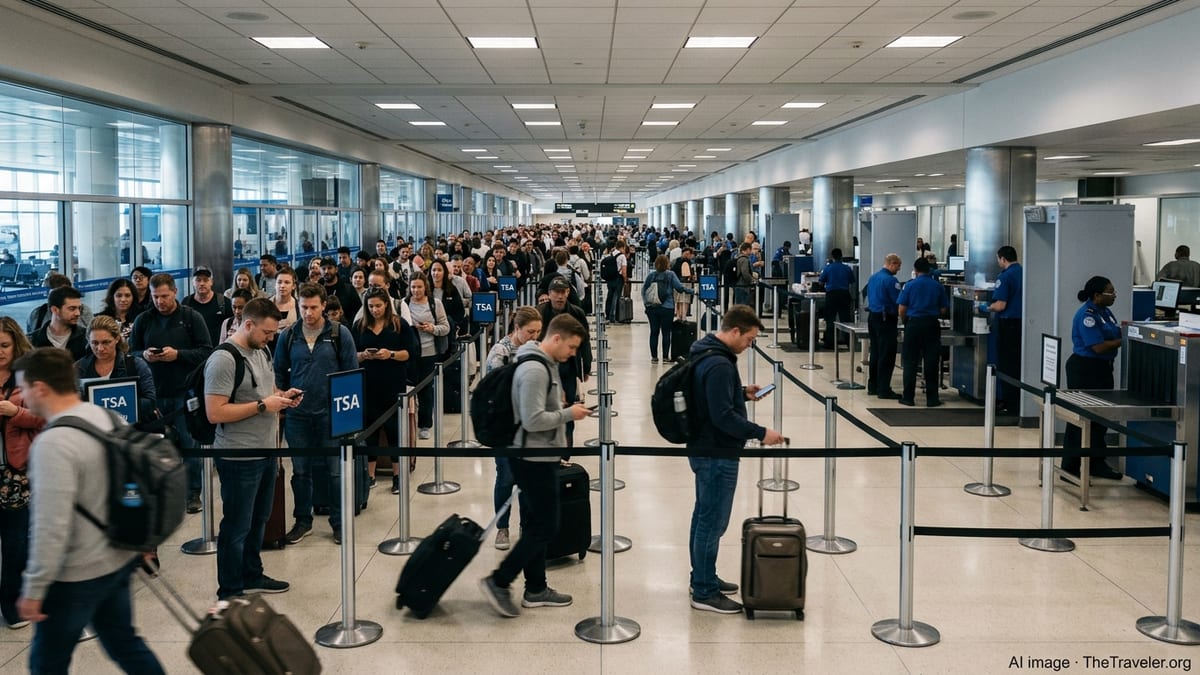
Shutdown Pushes TSA Workforce to Breaking Point
The current funding lapse affecting key federal departments has left tens of thousands of TSA officers working without timely pay, a situation that has rapidly translated into higher sick-call rates and mounting vacancies at airport checkpoints. Publicly available information indicates that roughly one in ten officers at major hubs called out on some recent days, forcing managers to consolidate lanes or close secondary checkpoints entirely.
According to published coverage, federal officials began warning in February that a prolonged shutdown could require the suspension of expedited screening programs such as TSA PreCheck and Global Entry. That step has already been taken at some locations, removing an important pressure valve in busy terminals and pushing more travelers into standard queues that are short-staffed and frequently backed up.
National data compiled by travel and aviation analysts shows that screening operations remain technically open nationwide, but with fewer lanes active and less flexibility to absorb surges in passenger volume. As a result, wait times now swing wildly from one hour to the next, even at the same airport, undermining the predictability that frequent travelers rely on when planning connections and ground transport.
Travel advocates note that this pattern is consistent with earlier shutdowns, when essential security staff continued to report to work but attrition and financial pressure gradually eroded the system’s ability to sustain normal throughput. With the current standoff entering a critical phase ahead of peak spring break and early summer travel, those structural weaknesses are becoming more visible to the flying public.
Long Lines Hit Major Hubs, Sparking National Concern
Recent coverage from outlets including the Associated Press and major broadcast networks describes a patchwork of conditions across the country. At Houston’s George Bush Intercontinental Airport, travelers earlier this week reported waiting as long as three hours in snaking security lines before conditions suddenly eased later in the day when additional staff became available. Similar on-and-off bottlenecks have been documented in New Orleans, Atlanta, and Philadelphia.
Hartsfield-Jackson Atlanta International Airport, often cited as the world’s busiest, has seen a combination of severe weather, temporary checkpoint closures, and diminished TSA staffing slow traffic to a crawl on some days. Flight-tracking data compiled by independent services shows thousands of delays and cancellations in recent days, with airlines and airport operators attributing a portion of the disruption to security bottlenecks layered on top of storms and routine operational issues.
In Philadelphia, reports indicate that a shortage of officers linked to the shutdown prompted the temporary closure of multiple security checkpoints, forcing passengers into fewer open lanes and increasing the risk of missed departures even for those who arrived well in advance. Meanwhile, some smaller and mid-sized airports, such as Colorado Springs, have so far escaped the worst of the delays, illustrating how unevenly the shutdown is affecting different parts of the network.
Industry analysts caution that this unevenness is part of what makes the situation so challenging for travelers. Because TSA staffing levels and callout rates can fluctuate overnight, an airport that ran smoothly yesterday may face extreme congestion today, and publicly posted wait-time estimates can lag behind on-the-ground reality during sudden staffing dips.
St. Landry Travelers Advised to Rethink Airport Strategy
In St. Landry Parish, where residents commonly connect to the national air system through airports in Lafayette, Baton Rouge, New Orleans, Houston, and Dallas, local travel professionals are sounding the alarm. A travel expert based in the parish is publicly warning clients that the shutdown-related TSA disruptions are no longer a distant Beltway issue but a practical concern that could derail family vacations, business trips, and medical travel.
Publicly available guidance shared through agency newsletters and social channels urges St. Landry travelers to arrive significantly earlier than normal for flights out of regional hubs, especially during early morning and late afternoon peaks. For New Orleans and Houston departures, the suggested arrival window has stretched to at least three hours for domestic flights and even longer for international itineraries when possible.
The same local guidance recommends building in longer layovers when booking connecting flights through large hubs that have already experienced shutdown-related issues. For example, travelers routing through Atlanta, Houston, or major Northeast airports are being encouraged to avoid tight 45-minute connections and instead choose itineraries with a buffer of 90 minutes or more to account for unpredictable security queues and potential gate changes.
St. Landry-based agencies are also steering clients toward travel insurance policies that explicitly cover missed connections and extra lodging costs caused by extended security delays. While not all policies treat government shutdown impacts the same way, consumer advocates say carefully chosen coverage can soften the financial blow if passengers miss flights after spending hours in TSA lines beyond their control.
History Shows Shutdown Impacts Linger Beyond Reopening
Recent research from national travel associations examining the 43-day federal government shutdown in late 2025 found that air travel disruption did not end immediately when funding was restored. TSA staff and air traffic controllers faced lingering backlogs in training and hiring, and some workers left the profession entirely after going weeks without pay. Those findings have resurfaced in current discussions as policymakers weigh the long-term costs of the present impasse.
Academic and industry analyses of previous shutdowns indicate that even short-term disruptions can trigger a cascade of scheduling challenges. Security officers who take on second jobs or side work to bridge missed paychecks may be less able to cover overtime or flexible shifts when passenger demand spikes. In extreme cases documented in earlier episodes, terminals at large airports were temporarily closed to consolidate screening resources.
For travelers, that history suggests that the present wave of staffing shortages and unpredictable wait times could continue to reverberate for weeks or months after Congress eventually reaches a funding agreement. Travel planners in Louisiana and beyond are therefore treating the current situation not as a one-week anomaly but as a structural risk that merits more conservative planning for trips well into the summer.
Some aviation experts also warn that prolonged pressure on checkpoint staff can have safety implications, not because screening standards are formally relaxed, but because an exhausted workforce has less margin to handle surges, equipment malfunctions, or unusual security incidents. While no systemic failures have been reported in connection with the current shutdown, watchdog groups argue that operating a complex security apparatus in crisis mode for extended periods is not sustainable.
Practical Tips for Flying During the Shutdown
To navigate the present environment, travel advisors and consumer advocates are focusing on practical steps that individual passengers can take. The most consistent recommendation is to treat official “recommended arrival times” as a minimum and to add at least an extra hour for departures from large or already stressed airports. Travelers heading out of Louisiana and adjoining states during busy spring break and festival weekends are being urged to pad that further.
Another common suggestion is to monitor airport social media feeds and local news on the day of travel, since reports of unusually long lines, temporary checkpoint closures, or parking congestion often surface there before they filter into national coverage. Some airports now provide live security wait-time information through apps or terminal monitors, which can help travelers choose the least crowded checkpoint when multiple options exist.
Where available, enrolling in trusted traveler programs such as TSA PreCheck or CLEAR remains beneficial in the medium term, even though some expedited lanes have been temporarily curtailed during the shutdown. Analysts point out that participants in these programs generally experience shorter waits when lanes are staffed, and that once federal funding is restored, dedicated screening resources tend to return to full strength faster than standard lanes.
Finally, St. Landry travel professionals are emphasizing flexibility. That includes choosing refundable or changeable tickets when budgets allow, considering alternate airports for departure or return, and preparing for the possibility of overnight delays with essentials packed in carry-on luggage. In an environment where a single spike in local TSA absences can turn a routine morning at the airport into a multi-hour ordeal, travelers who build in extra time and options are best positioned to keep their plans on track.