

More news on this day
As the partial U.S. government shutdown drags into its seventh week and airport disruptions intensify, growing numbers of travelers are abandoning flights in favor of Amtrak and regional rail services viewed as more predictable and less stressful.
Get the latest news straight to your inbox!
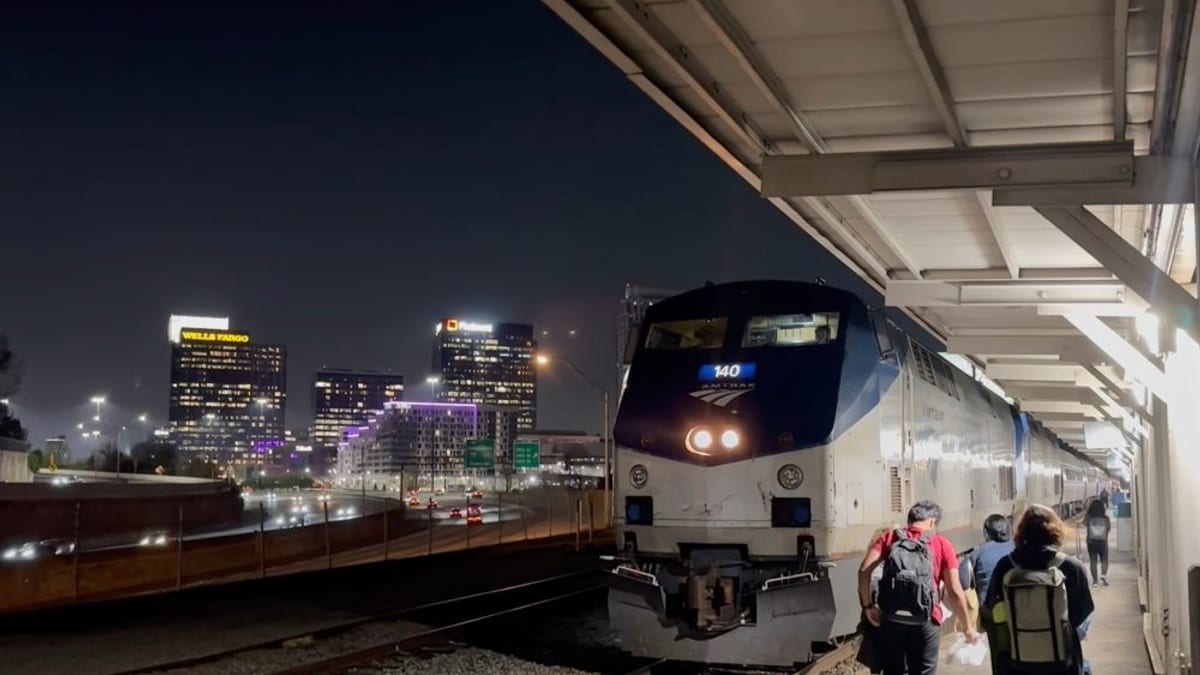
Image by Fine Day 102.3
Airport Gridlock Drives Mode Shift
The current funding lapse for the Department of Homeland Security, which began in mid-February, has left Transportation Security Administration officers and many Federal Aviation Administration personnel working without pay. Publicly available information shows that hundreds of TSA workers have resigned since the shutdown began, while others are using sick time or seeking temporary work elsewhere. The resulting staffing shortages have produced scenes of hours-long security lines at major hubs from New York to Houston.
Coverage from national and local outlets describes chronic waits of three to four hours at some TSA checkpoints, sporadic closure of security lanes, and growing warnings that smaller airports could temporarily shut down if staffing erodes further. Airlines have reported rising delays and cancellations as reduced staffing at security and in air traffic control ripples through already tight schedules during the busy spring travel period.
As frustration mounts, travelers who have flexibility in their routes and timetables are increasingly weighing alternatives. Domestic rail services, which are funded through separate appropriations and have been largely insulated from the DHS dispute, are emerging as a leading option for intercity trips under about 500 miles.
According to published transportation analyses, even modest additional delays at airport checkpoints can tip the balance in favor of rail on city pairs such as Washington to New York, Boston to New York, and Chicago to St. Louis, where total door-to-door travel time by train now rivals or beats flying for many passengers.
Amtrak and Regional Lines See Demand Spike
Amtrak has not released full shutdown-specific ridership statistics, but scattered disclosures and local reporting indicate a notable uptick in bookings on key corridors since the DHS funding lapse began. Industry coverage points to stronger-than-usual March demand on the Northeast Corridor and several state-supported routes in California and the Midwest, with some peak trains selling out days in advance.
Travel and tourism groups report increased interest in rail from both leisure and business travelers seeking to avoid airport uncertainty. Online search data compiled by booking platforms, described in recent travel-industry articles, shows a sharp rise in queries for “train instead of plane” and “Amtrak to avoid TSA lines” that tracks closely with the worst days of airport delays.
Regional rail agencies around major metropolitan areas are also seeing spillover effects. Commuter rail lines that connect to intercity routes, such as services feeding into New York’s Penn Station and Washington’s Union Station, have reported heavier off-peak use as travelers stitch together multi-segment rail journeys to bypass congested airports.
Rail advocates note that this pattern mirrors behavior seen during previous federal funding crises and major weather disruptions, when travelers temporarily shifted to trains, buses, or cars when confidence in air travel reliability dipped. The difference in 2026, analysts suggest, is the duration and political volatility of the shutdown, which may extend the window during which rail can capture new, repeat customers.
Reliability and Security Shape Traveler Choices
Published accounts of the shutdown’s impact consistently highlight reliability as the top concern for air travelers, even more than discomfort or cost. With TSA staffing in flux and the prospect of additional FAA furloughs if the impasse continues, travelers weighing their options increasingly prioritize modes that operate on stable schedules with fewer last-minute disruptions.
Rail operations are not untouched by federal politics or funding pressures, but Amtrak’s workforce is not directly tied to DHS appropriations, and rail security is managed through a more diffuse network of agencies and private operators. During the current shutdown, reports indicate that intercity rail services have maintained regular timetables except where winter storms or routine maintenance intervened, contrasting with the rolling disruptions reported at airports.
Traveler sentiment shared through consumer advocacy organizations and social media, as summarized in recent coverage, suggests that security procedures themselves are also a factor. Many passengers report feeling uneasy about reports of understaffed TSA checkpoints and the prospect of personnel without specialized aviation training assisting at airports. Rail stations, which generally employ less intrusive screening and have not seen comparable staffing turbulence in this shutdown, are perceived by some travelers as calmer and more predictable environments.
Cost comparisons further influence decisions. While last-minute rail tickets on popular routes can be expensive, the additional expenses tied to air disruptions, including overnight hotel stays, missed connections, and rebooking fees, are prompting some travelers to conclude that rail is the better value once the risk of delay is factored in.
Pressure Mounts on Airlines and Policymakers
The migration of some travelers from air to rail is adding to the chorus of alarms from the aviation industry. Major U.S. airline chiefs have publicly backed legislative efforts that would insulate TSA and air traffic control workers from future shutdowns by guaranteeing their pay regardless of broader funding disputes. Industry statements argue that the ongoing uncertainty is damaging consumer confidence in flying and risks long-term reputational harm to the U.S. aviation system.
Consumer and business travel organizations are also warning that persistent disruptions could have wider economic consequences if conferences, tourism campaigns, and corporate meetings are scaled back or relocated to destinations that are easier to reach by rail or car. Analysts point out that many large U.S. economic centers in the Northeast and parts of California are already well served by intercity rail, making it easier for event planners to shift itineraries away from congested airports.
Publicly available policy briefs reference previous shutdowns in which even short interruptions to FAA and TSA operations translated into billions of dollars in lost economic activity linked to aviation. With the current impasse now stretching beyond those benchmarks for DHS, transportation economists suggest that each additional week of uncertainty increases the probability that some of today’s temporary traveler behavior will calcify into lasting preference for alternative modes.
At the same time, the increased reliance on rail is drawing attention to chronic underinvestment in U.S. passenger rail infrastructure. Advocates argue that the surge in demand during the shutdown demonstrates untapped potential for trains to relieve pressure on the aviation system during both crises and normal operations, but only if capacity and reliability on key routes are expanded.
A Potential Turning Point for U.S. Intercity Travel
How long the current shift from air to rail persists will depend heavily on the trajectory of the shutdown and the speed with which airport staffing can be stabilized once funding is restored. Travel behavior research cited in transportation journals suggests that repeated negative experiences, such as missed flights or multi-hour security lines, can have lasting effects on mode choice, especially for frequent travelers who have viable alternatives.
If the DHS funding dispute is resolved quickly and federal aviation workers see back pay and predictable schedules restored, some of the recent rail gains may recede as travelers return to familiar flight patterns. However, analysts note that travelers who have used the shutdown as an opportunity to test rail for the first time, particularly on short and medium-haul routes, may be more likely to consider trains a realistic option in the future.
For now, the shutdown has underscored the interconnectedness of the nation’s transportation systems and the extent to which confidence in one mode can influence demand for another. With trains absorbing at least a portion of the demand diverted from airports, the episode is providing an unplanned but revealing case study in how policy crises can accelerate changes in how Americans move between cities.
As spring and summer travel seasons approach, rail operators, airlines, and policymakers will be watching closely to see whether travelers return to the skies once funding is restored or whether the current disruption marks the beginning of a more durable rebalancing between air and rail in the United States.