

More news on this day
A partial U.S. government shutdown is colliding with the start of spring break, triggering hours-long security lines at major airports and turning routine departures into grueling ordeals for travelers across the country.
Shutdown Hits Just as Spring Break Crowds Surge
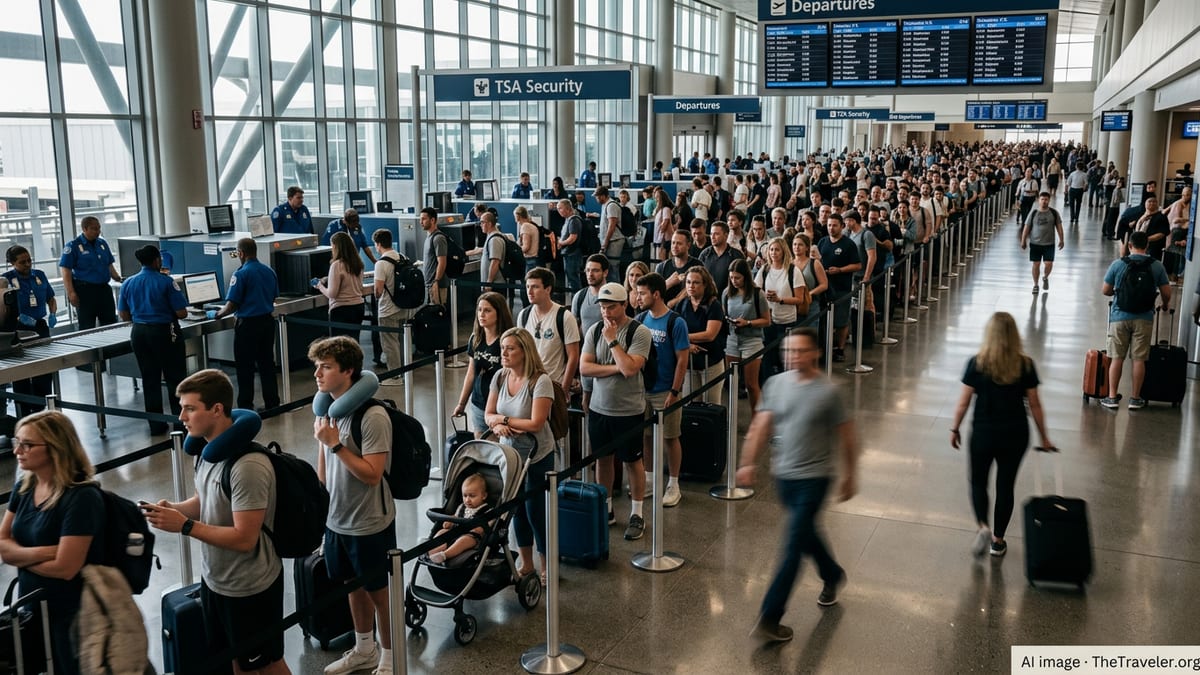
Security checkpoints at several of the nation’s busiest airports were overwhelmed over the weekend, with reported wait times stretching to three hours or more as the federal funding stalemate in Washington entered its fourth week. The timing could hardly be worse for travelers, coinciding with the first major wave of spring break departures.
In Houston, William P. Hobby Airport at one point reported standard checkpoint waits of around three to three and a half hours on Sunday, prompting officials to urge passengers to arrive at least four to five hours before departure. Airport leaders cited the partial shutdown of the Department of Homeland Security, which oversees the Transportation Security Administration, alongside a sharp increase in leisure travelers as schools and universities begin their mid-March breaks.
Similar scenes unfolded at George Bush Intercontinental Airport in Houston, Louis Armstrong New Orleans International Airport and other hubs in the South and Southeast, where airlines count on strong spring break demand. Long queues snaked through terminal concourses, with some passengers standing for so long they missed flights despite arriving well ahead of schedule.
Nationwide, the Department of Homeland Security warned that travelers could see TSA lines approach or exceed three hours at peak periods if the shutdown drags on, particularly at airports already operating near capacity in March and April. The warning underscored how quickly a funding gap in Washington can ripple into a full-blown travel disruption.
TSA Staffing Strains Drive Hours-Long Waits
While TSA officers are considered essential and must report to work during a shutdown, they are currently doing so without pay. Union representatives and agency officials say that missed paychecks, mounting bills and burnout are contributing to higher-than-normal absenteeism, thinning already tight rosters just as passenger volumes climb.
At some checkpoints, lanes remained closed for lack of available screeners, pushing more passengers through fewer operating positions. That dynamic was especially visible at Houston’s Hobby Airport and in New Orleans on Sunday, where local officials said a mix of people calling out sick, overtime limits and the strain of working without pay had left TSA operating with fewer officers than needed for peak loads.
Recent testimony from TSA leadership to Congress had already flagged spring break as a critical stress test for the agency, even under normal funding conditions. The shutdown has upended those planning assumptions, delaying technology upgrades and limiting the ability to surge staff or open additional lanes to manage spikes in demand.
Airport managers stress that frontline TSA staff are working under extraordinary pressure. Many officers, they note, are commuting to jobs for which they are not currently receiving pay, even as they face rising living costs and uncertainty about when back pay will arrive. That reality, they warn, cannot be separated from the operational challenges unfolding at checkpoints.
Airports and Airlines Scramble to Contain the Chaos
In response, airports from Texas to the Carolinas spent the weekend rewriting their playbooks in real time. Houston’s airport system, which expects more than 2.2 million passengers over the March 5 to March 16 spring break period, repeatedly escalated its guidance, moving from standard “arrive early” advisories to recommending arrivals four to five hours ahead of flight time.
New Orleans officials issued similar alerts, asking passengers to build in at least three extra hours for security screening. Some airports used social media to post live photos of checkpoint queues and share updated wait-time estimates throughout the day, hoping to persuade travelers to adjust schedules before leaving home.
Airlines, for their part, encouraged customers to check in online, travel with carry-on bags where possible and head straight to security upon arrival. Carriers also began waiving some change fees and offering limited rebooking flexibility for passengers who missed flights solely because of security delays, though policies varied by airline and route.
The operational strain reaches beyond passenger frustration. Prolonged security backups can ripple through airline networks, forcing carriers to hold flights for delayed passengers, rebook stranded travelers and reposition aircraft and crews. Industry groups have warned that if the shutdown continues, the financial toll on airlines, airports and tourism businesses could mount quickly.
Spring Break Destinations Brace for Ripple Effects
The disruption comes at a crucial time for tourism-dependent destinations across Florida, the Gulf Coast and popular western gateways such as Las Vegas and Phoenix, which rely heavily on spring break spending. Travel analysts note that March and early April are among the most lucrative weeks of the year for many hotels, attractions and local businesses.
So far, flights into major beach markets have largely operated on schedule once they depart, but the risk of missed connections and forced rebookings is rising as security lines grow. For family groups and student travelers on tight budgets, a missed outbound flight can mean losing nonrefundable hotel nights, prepaid tours and vacation days that cannot be recovered.
Tourism officials in several states are urging would-be visitors not to cancel trips outright, but to plan more cautiously. That includes booking the earliest flights of the day when possible, allowing generous layover times for connections and monitoring airport and airline updates closely in the 24 hours before departure.
Travel advisors report a spike in last-minute questions from clients about whether to postpone vacations or reroute through smaller airports perceived as less congested. While some secondary airports are currently reporting more manageable TSA waits, experts caution that staffing shortages can spread quickly if the shutdown persists, eroding that advantage.
Travelers Adjust Plans as Washington Stalemate Drags On
Inside terminals, the human impact of the funding fight is playing out in real time. Families bound for theme parks and beach resorts are camped on terminal floors beside roller bags, anxiously watching boarding times while inching through security. College students on tight schedules weigh whether to risk leaving campus after final classes or spend extra nights near the airport to avoid early-morning gridlock.
Some travelers are opting to drive instead of fly for regional trips, trading TSA lines for long hours on congested highways. Others are pushing back departure dates to later in March in the hope that lawmakers will reach a funding agreement before their scheduled flights.
Industry groups are pressing Congress and the White House to resolve the impasse quickly, warning that confidence in the air travel system is at stake just as demand has recovered from the shocks of recent years. For now, however, both TSA officers and passengers find themselves caught in the middle of a political standoff that has turned what should be a celebratory break into a lesson in the fragility of the nation’s travel infrastructure.
With spring break travel only beginning to ramp up, airport leaders say the scenes witnessed over the weekend could be a preview of even more severe congestion in the weeks ahead unless the shutdown ends or emergency measures can significantly bolster checkpoint staffing.