

More news on this day
A new Dutch rail newcomer, GoVolta, is preparing to shake up cross-border travel this spring with budget-friendly daytime trains linking Amsterdam and Berlin from March 2026, positioning itself as one of Europe’s most aggressive low-cost challengers on a key international corridor.
Get the latest news straight to your inbox!
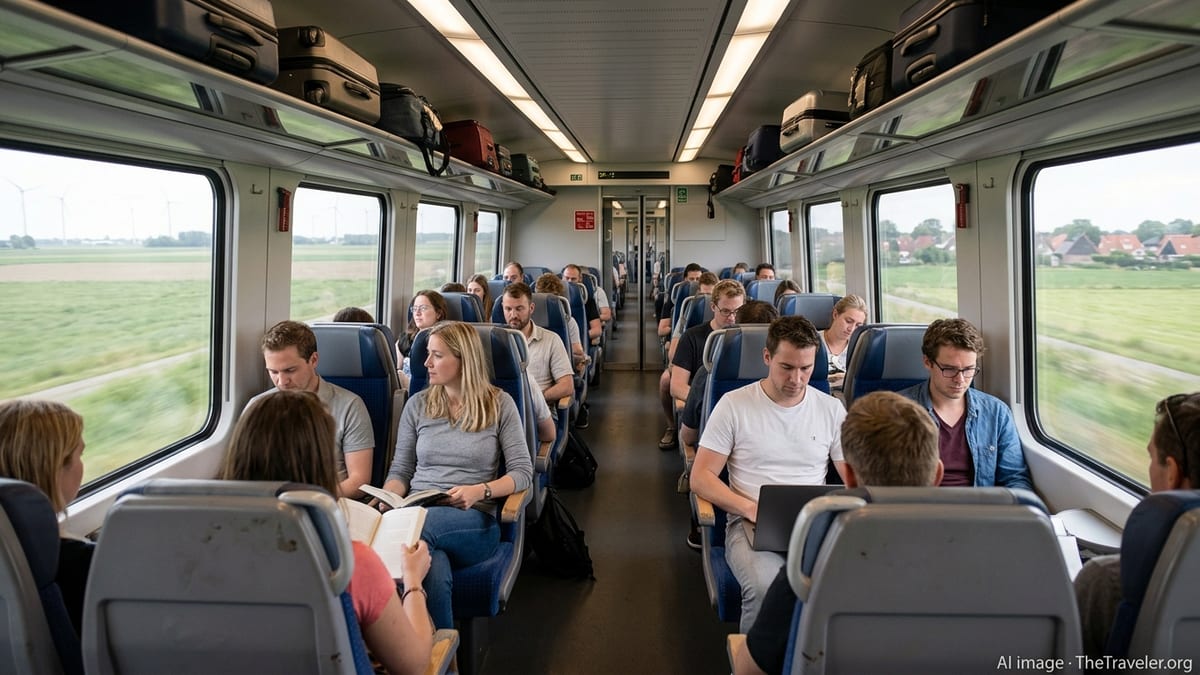
A Low-Cost Newcomer Targets a Busy Capital-to-Capital Route
Publicly available information shows that GoVolta, based in Breda and founded in 2025, is entering the crowded Amsterdam to Berlin corridor with a distinctly low-cost model focused on early-booker bargains and simplified pricing. From late March 2026, the company is launching three weekly direct daytime services between the two capitals, with plans to build up to daily operations in the summer timetable.
According to published coverage, tickets on the new Amsterdam–Berlin route are set to start from around 10 euros for an initial batch of seats on each train, with average one-way fares reported at roughly 30 euros. That positions GoVolta well below many existing rail options and in direct competition with low-cost airlines that currently dominate the price-sensitive leisure market between the Netherlands and Germany.
Reports indicate that the connection will run via Amersfoort, Deventer, Hengelo, Bad Bentheim, Osnabrück and Hannover before reaching Berlin, using traditional intercity rolling stock rather than purpose-built high-speed trainsets. Journey times of around six and a half hours from Amsterdam to Berlin are expected, slightly longer than the fastest services jointly offered by incumbent operators but with the advantage of simple, direct daytime journeys at lower prices.
The new service inaugurates GoVolta’s wider vision of becoming a pan-European budget rail operator, in the same way that low-cost carriers reshaped short-haul air travel. The company’s model is centered on no-frills comfort, basic onboard amenities and clear surcharges for extras such as large luggage, seeking to make rail travel feel as straightforward and predictable as booking a budget flight.
Reimagining Affordability and Comfort on Cross-Border Trains
GoVolta’s concept is built around keeping base fares low while guaranteeing every passenger a reserved seat, a notable contrast with some traditional European intercity services where seat reservations can be optional or sold separately. Reports from industry and travel media outline a two-class configuration, with Economy for price-focused travelers and a Comfort class offering more space and access to a dining car.
The rolling stock underpinning the Amsterdam–Berlin operation consists of refurbished Type I10 coaches originally built for Belgium’s national railway, formed into trains of around eleven cars and roughly 800 seats. Public information shows that these coaches are being modernized to balance capacity with acceptable comfort levels on journeys exceeding six hours, aligning with GoVolta’s aim to offer “affordable but pleasant” long-distance travel.
Observers note that certain amenities will be intentionally limited to keep costs down. Early reports emphasize that onboard Wi-Fi will not be available at launch, and that large suitcases will attract surcharges similar to airline luggage policies. In practice, this positions GoVolta somewhere between classic national rail services and ultra-frugal coach operators, leaning on simple pricing and guaranteed seating rather than premium onboard services.
For many leisure travelers, the trade-off may prove attractive. The route connects not only Amsterdam and Berlin but also a string of secondary cities in the Netherlands and Germany, serving passengers who might otherwise need multiple changes or a combination of regional trains and long-distance services. By folding these intermediate markets into a single fixed-journey product, GoVolta is attempting to broaden the base of travelers who see rail as the easiest option.
Operational Partnerships and a Pragmatic Fleet Strategy
Instead of building a fully vertically integrated operation from day one, GoVolta has opted for a partnership-driven approach. Publicly available information shows that the company is working with Keolis, an experienced European rail and bus operator, to handle staffing, operational planning and daily train running. This allows the newcomer to tap into existing expertise in cross-border operations and regulatory compliance.
On the technical side, GoVolta is combining leased locomotives with its refurbished coach fleet. Reports from rail sector publications describe Siemens Vectron electric locomotives hauling the trains in Germany, while former Dutch NS Class 1700 locomotives are used on the Dutch section between Amsterdam and the German border. This mix-and-match strategy reflects a focus on proven technology and availability rather than on headline-grabbing new high-speed equipment.
The company’s pragmatic rolling-stock plan extends to maintenance and overhaul. Dutch firm Brouwer Technology has been identified in industry reports as responsible for technical support and upkeep of the coaches, underpinning reliability on the new Amsterdam–Berlin link. By reusing and upgrading existing assets, GoVolta avoids the substantial up-front capital costs associated with new trainsets, an approach that aligns closely with its low-cost ambitions.
This asset-light philosophy also leaves room for future adaptation. Should demand increase substantially, the operator can consider lengthening trains, adding frequencies or eventually investing in newer rolling stock better suited to accelerated journey times. For now, the emphasis remains firmly on getting a dependable, affordable cross-border product into the market quickly.
Implications for European Travelers and the Wider Rail Market
The launch of GoVolta’s Amsterdam–Berlin service arrives at a moment when European institutions, national governments and climate advocates are all pressing for a shift from short-haul flights to rail. By targeting one of the continent’s most popular air corridors with fares that match or undercut many budget airlines, GoVolta is testing whether price and simplicity alone can convince more passengers to switch to the rails.
Travel industry coverage suggests that the new operator is positioning itself as a “missing link” for travelers who find existing train options too complex or too costly. The direct Amsterdam–Berlin runs remove the need to compare multiple fares, navigate various reservation systems or contend with changes en route, which may appeal strongly to occasional travelers, students and budget-conscious tourists.
At the same time, GoVolta’s entry adds competitive pressure for incumbent rail operators. On the Berlin route, it becomes the first direct daytime rival to the combined offerings of the Dutch and German national railways, creating an additional incentive for established players to refine pricing, improve onboard standards or add capacity on busy days. In the longer term, the newcomer’s model could also inspire other independent operators to explore cross-border routes where air and road still dominate.
The project is being closely watched by rail advocates as a potential template for affordable international services elsewhere in Europe. If the Amsterdam–Berlin route proves commercially viable with modest speeds and refurbished stock, it could strengthen the case for similar low-cost daytime trains linking other major capitals and regional centers, even before high-speed infrastructure is expanded.
Looking Ahead: From Amsterdam–Berlin to a Broader Network
GoVolta’s ambitions do not end with Berlin. Public announcements and media reporting outline plans for an Amsterdam–Hamburg route running on a similar three-times-weekly pattern from March 2026, creating the first direct daytime rail connection between those two cities. Like the Berlin service, that corridor is expected to grow to daily frequency in subsequent timetable periods, deepening GoVolta’s presence in northern Germany.
Further ahead, the company is signaling its intention to add a direct Amsterdam–Paris link in December 2026, although journey times on that route would trail existing high-speed options. Even so, the planned service underlines GoVolta’s belief that there is room in the market for slower, cheaper daytime trains that prioritize price and simplicity over sheer speed, particularly for leisure travelers with flexible schedules.
For cross-border passengers, the emergence of such services hints at a future in which European rail travel feels more like booking a budget airline ticket, with clear price ladders, simple add-ons and predictable timetables. If GoVolta can sustain its low-fare strategy while expanding across multiple routes, it could help normalize the idea that taking the train between major cities like Amsterdam and Berlin is not only climate-conscious but also the most economical and straightforward choice.
As the Amsterdam–Berlin trains begin rolling out, the new entrant will need to prove that its tightly costed model can deliver reliable operations and consistent value. The response from travelers, and the way incumbents react, will determine whether this experiment becomes a turning point in how Europeans move across borders by rail, or a niche alternative on a busy map of options.