

More news on this day
Gran Canaria has inaugurated a new cruise terminal in Las Palmas that industry reports describe as the largest in Europe, marking a strategic expansion of the Canary Islands’ role in the continent’s booming cruise sector.
Get the latest news straight to your inbox!
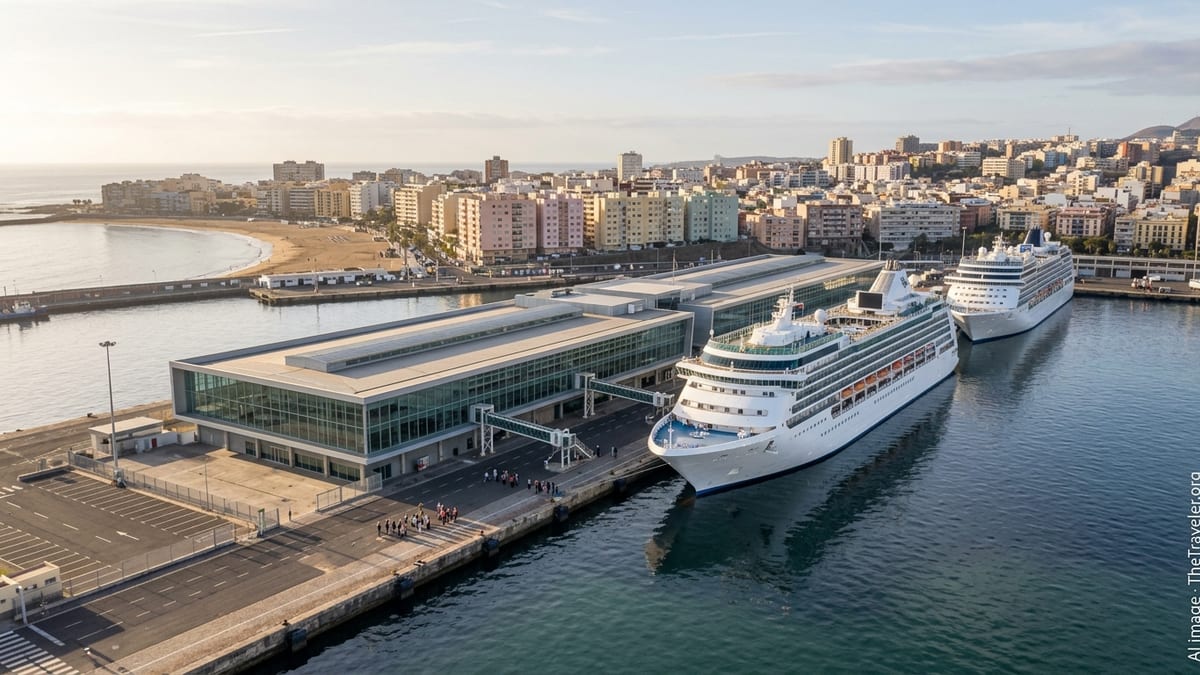
Flagship Terminal Redefines the Atlantic Cruise Gateway
The new facility at Las Palmas Cruise Port on the Santa Catalina quay spans around 14,400 square metres, according to publicly available information from the port’s operator, making it one of the most extensive dedicated passenger terminals in Europe. The complex has been developed to handle simultaneous embarkation and disembarkation for multiple large ships and to accommodate the latest generation of mega cruise vessels.
Architecture and layout emphasize open-plan interiors, high ceilings and generous circulation space designed to streamline passenger flow from curb to gangway. Check in, security screening and baggage handling are concentrated on a single level to minimize bottlenecks, while upper-level areas focus on passenger comfort and waiting zones with views across the harbor.
The terminal forms part of a wider investment program in the Canary Islands’ cruise infrastructure led by Global Ports Holding, which has signaled plans to channel tens of millions of euros into the region’s ports. Published corporate materials indicate that Las Palmas is the flagship of this strategy, intended to raise the islands’ profile as a primary homeport and turnaround base rather than solely a port of call.
In design and capacity, the new building aims to match the demands of ships carrying several thousand passengers, many of which already use the Canary Islands on winter and repositioning itineraries linking Northern Europe, the Mediterranean, West Africa and transatlantic routes.
Boost for Year-Round Tourism and Local Economy
The expansion of cruise facilities in Gran Canaria is expected to reinforce the island’s status as a year-round destination that blends beach holidays with city breaks and active tourism. Las Palmas de Gran Canaria already benefits from a mild subtropical climate and an established tourism base; the new terminal is intended to convert more visiting ships into turnaround operations, encouraging passengers to begin or end their voyages on the island.
According to industry coverage, turnaround calls generally generate higher local spending than brief port visits, as passengers tend to book pre- and post-cruise hotel nights, dine in city restaurants and use local transport and tour services. Port-side logistics and provisioning businesses also stand to benefit from increased volumes of luggage handling, catering, bunkering and technical support.
Travel trade reports suggest that the Gran Canaria upgrade is being closely watched by cruise lines seeking reliable winter hubs with modern infrastructure in European waters. By positioning itself as a fully equipped homeport, the island aims to capture more of the Atlantic and Mediterranean deployment that traditionally gravitates toward mainland ports.
The project also aligns with a broader trend in Spanish and European ports, where cruise facilities are being integrated into urban waterfront redevelopment plans. For Las Palmas, the terminal is expected to reinforce links between the port and nearby neighborhoods, including shopping streets, cultural venues and beachfront promenades popular with visitors.
Passenger Experience and Operations at the New Facility
The new Las Palmas terminal places a strong emphasis on passenger experience, with contemporary interiors, climate-controlled waiting areas and purpose-built embarkation and disembarkation zones. Publicly available descriptions highlight dedicated check-in islands, improved signage and barrier-free access designed to keep queues moving and reduce congestion at peak times.
Commercial spaces within the complex are being curated for duty-free retail, food and beverage outlets and service counters for ground transport and excursions. Operators intend these amenities to encourage passengers to spend more time in the building, while still facilitating quick transfers for those heading directly to the city or airport.
Operationally, the facility has been designed to process several thousand passengers in a relatively short window, in line with the tight turnaround schedules of large cruise ships. The terminal’s configuration is intended to separate arriving and departing flows where possible, reducing cross-traffic and security risks while enabling cleaning and provisioning teams to work efficiently on the quay.
Handling capacity is also tailored to meet modern health, safety and baggage-screening requirements that became more stringent in the wake of global public health concerns. Industry briefings describe spacious security areas and flexible queuing systems that can be adjusted according to ship size and arrival patterns.
Environmental Considerations and Sustainability Features
Global cruise infrastructure is facing growing scrutiny over environmental impacts, and the Gran Canaria development has been framed as part of a wider shift toward more sustainable port operations. According to published corporate communications, the Las Palmas terminal incorporates recycled materials in its construction and integrates energy-efficient systems designed to reduce emissions and operating costs.
The building’s design emphasizes natural light and ventilation where climate allows, helping to lower reliance on artificial lighting and air conditioning. High-performance glazing and insulation further support energy efficiency, while modern waste-handling infrastructure is intended to improve separation and recycling rates for both ship and terminal-generated waste.
Reports related to the Canary Islands cruise investment program also reference an ambition to prepare terminal infrastructure for future technologies such as onshore power connections. While detailed timelines may vary by port and power grid capacity, the longer-term objective across European cruise gateways is to enable ships to connect to shore-based electricity and reduce emissions while alongside.
The Las Palmas project is being presented within the industry as an example of how regional cruise hubs can expand capacity while aligning with European Union and Spanish objectives on decarbonization, circular economy principles and more resilient tourism models.
Strategic Implications for Europe’s Cruise Network
The inauguration of what is being described as Europe’s largest cruise terminal in Gran Canaria carries strategic implications that extend beyond the Canary Islands. Positioned off the northwest coast of Africa yet politically and economically part of Spain and the European Union, the archipelago sits at a crossroads of routes linking Northern and Southern Europe, West Africa and the Americas.
Industry analysis indicates that the upgraded Las Palmas facility strengthens Europe’s Atlantic cruise corridor by providing a high-capacity, all-season port that can handle the newest and largest vessels. This, in turn, may influence deployment decisions by major cruise lines, particularly for winter seasons when Northern European ports are less suitable for sun-oriented itineraries.
The project complements parallel investments in other European hubs, including new terminals in Mediterranean and Atlantic ports, collectively reshaping how capacity is distributed across the continent. Analysts suggest that a more diversified network of homeports could help cruise lines manage operational risk, respond to evolving regulations and offer passengers a broader range of itinerary options.
For Gran Canaria, the opening of the terminal marks a milestone in its long maritime history and underscores the island’s ambition to play a central role in Europe’s next phase of cruise tourism growth, anchored in larger ships, more sophisticated infrastructure and increasing focus on sustainability and local economic integration.