

More news on this day
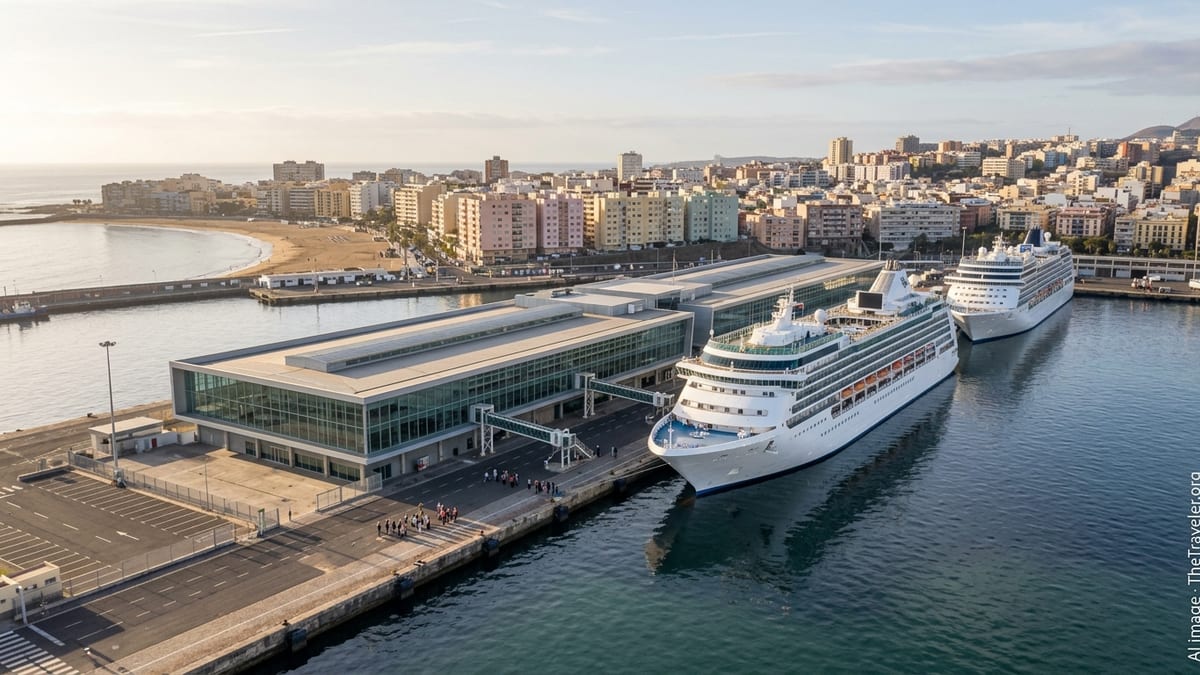
Gran Canaria has entered a new phase in its cruise tourism development with the official opening of Europe’s largest cruise terminal at Las Palmas Cruise Port, where the new facility began operating on October 2, 2025, with the arrival of Celebrity Apex.
Get the latest news straight to your inbox!
Record-Breaking Facility Anchors Cruise Growth
The new terminal at Las Palmas Cruise Port is being highlighted in industry coverage as the largest dedicated cruise terminal in Europe, both in size and operational capacity. Reports indicate that the complex spans roughly 14,400 square meters indoors, supported by an extensive exterior esplanade of more than 17,800 square meters that links the port directly with the city. The opening is viewed as a strategic response to the steady rise in passenger volumes across the Canary Islands.
Publicly available information shows that the terminal can accommodate up to four cruise ships simultaneously and is configured for both homeport and transit operations. This scale is designed to cater to the latest generation of large vessels, which are increasingly scheduling the Canary Islands as turnaround or highlight ports on Atlantic and Mediterranean itineraries. The facility’s launch with Celebrity Apex underscored that focus on large-ship traffic.
According to published data from the Las Palmas Port Authority summarized in trade media, cruise passenger numbers in the province surpassed 1.18 million in the first half of 2025, reflecting growth of nearly 25 percent compared to the same period in 2024. The new terminal’s capacity and modern processing spaces are intended to relieve pressure on existing infrastructure and provide room for further increases in ship calls and passenger throughput in upcoming winter seasons.
Design Focus on Passenger Experience and Urban Connectivity
The terminal’s architecture places emphasis on an open, light-filled interior with high ceilings, spacious check-in and security areas, and clearly separated flows for embarking and disembarking guests. Industry reports describe dedicated zones for luggage handling, waiting areas, retail, food and beverage, and passenger processing, all configured to move large volumes of travelers comfortably within tight turnaround windows.
Outside, the landscaped esplanade functions as a transition space between ship and city. Tree-lined pedestrian routes, shaded seating, and a restored palm grove are presented as key elements that soften the port environment and guide passengers toward the Santa Catalina district and adjacent waterfront promenades. This layout reflects a broader trend in cruise port development, where terminals are conceived as gateways into urban neighborhoods rather than isolated maritime facilities.
Integration with local transport networks has also been a priority. The terminal’s location near existing bus connections and taxi ranks is intended to ease dispersal of passengers across Las Palmas de Gran Canaria, from historic Vegueta and Triana to the beachside area of Las Canteras. For homeport guests, the proximity to hotels, dining, and cultural attractions offers additional options for pre- and post-cruise stays, strengthening the island’s appeal as both a turnaround base and a standalone holiday destination.
Investment Program Spans Three Canary Islands
The Las Palmas terminal forms the centerpiece of a wider cruise infrastructure program led by Global Ports Holding in cooperation with local partners and the Port Authority of Las Palmas. Published corporate materials describe a total investment of around 40 million euros across three islands: Gran Canaria, Fuerteventura, and Lanzarote. The objective is to standardize modern facilities across the archipelago and support rising demand for Canary Islands cruise itineraries.
New and upgraded terminals have already been reported in Arrecife, Lanzarote, and Puerto del Rosario, Fuerteventura, mirroring the design approach seen in Las Palmas with dedicated terminal buildings, improved berths, and enhanced passenger services. Together, these ports form a network of homeport and transit options that enable cruise lines to design flexible routes through the region, often pairing the Canary Islands with Morocco, mainland Spain, or Atlantic island destinations such as Madeira.
The broader program is framed in industry coverage as part of a competitive push among European cruise destinations to capture additional winter traffic. The Canary Islands’ mild climate and established air links with major European markets give the region an advantage in attracting ships repositioning from Northern Europe or the Mediterranean. Expanded infrastructure across multiple islands is expected to support longer, more varied itineraries that include repeat calls within the same archipelago.
Sustainability and Technology Embedded in the New Terminal
Reports on the development highlight a focus on sustainability, energy efficiency, and digitalization throughout the new Las Palmas facility. Design documentation presented in trade publications points to the use of recycled and locally sourced materials, optimized natural light, and systems conceived to reduce overall energy consumption. The project has also appeared in European initiatives related to “blue ports” and maritime environmental innovation, underscoring its role in regional decarbonization efforts.
Technological upgrades are equally prominent. Passenger boarding is supported by new-generation boarding bridges installed in late 2025, which are designed to handle a wide variety of ship classes while improving accessibility and safety. The terminal layout facilitates scalable security screening, automated check-in options, and real-time coordination between port operations and cruise line teams to streamline embarkation and disembarkation.
In line with sector-wide trends, the facility is being prepared to integrate future shore power capabilities as regulations and ship technologies evolve. While not all vessels calling at the port are yet equipped for plug-in operations, the long-term plans described in industry analyses anticipate growing demand for cold ironing in European ports, particularly as environmental regulations tighten.
Economic Impact for Gran Canaria and the Wider Region
Economic assessments cited in cruise industry coverage emphasize the potential of the new terminal to deepen the financial impact of cruise tourism on Gran Canaria. Cruise passengers typically generate spending on excursions, dining, shopping, and cultural activities, with additional indirect benefits for local suppliers and service providers. By increasing the volume of homeport operations, the port aims to stimulate longer hotel stays and higher per-visitor expenditure, particularly among guests who opt to explore the island before or after their cruise.
Local business associations and tourism stakeholders have been prominently referenced in public materials promoting the terminal, pointing to collaborations on tastings, artisan markets, and promotional events around the opening. These initiatives are intended to connect visitors with Gran Canaria’s gastronomy, crafts, and cultural offerings directly at the terminal and along the routes leading into the city center.
At a regional level, the expanded capacity in Las Palmas, combined with the investments in Lanzarote and Fuerteventura, is expected to reinforce the Canary Islands’ status as one of Europe’s key winter cruise hubs. As ship deployments for 2025 and 2026 increasingly feature the archipelago, the new Las Palmas terminal positions Gran Canaria as both a gateway and a showcase for the islands’ wider tourism offering, marking a significant milestone in the evolution of its maritime economy.