

More news on this day
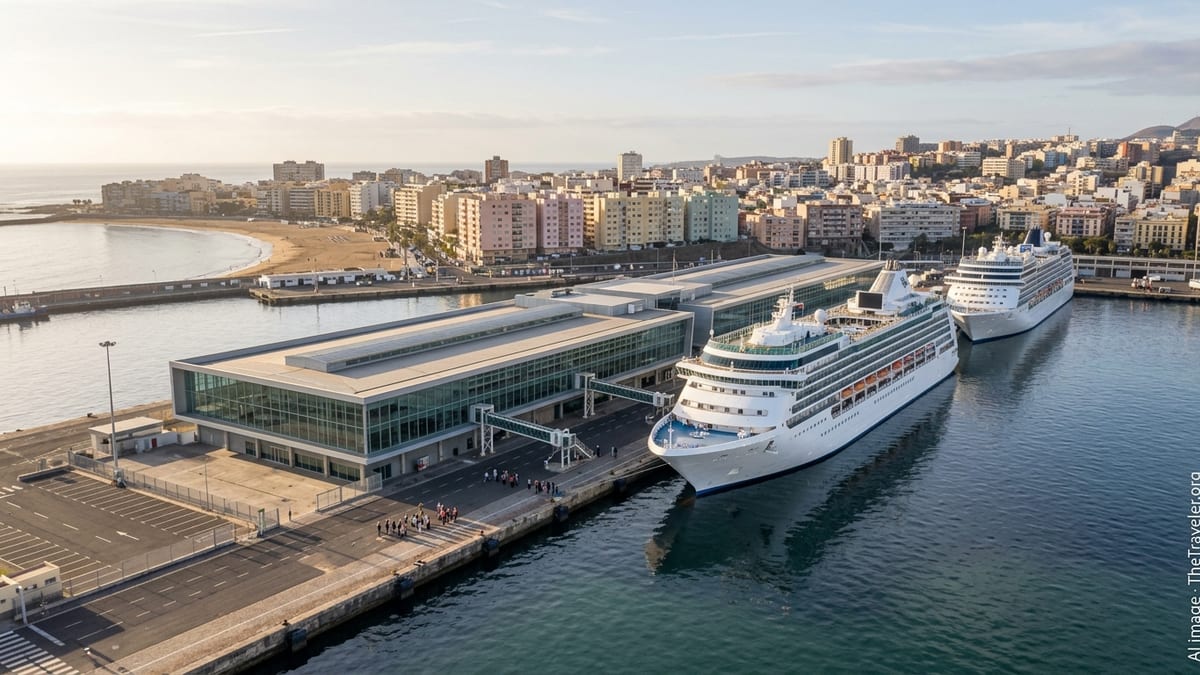
Gran Canaria has stepped onto the global cruise stage with the official opening of Europe’s largest cruise terminal in Las Palmas, a flagship project poised to reshape Atlantic itineraries and consolidate the Canary Islands as a year-round hub for ocean travel.
Get the latest news straight to your inbox!
A Landmark Opening in Las Palmas
The new Las Palmas Cruise Port terminal received its first official call on October 2, 2025, when Celebrity Apex docked at the Santa Catalina Pier to inaugurate the facility. According to published coverage, the call marked the start of regular operations at a complex designed to accommodate some of the world’s largest cruise ships while processing several thousand passengers per day.
Publicly available information indicates that the terminal spans roughly 14,400 square metres, making it the largest dedicated cruise facility in Europe by building size. The project forms part of a multi-year concession and investment program led by Global Ports Holding in partnership with the Port Authority of Las Palmas, with capital spending for the province’s cruise infrastructure reported in the region of 40 million euros.
Reports from regional and industry outlets describe the building as a multi-purpose space capable of hosting both home-port and transit operations. The design prioritises open-plan check-in and security areas, flexible embarkation zones, and improved baggage handling, all with the intent of reducing turnaround times and easing passenger flows on busy changeover days.
Although some finishing works are understood to be continuing into the current season, the terminal is already being used for scheduled calls, indicating a phased approach that brings key capacities online while final fit-out and cosmetic elements are completed.
Transforming Atlantic Cruise Itineraries
The opening comes at a time when cruise traffic in the Canary Islands is climbing sharply. In the first half of 2025, the Las Palmas port system reported cruise passenger totals of more than 1.18 million across its province, with year-on-year growth close to 25 percent, according to industry data cited in trade coverage. The new terminal is expected to help sustain and potentially accelerate that trajectory as cruise lines adjust their deployment.
The Canary Islands occupy a strategic position on traditional Atlantic routes linking Northern Europe with West Africa, the Caribbean and South America, as well as on repositioning itineraries between Mediterranean and Caribbean home ports. With the Las Palmas terminal now fully operational, itinerary planners gain added flexibility to use Gran Canaria as both a turnaround and transit base, particularly for winter cruises targeting milder climates.
Analysts note that congestion and infrastructure limits at several mature European ports have pushed operators to seek alternative bases that can handle larger ships and more complex operations. The scale of the new Las Palmas terminal, together with a deep-water pier already familiar to major global brands, positions Gran Canaria as a credible alternative or complement to mainland hubs for select itineraries.
Early schedules for the 2025 to 2026 season already show a more diverse mix of cruise lines calling at Las Palmas, including both premium and contemporary brands, with some voyages embarking or disembarking in the port before heading toward West Africa, the Iberian Peninsula and beyond.
Part of a Wider Canary Islands Cruise Investment Wave
The Gran Canaria terminal is the flagship element of a broader infrastructure program that has reshaped cruise facilities across the Canary Islands over the last two years. Global Ports Holding has already opened new terminals at Arrecife in Lanzarote and Puerto del Rosario in Fuerteventura, with the entire package described in corporate material as a transformative upgrade to the region’s cruise offer.
In Lanzarote, recently inaugurated terminals at the Naos and Los Mármoles docks are projected to nearly double cruise passenger throughput, with local authorities forecasting more than one million cruise visitors annually in the coming seasons. Similar improvements in Fuerteventura aim to create a consistent passenger experience across the archipelago, supporting multi-island itineraries that begin or end in Gran Canaria.
Public documentation from European initiatives focused on sustainable ports highlights Las Palmas Cruise Port as part of a new generation of terminals designed with environmental considerations in mind. Plans outline the use of recycled materials in construction, preparation for future shore power connections where feasible, and layouts that encourage efficient ground transportation links to reduce congestion around the port district.
The combined investments are intended to reinforce the Canary Islands’ status as a leading European cruise destination while distributing economic benefits across several islands, rather than concentrating all growth in a single port.
Boost for Local Economy and Urban Waterfront
Local and regional economic assessments cited in recent coverage suggest that the expanded cruise infrastructure could translate into significant additional visitor spending in Las Palmas de Gran Canaria. Each large ship call typically brings several thousand passengers and crew into the city for shore excursions, shopping, dining and cultural visits, supporting jobs in tourism, transport, retail and services.
The new terminal sits close to the heart of the city, adjacent to the Santa Catalina area and within reach of key beaches and commercial zones. Urban planners have framed the development as part of a broader waterfront revitalisation, integrating port functions more closely with public spaces and visitor amenities while maintaining operational security.
Business groups on the island have welcomed the potential for more year-round activity, particularly outside the traditional high season when other Mediterranean ports see a slowdown. The milder winter climate in Gran Canaria and the ability to host large ships in modern facilities give local operators an opportunity to capture off-season demand from cruise lines seeking stable weather and established excursion offerings.
At the same time, debates around managing visitor numbers and protecting neighbourhood character are ongoing, with local media reporting calls for careful planning to balance growth in cruise arrivals with quality-of-life considerations for residents and long-stay tourists.
Raising the Bar for Passenger Experience
From a passenger perspective, the new terminal is intended to simplify the start and end of a cruise holiday. Information released by the port and operator highlights amenities such as spacious check-in halls, designated areas for tour dispatch, modern security screening, and upgraded gangway systems to reduce bottlenecks when thousands of guests board or disembark simultaneously.
Recent reports also describe improvements behind the scenes, including enhanced baggage handling and staging zones for provisioning and waste management. These operational upgrades are designed to shorten turnaround times, enabling cruise lines to keep to tight schedules while minimising disruption in the surrounding city.
For transit passengers spending a few hours ashore, signage and transport connections have been structured to make it easier to reach popular sites such as Las Canteras beach, the historic Vegueta district and shopping streets in the city centre. The location of the terminal means that many visitors can walk directly into nearby neighbourhoods without long shuttle transfers, an advantage that tourism officials have repeatedly stressed in public communications.
As Europe’s largest cruise terminal enters its first full winter season, cruise watchers will be looking closely at how ship deployments, passenger volumes and local impacts evolve. The performance of Las Palmas Cruise Port is likely to serve as an indicator of how medium-sized Atlantic cities can leverage next-generation cruise infrastructure to reposition themselves on the global travel map.