

More news on this day
Gran Canaria has stepped decisively onto the global cruising stage, with Las Palmas Cruise Port inaugurating what reports describe as the largest dedicated cruise terminal in Europe, a vast, purpose-built facility now ready to welcome some of the world’s biggest ships and a fast-rising tide of international visitors.
Get the latest news straight to your inbox!
A Record-Breaking Terminal in the Atlantic
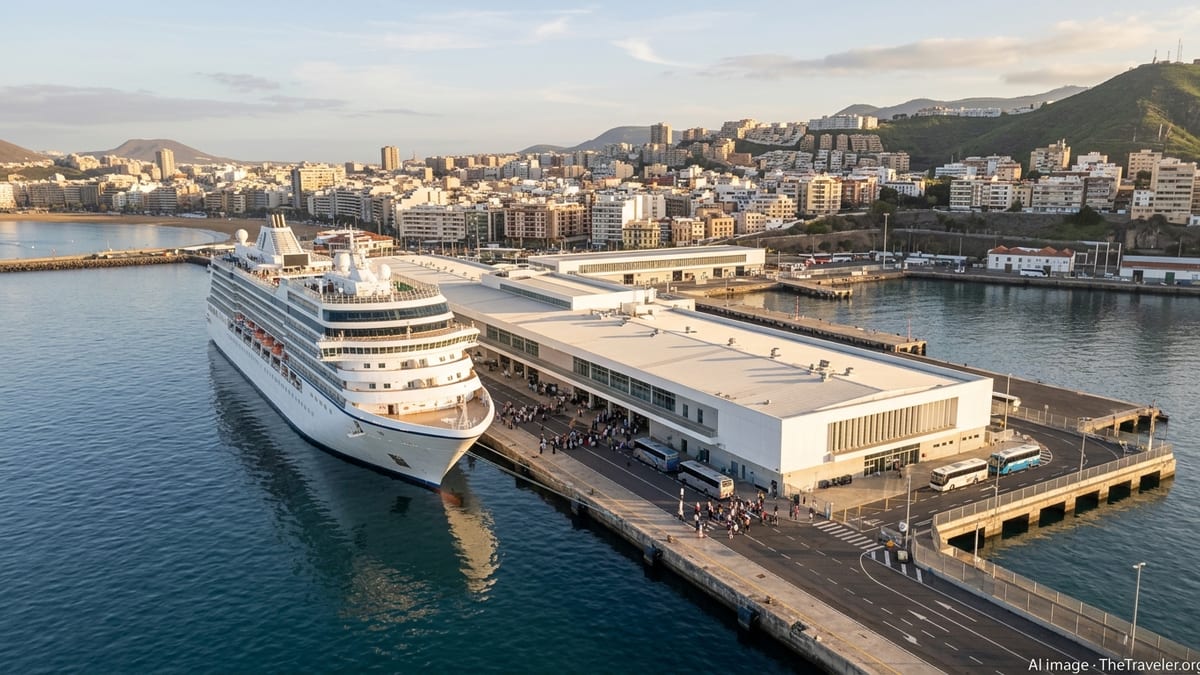
Publicly available information indicates that the new Las Palmas Cruise Port terminal at Puerto de la Luz opened to cruise traffic in October 2025, welcoming Celebrity Apex as its first official caller. Coverage in specialist cruise media describes the building as Europe’s largest cruise terminal by surface area, with a footprint of around 14,400 square meters positioned directly at the Santa Catalina pier, long the island’s traditional cruise gateway.
The terminal forms the centerpiece of a reported 40 million euro investment program led by Global Ports Holding in partnership with the Port Authority of Las Palmas, covering upgrades not only in Gran Canaria but also in Lanzarote and Fuerteventura. Industry reports suggest the Las Palmas facility has been designed to handle the latest generation of mega-ships, including vessels comparable in size to the world’s largest cruise ships, while also streamlining passenger flows through modern security, check-in and baggage systems.
In the first half of 2025, the Las Palmas port area recorded cruise passenger growth of around 25 percent compared with the same period a year earlier, according to cruise industry coverage, underlining the timing of the terminal’s debut. The new infrastructure is positioned as a long-term anchor for that expansion, supporting both homeport operations and transit calls across the main winter and shoulder seasons.
Reports from regional media in the Canary Islands frame the opening as a strategic move to consolidate the archipelago’s place among Europe’s key cruise regions. With the new terminal operational, Las Palmas is expected to compete more directly with Atlantic and Mediterranean ports that have long dominated the European cruise map.
Design, Capacity and Passenger Experience
According to technical summaries shared by the port’s operator and trade publications, the terminal’s vast single-level floorplate is configured to support simultaneous embarkation and disembarkation operations, with separate flows for arriving and departing guests. High ceilings, expansive glass façades and open-plan waiting areas are designed to keep crowding to a minimum during peak turnaround hours, particularly on days when large ships homeport in Las Palmas.
The facility incorporates multiple check-in islands, dedicated security screening lanes and extensive baggage-handling zones intended to move thousands of passengers quickly between curbside, check-in counters and the gangways. Reports also highlight new passenger boarding bridges added in late 2025, which strengthen all-weather access to ships and improve accessibility for guests with reduced mobility.
Inside, the terminal has been described in Spanish and international coverage as a modern, bright space with commercial areas, food and beverage offerings and flexible zones that can be opened or closed depending on the day’s ship schedule. The layout aims to shorten walking distances while offering enough circulation space to accommodate growing numbers of fly-cruise guests connecting through Gran Canaria’s airport.
Port communications cited in industry reports emphasize that the building has been engineered for modular use. During off-peak periods or seasonal lulls, sections can be closed to reduce operating costs, while marquee events such as multi-ship days can see the entire structure activated, including additional security and check-in positions.
Connectivity, Sustainability and Operations
Beyond its scale, the new Las Palmas terminal has been presented as a more sustainable and technologically advanced addition to Europe’s cruise network. Materials with recycled content, energy-efficient systems and design choices aimed at passive climate control are reported to feature prominently, aligning the project with wider environmental goals across Spanish ports.
Industry documents indicate that the terminal is being integrated with broader modernization efforts at Puerto de la Luz, including upgrades to adjacent piers, traffic circulation and ground transport staging. The location at Santa Catalina keeps arriving passengers within walking distance or a short transfer of Las Palmas’ key visitor areas, including the port’s commercial center and the popular Las Canteras beachfront.
Operationally, the facility has been built to support complex itineraries and quick turnarounds, a priority for cruise lines deploying larger vessels in the region. The terminal’s size and dual-flow design are intended to reduce bottlenecks when ships use Las Palmas as a homeport, allowing disembarking passengers, new arrivals and transit visitors to be handled concurrently.
Port-focused publications note that the development is part of a broader trend across leading cruise destinations, where terminals are being designed as multi-functional, open and technologically equipped spaces rather than simple transit halls. Las Palmas’ new complex is being positioned as a showcase of that shift in the mid-Atlantic, combining high-capacity operations with a more comfortable passenger environment.
Impact on Gran Canaria’s Cruise Tourism
For Gran Canaria’s tourism sector, the terminal is widely viewed as a game-changer that could reshape visitor flows across the island. Cruise industry analyses report that the province of Las Palmas surpassed one million cruise passengers in the first half of 2025, with Gran Canaria accounting for a significant share and posting double-digit growth rates compared with 2024.
With Europe’s largest cruise terminal now in place, Las Palmas is better positioned to attract winter homeport deployments from major lines targeting sun-seeking guests from northern Europe and beyond. The combination of improved infrastructure, a busy international airport and year-round mild weather has been repeatedly cited in trade coverage as a compelling package for cruise operators considering new itineraries.
Local and regional tourism commentary points to potential knock-on benefits for accommodation providers, transport companies and shore-excursion operators across Gran Canaria. Homeport passengers often spend pre- and post-cruise nights on island, while transit calls generate demand for guided visits to historic Las Palmas, inland mountain villages and southern beach resorts.
At the same time, discussions in Spanish media reflect an awareness of the need to balance growth with urban life in Las Palmas and environmental considerations. The new terminal’s focus on operational efficiency and greener design features is presented as one response to those concerns, aiming to handle larger passenger numbers with reduced impacts on congestion and emissions compared with older facilities.
What Cruise Travelers Need to Know Now
For travelers, the new terminal changes the practical experience of sailing from or via Gran Canaria. Publicly available port information shows that most large cruise ships are now scheduled at the Santa Catalina area, using the modern check-in halls and new boarding bridges, with clear wayfinding and enhanced security processes.
Passengers beginning their voyages in Las Palmas can expect a more streamlined arrival, with dedicated spaces for taxis, coaches and luggage drop-off, along with expanded check-in capacity during peak times. Those in transit are likely to experience quicker disembarkation and re-embarkation, giving them more time ashore to explore the city or join organized excursions.
Cruise lines promoting Canary Islands itineraries are already highlighting Las Palmas’ new infrastructure in marketing materials, presenting the port as a capable base for exploring multiple islands in a single voyage. This includes combinations with Lanzarote and Fuerteventura, where new or upgraded terminals are also coming online under the same regional investment plan.
As cruise schedules evolve for winter 2026 and beyond, industry observers expect more large vessels to include Las Palmas as either a turnaround or key transit port. For global tourists, that means Europe’s newest and largest cruise terminal is set to feature more prominently in brochures, booking engines and social media feeds, placing Gran Canaria firmly on the map as a modern Atlantic cruise hub.