

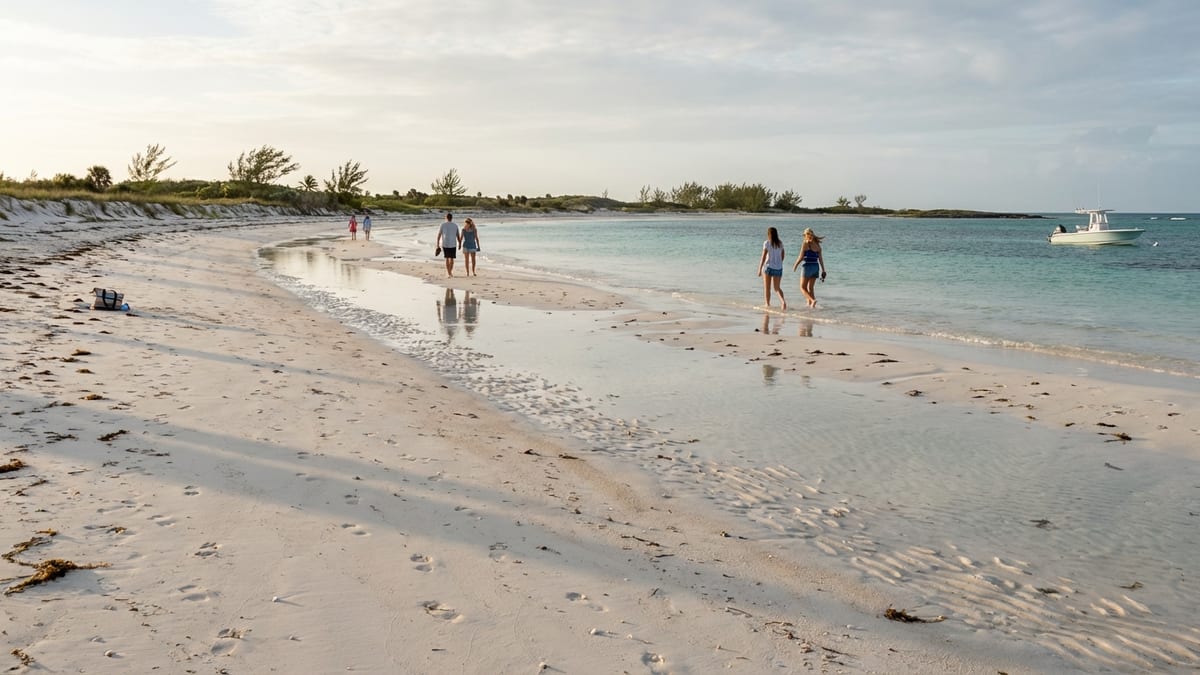
Grand Bahama Island blends powdery white beaches, pine forests, blue holes and one of the Caribbean’s liveliest duty-free hubs into a single, easy-to-reach escape. Just 55 nautical miles off the coast of Florida, it offers a laid-back alternative to more crowded Bahamian islands, with a strong focus on nature, soft adventure and relaxed resort living.
Whether you arrive by cruise ship or plane, this is an island where you can spend one day snorkeling reefs and exploring underwater caves, and the next shopping, dining and listening to live music by the waterfront.
Where Grand Bahama Island Is And How To Get There
Grand Bahama Island sits in the northern Bahamas, closest of the major Bahamian islands to the United States. It is part of the Lucayan Archipelago, with its main city, Freeport, located roughly 90 miles east of Palm Beach, Florida. Boaters know it as one of the first deepwater ports when crossing from the Florida coast to Bahamian waters, while air travelers recognize it as an easy hop from major East Coast gateways.
Most visitors arrive through Grand Bahama International Airport, located near Freeport and a short drive from the primary resort area of Lucaya. From the United States, there are frequent flights via Florida, especially Miami and Fort Lauderdale, with schedules that fluctuate by season and demand. Travelers from farther afield usually connect via Nassau, which offers onward flights of around 40 to 45 minutes. Seasonal charters and package operators also add capacity during peak winter and spring months.
Cruise and ferry traffic is another major gateway. Freeport Cruise Port accommodates large ocean liners, while high-speed ferries operate on routes between South Florida and Grand Bahama, popular with weekenders seeking a quick tropical change of scene. From the port, taxis, shuttles and organized excursions fan out across the island, taking day visitors to beaches, shopping districts and nature sites. Even with only a few hours ashore, it is possible to see a surprising amount of the island.
Once on Grand Bahama, getting around is straightforward. The main tourist zone between Freeport and Lucaya is compact and served by taxis, hotel shuttles and local jitney buses that follow fixed routes during daylight hours. Car rental agencies are also available near the airport, cruise port and major hotels. Driving is on the left, and the island’s main highways are generally in good condition, making self-drive day trips to the East End or remote beaches both feasible and rewarding.
Why Visit Grand Bahama Island Now
Grand Bahama Island has spent recent years focusing on sustainable recovery and upgrading key tourism areas, making now an appealing time to visit. New and refreshed resorts in the Freeport and Lucaya area are reopening or expanding as travel demand rebounds, bringing with them updated pools, dining options and beach facilities. National parks have invested in boardwalks and interpretive signage, enhancing access to ecosystems ranging from mangrove creeks to sand flats and pine forests.
Nature remains the island’s calling card. Compared with busier Caribbean destinations, Grand Bahama’s beaches feel expansive, with long sweeps of sand that never seem crowded. Offshore, barrier reefs create calm, clear water that suits families, beginner snorkelers and kayakers. Inland, the island shelters one of the world’s largest known underwater cave systems, rare pine woodlands and wetlands that attract migratory birds. This mix of blue water and green heartland is ideal for travelers who want more than a standard beach break.
Accessibility is another advantage. The short flight times from Florida and good connectivity via Nassau make Grand Bahama particularly convenient for North American travelers looking for a long weekend escape. Cruise itineraries frequently include Freeport, giving first-time visitors a low-commitment way to get a taste of the island. Once here, prices for food, drink and activities can be more approachable than on some other Bahamian islands, especially if you venture beyond the most touristy dining rooms.
There is also a cultural story to explore. Freeport was developed in the 1950s as a tax-free trade zone, shaping a distinctive blend of Bahamian traditions with international influences. In areas like Port Lucaya you will find straw markets and conch shacks alongside duty-free jewelers, marinas and live music stages. Given recent global focus on sustainable tourism, Grand Bahama’s efforts to balance development with conservation also make it an instructive example of how an island destination can adapt while retaining its coastal and ecological character.
Freeport & Lucaya: Heart Of The Island
Freeport and Lucaya form the commercial and tourism core of Grand Bahama Island. Freeport, laid out as a planned city, contains the main port, business district and many residential neighborhoods. Lucaya, a short drive to the east, is the primary resort area, with hotels, marinas and some of the island’s best-known beaches. Together, they offer the broadest range of restaurants, bars, shops and services, making them an ideal base for first-time visitors.
At the center of this activity is Port Lucaya Marketplace, a colorful open-air complex on the waterfront. Here, duty-free boutiques sit alongside kiosks selling Bahamian handicrafts, batik fabrics, straw bags and locally made jams and sauces. Restaurants serve everything from grilled seafood to international comfort food, often with live bands performing in the evenings at Count Basie Square. It is as much a social hub for locals as a shopping zone for tourists, and a good spot to ease into island time over a rum punch.
Beaches are never far away. Lucaya Beach and nearby Taino Beach stretch along the southern shoreline, offering soft sand, shallow turquoise waters and a full suite of watersports. Parasailing, jet skiing and glass-bottom boat trips are easily arranged from vendors along the sand, while calmer sections of the beach suit swimming and stand-up paddleboarding. For many visitors staying at waterfront resorts, days follow a simple rhythm of beach time, water activities and evening strolls through the marketplace.
For nightlife, the Lucaya area offers a modest yet varied scene. Casino gaming, cocktail lounges, sports bars and beachfront grills provide options for both low-key and livelier evenings. While this is not a party island on the scale of some Caribbean destinations, there is enough going on in and around Port Lucaya to keep most travelers entertained after dark, especially on weekends and during holiday periods.
Nature, Beaches And National Parks
One of Grand Bahama’s greatest strengths is its easy access to protected natural areas. Lucayan National Park, about a 30-minute drive east of Freeport, is the best-known showcase. Covering around 40 acres of land and a much larger area offshore, it contains boardwalks threading through mangrove creeks, pine forests and dunes. It also overlays a vast underwater cave system, with sections open for viewing from the surface. Short walking trails lead visitors through multiple Bahamian ecosystems in a compact space, making it one of the island’s must-see attractions.
From Lucayan National Park, elevated boardwalks cross the wetlands to Gold Rock Beach, often described as the island’s “welcome mat.” At low tide, the ocean withdraws to reveal hard-packed rippled sand that stretches far out toward the reef, creating ideal conditions for wading, beachcombing and photography. The beach has appeared in several films and remains remarkably undeveloped, with few facilities beyond basic shelters and designated picnic spots. This is the place to come if you want the archetypal Bahamian beach without resort infrastructure.
Smaller but equally rewarding is Peterson Cay National Park, a tiny offshore cay surrounded by coral reef. Accessible only by boat or kayak, it draws snorkelers and divers who come for clear water, reef fish and the chance to explore a more secluded marine environment. Several outfitters in the Lucaya area run half-day trips that combine paddling through shallow turquoise channels with time in the water around the cay.
The island’s third major protected area, Rand Nature Centre in central Freeport, offers a different perspective. This 100-acre sanctuary features trails through pine forest, coppice and native vegetation, plus birdwatching blinds and educational displays about local flora and fauna. It is an especially appealing stop during bird migration seasons when a variety of species move through the Bahamas. For travelers who want a break from sun and sea, Rand’s shaded paths provide a quieter, cooler way to connect with Grand Bahama’s interior landscapes.
On And Under The Water: Diving, Snorkeling And Boating
Grand Bahama is renowned among divers and snorkelers for its combination of barrier reefs, blue holes and accessible wrecks. Offshore from Freeport and Lucaya, coral formations teem with tropical fish, turtles and rays, while visibility often extends to 30 meters or more in favorable conditions. Several dive operators based near the major marinas offer daily boat trips for both certified divers and beginners, including introductory “resort courses” that allow newcomers to experience shallow dives under close supervision.
One of the island’s unique natural features is its underwater cave system, part of which lies beneath Lucayan National Park. While cave diving here is strictly regulated and limited to highly trained technical divers accompanied by authorized guides, some cavities and blue holes can be observed safely from the surface or on specialized tours. These submerged passageways, carved through limestone over millennia, add a sense of geological mystery to the island’s otherwise sunlit image.
For snorkelers, Grand Bahama offers plenty of options that do not require specialized training. Shallow reefs near Paradise Cove and Deadman’s Reef, for example, can be explored on guided excursions or independently, with rental equipment available from local beach clubs. Closer to the main resort strip, Taino Beach and sections off Lucaya Beach give access to patch reefs and seagrass beds where you may spot parrotfish, sergeant majors and occasional rays. Always heed local advice about currents and marine life, and avoid touching or standing on corals.
Boating and paddling are equally popular. Calm coastal waters suit kayaking through mangrove channels, stand-up paddleboarding in sheltered bays and leisurely catamaran cruises at sunset. Some tour companies combine multiple activities, such as snorkeling, beach time and dolphin-watching on a single half-day outing. Offshore fishing charters target species like mahi-mahi, wahoo, tuna and marlin in deep blue water that lies surprisingly close to shore, while inshore guides take anglers onto the flats in search of elusive bonefish.
Cuisine, Culture And Everyday Life
Local food is central to the Grand Bahama experience. Conch, the iconic Bahamian shellfish, appears in many guises: raw in citrusy salads, deep-fried as fritters, or pounded and breaded as “cracked conch.” Beachside shacks and casual restaurants around Port Lucaya, Taino Beach and the cruise port specialize in simple, flavorful seafood dishes, often served with peas and rice, fried plantains and coleslaw. Freshly grilled snapper, grouper and lobster are common menu highlights, especially when boats come in with the day’s catch.
Away from the waterfront, you will find bakeries and takeaways offering johnnycakes, guava pastries and Bahamian macaroni and cheese. Rum plays a starring role in many cocktails, from classic rum punches to creatively garnished frozen drinks. Visiting a local liquor store or tasting bar provides a chance to sample regional rum brands and learn how they are woven into Bahamian social life, from celebrations to casual weekend gatherings.
Culturally, Grand Bahama reflects both its Bahamian heritage and its unique history as a free trade zone. Freeport’s grid-like layout and commercial district contrast with the more traditional, low-rise communities found elsewhere on the island, such as the historic West End. Here, stories of rum-running during Prohibition, maritime trade and fishing traditions give deeper context to the island’s modern tourism economy. Local festivals and Junkanoo parades, especially around Christmas and New Year, bring together music, costumed dancers and elaborate handmade headdresses.
Travelers who make time to explore beyond the resort zone often encounter small churches, neighborhood bars and local craft studios that reveal everyday life on the island. Speaking with residents, many of whom have weathered hurricanes and economic shifts, underscores the resilience and hospitality that define Grand Bahama today. Respect for local customs, modest dress when away from the beach and a willingness to support small, locally owned businesses all contribute to more meaningful travel experiences here.
Planning Your Trip: Seasons, Stays And Practical Tips
Grand Bahama’s subtropical climate brings warm temperatures year-round, with average daytime highs typically ranging from the mid-70s Fahrenheit in winter to the mid-80s and above in summer. The peak tourism season runs roughly from December through April, when North American and European travelers flock south to escape colder weather. During these months, you can expect higher rates for flights and accommodations, and it pays to book popular tours in advance.
The summer and early autumn months bring warmer, more humid conditions and fall within the Atlantic hurricane season, which runs from June through November. Travel during this period can be rewarding, with fewer crowds and potential discounts, but it is wise to monitor weather forecasts closely and consider flexible bookings or travel insurance that covers storm-related disruptions. Regardless of season, packing lightweight clothing, sun protection, insect repellent and reef-safe sunscreen will help you stay comfortable.
Accommodation choices on Grand Bahama range from large beachfront resorts and all-inclusive properties in the Lucaya area to smaller inns, vacation rentals and boutique hotels scattered around the island. Many visitors, especially first-timers, choose to stay near Port Lucaya for immediate access to dining, nightlife and tour departure points. Those seeking quieter surroundings might favor properties near outlying beaches or at the West End, where upscale marina resorts cater to boaters and anglers.
Practicalities are straightforward. The local currency is the Bahamian dollar, which is pegged at par to the US dollar and largely interchangeable in day-to-day transactions. English is the official language, and tipping practices are similar to those in the United States, though some restaurants add a service charge to the bill. Tap water quality can vary, so many visitors prefer bottled or filtered water, especially outside major hotels. While the island is generally welcoming to visitors, it is sensible to use standard urban precautions, avoid poorly lit or deserted areas at night and secure valuables in hotel safes.
Responsible Travel And Safety Considerations
Like many island destinations, Grand Bahama balances tourism with the protection of fragile ecosystems. Visitors can support this balance by choosing operators that follow responsible practices, such as limiting group sizes in sensitive environments, avoiding anchor damage to reefs and following wildlife interaction guidelines. When snorkeling or diving, refrain from touching corals or marine animals, and never feed fish or other wildlife. Using reef-safe sunscreen helps reduce chemical stress on nearshore reefs, while staying on marked paths in national parks protects vegetation and bird habitat.
Community-based tourism is another way to travel responsibly. Booking locally owned guesthouses, eating at family-run restaurants and joining tours led by licensed Bahamian guides keeps more of your travel spending within the island’s economy. Many small businesses are rebuilding and expanding after past storms and global travel downturns, and your patronage can directly support jobs and skills development. When shopping for souvenirs, seek out genuinely handmade items and ask vendors about the origins of products to avoid mass-produced imports being passed off as local crafts.
In terms of safety, visitors should stay informed about current advisories and follow guidance from local authorities and accommodation providers. Like any urban area, Freeport has neighborhoods where visitors are advised to be cautious or avoid wandering late at night. Stick to well-trafficked zones, use registered taxis and do not display valuables openly. On beaches, pay attention to posted flags or lifeguard instructions regarding surf and currents, and be cautious with alcohol consumption around water activities.
Health considerations are typical of Caribbean travel. Sun exposure can be intense, even on overcast days, so frequent sunscreen application, hats and hydration are essential. Mosquito activity can increase after rainfall, so using repellent and wearing long sleeves in the evening can reduce the risk of bites. Basic medical facilities are available in Freeport, but travelers with specific health conditions should bring necessary medications, copies of prescriptions and any critical health information in case of emergency.
The Takeaway
Grand Bahama Island offers a compelling fusion of natural beauty, accessible adventure and relaxed resort culture. Its proximity to Florida makes it one of the easiest tropical getaways for North American travelers, yet its national parks, blue holes and unspoiled beaches deliver the sense of being far from everyday life. Whether you come for a day on a cruise, a long weekend of sun and shopping, or a week devoted to diving and exploration, the island reveals new layers with each outing beyond the hotel pool.
Choosing Grand Bahama is as much about the mood as the map. This is not an island of hurried sightseeing schedules but of unhurried mornings at Gold Rock Beach, afternoons drifting above coral heads at Paradise Cove and evenings listening to live music over grilled fish at Port Lucaya. With thoughtful planning, attention to local culture and a willingness to explore past the main tourist strip, travelers find an island that rewards curiosity and returns again and again to the essentials: sea, sky and the easy rhythm of Bahamian life.
FAQ
Q1: Where exactly is Grand Bahama Island located?
Grand Bahama Island lies in the northern Bahamas, just east of Florida, and is one of the closest major Bahamian islands to the United States. It sits roughly 90 miles off the coast of Palm Beach and is part of the Lucayan Archipelago.
Q2: How do I get to Grand Bahama Island from the United States?
You can fly directly to Grand Bahama International Airport from several Florida cities, with flight times typically under an hour, or connect through Nassau from other parts of North America. High-speed ferries and cruise ships also operate between South Florida ports and Freeport Cruise Port.
Q3: What is the best time of year to visit Grand Bahama?
The most popular time is from December through April, when temperatures are warm and humidity is lower. Shoulder seasons in late spring and late autumn can offer fewer crowds and better prices, while summer brings hotter weather and lies within the Atlantic hurricane season, which runs from June through November.
Q4: Is Grand Bahama Island safe for tourists?
Grand Bahama welcomes many visitors each year, and most stays are trouble-free, but it is important to use normal travel precautions. Stay in well-populated areas, use registered taxis, avoid displaying valuables and follow local advice from hotels and tour operators about areas to avoid at night.
Q5: Do I need a passport to visit Grand Bahama from the United States?
Yes. US citizens need a valid passport to enter the Bahamas and to reenter the United States, even if traveling by cruise or ferry. Some cruise lines may offer specific documentation options, but the most reliable and widely accepted identification is a current passport book.
Q6: What kind of activities can I do on Grand Bahama besides going to the beach?
Beyond the beaches, you can explore Lucayan National Park and its boardwalks, visit Rand Nature Centre, take kayak or boat trips to Peterson Cay, go reef or wreck diving, join deep-sea or bonefishing charters, shop and dine at Port Lucaya Marketplace and experience local culture in communities like West End.
Q7: Is Grand Bahama suitable for families with children?
Yes. The island’s calm, shallow beaches, family-friendly resorts and abundance of outdoor activities make it well suited to children. Many hotels offer kids’ pools and programs, and excursions such as glass-bottom boat rides, easy snorkeling trips and visits to botanical gardens can appeal to a wide range of ages.
Q8: What currency is used on Grand Bahama, and can I use US dollars?
The Bahamian dollar is the official currency and is pegged one-to-one with the US dollar. US dollars are widely accepted in shops, restaurants and taxis, and you will often receive change in a mix of Bahamian and US notes and coins. Major credit cards are accepted at most established businesses in the main tourist areas.
Q9: Do I need to rent a car to get around the island?
You do not have to rent a car, especially if you are staying in the Freeport and Lucaya areas, where taxis, jitney buses and hotel shuttles are common. However, renting a car can be useful if you plan to explore more remote beaches or the East End at your own pace. Remember that driving is on the left side of the road.
Q10: What should I pack for a trip to Grand Bahama Island?
Pack lightweight, breathable clothing, swimwear, a hat, sunglasses and sturdy sandals or water shoes. Reef-safe sunscreen, insect repellent and a reusable water bottle are valuable for outdoor activities. If you plan to snorkel frequently, consider bringing your own mask and snorkel for comfort and fit, although equipment can also be rented locally.