

More news on this day
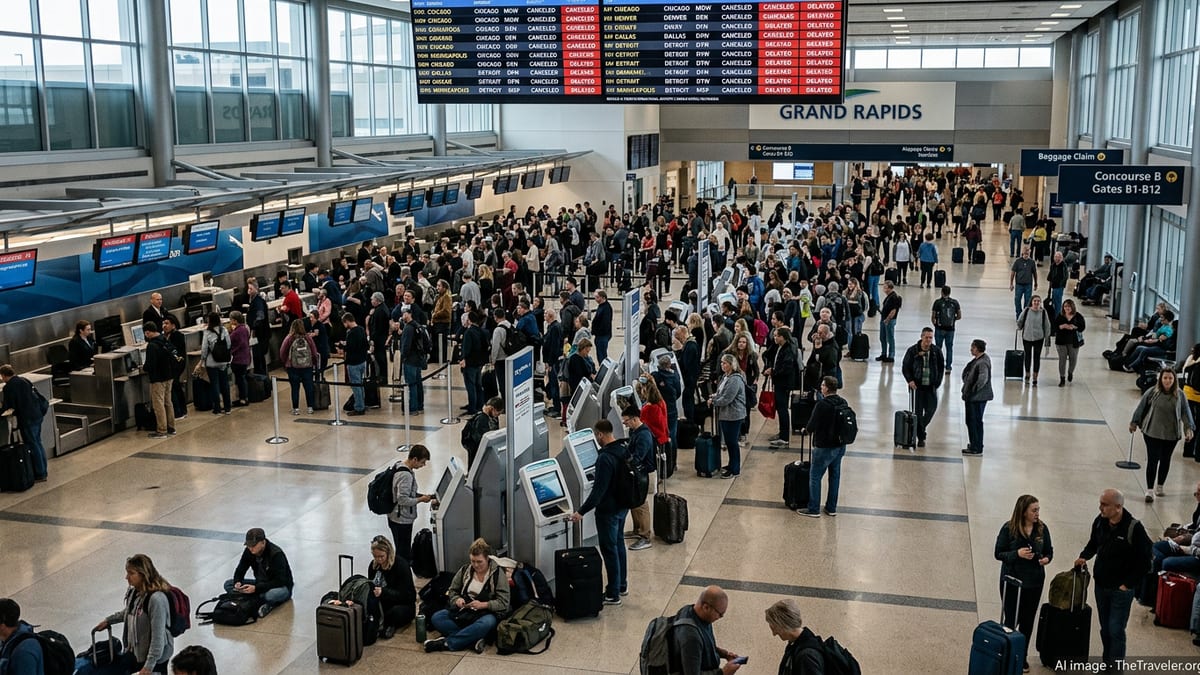
A wave of flight cancellations centered on Grand Rapids’ Gerald R. Ford International Airport in mid-March has rippled across the United States, tangling spring travel plans, stranding passengers, and exposing how quickly severe Midwest weather can snarl a fragile national air network.
Get the latest news straight to your inbox!
How a Midwest Disruption Became a National Problem
Gerald R. Ford International Airport in Grand Rapids, Michigan, typically operates as a relatively smooth, small-hub facility. In recent days, however, it has found itself at the center of widespread turbulence in the U.S. air system as a late-season winter blast swept across parts of the Midwest and Great Lakes. Publicly available flight-tracking data and airline alerts indicate that a surge of cancellations and delays at Grand Rapids has cascaded through major hubs, from Chicago and Detroit to Denver and Dallas.
The timing has been especially problematic. The disruption has overlapped with peak spring break travel, when flights are heavily booked and spare seats are scarce. Once aircraft and crews were knocked out of position by weather in the region, carriers struggled to recover schedules, leaving travelers rebooked days later or forced to piece together alternative routings through crowded hubs.
While Grand Rapids is not one of the nation’s largest airports, it is deeply connected to them through a web of regional routes operated by major U.S. airlines. When outbound flights from Grand Rapids were canceled or heavily delayed, aircraft that were scheduled to continue on to other cities never arrived, contributing to rolling disruptions well beyond west Michigan.
Weather, Capacity Strains, and a Fragile System
The immediate trigger for the latest round of cancellations has been unstable March weather, including snow, strong winds, and low visibility across parts of the Midwest. Airlines and airport operators rely on precise weather windows to keep aircraft moving; when those conditions deteriorate, ground stops, deicing backlogs, and air traffic control spacing quickly slow operations. Even a short-lived burst of poor conditions can strand aircraft and crews in the wrong place at the wrong time.
In recent months, large winter systems crossing the Great Lakes and central United States have repeatedly produced some of the highest daily cancellation totals since the early pandemic period. Grand Rapids, sitting at the intersection of these storm tracks and feeding into multiple major hubs, has become especially vulnerable when storms hit on high-demand days. As carriers tighten schedules to maximize revenue, there is less slack in the system to absorb disruptions.
Once a weather event forces cancellations at a spoke airport such as Grand Rapids, the effects can echo for days. Aircraft assigned to operate morning departures from Michigan are often scheduled to fly multiple additional legs around the country. When those early flights do not take off, subsequent segments must be canceled or consolidated, creating a rolling wave that travelers may encounter hours or even days after the original storm has passed.
What Travelers Through Grand Rapids Are Experiencing
For passengers at Gerald R. Ford International, the result has been an abrupt shift from the airport’s reputation for short lines and quick security checks to scenes of crowded ticket counters and last-minute gate changes. Travelers report early-morning cancellations, sudden aircraft swaps, and rebookings that move them to much later departures or routings via multiple hubs. Those connecting to international flights from larger gateways have faced particularly tight margins and, in some cases, missed onward journeys.
Because many of the affected services are regional flights feeding into large hubs, options to rebook can be limited when multiple departures on the same route are canceled. Full spring-break loads mean that later departures often have few open seats. Families traveling together sometimes find that only scattered single seats are available, forcing difficult choices about splitting parties or staying overnight.
At the same time, not every traveler has encountered chaos. Some recent passengers through Grand Rapids describe relatively normal security waits and on-time departures, underscoring how uneven these disruptions can be. Calm periods between weather systems can give an impression of normalcy even as the broader network remains under strain, and conditions can shift rapidly within a single travel day.
Key Things Passengers Need to Know Right Now
For anyone scheduled to fly into or out of Grand Rapids in the coming days, the most important step is to monitor flight status closely. Airlines are continuing to adjust schedules as they work aircraft and crews back into position, and same-day changes remain common, especially on early-morning and late-evening departures. Mobile apps and airline notifications typically reflect changes before information appears on airport displays.
Several major carriers serving Grand Rapids have issued weather-related travel waivers for Midwest routes, allowing passengers to move their trips within a limited date range without change fees or fare differences in many cases. These waivers can provide critical flexibility for travelers willing or able to shift plans by a day or two. However, rebooking windows are finite, and high demand means that desirable times and nonstop options can disappear quickly.
Travelers connecting through large hubs should pay particular attention to minimum connection times. When the first leg originates in a weather-affected city such as Grand Rapids, even a modest departure delay can put tight connections at risk. In some situations, it may be wiser to request a longer layover or an earlier departure rather than gamble on a short connection during a period of systemwide stress.
How to Reduce Your Risk if You Must Travel
Although no traveler can completely avoid the impact of severe weather on the air system, a few strategies can lessen the likelihood of being stranded. Early-day departures are often more reliable, as they rely less on inbound aircraft from already-disrupted routes. Nonstop flights, where available, remove the additional risk of missed connections in busy hubs that are also coping with weather and volume.
Checking in as early as airline rules allow and arriving at the airport with extra time can also help. While Gerald R. Ford International is typically known for short security lines, sudden surges around popular departure banks, evacuations, or operational hiccups can briefly overwhelm checkpoints. Leaving additional time cushions travelers against these unexpected bottlenecks and allows more options if last-minute rebookings become necessary.
Passengers should also be aware of their rights and options when flights are canceled or significantly delayed for reasons within an airline’s control, such as crew availability or mechanical issues that persist after a storm has moved on. Publicly available airline customer service plans outline when travelers may be eligible for meal vouchers, hotel accommodations, or refunds instead of credits. Knowing these policies in advance can make it easier to navigate tense conversations at crowded service desks.
For now, the situation at Grand Rapids illustrates how even a relatively modest airport can become a flashpoint in a much larger disruption. With more late-winter and early-spring systems in the forecast, travelers across the United States who rely on regional hubs like Gerald R. Ford International may continue to feel the knock-on effects well beyond west Michigan.