

More news on this day
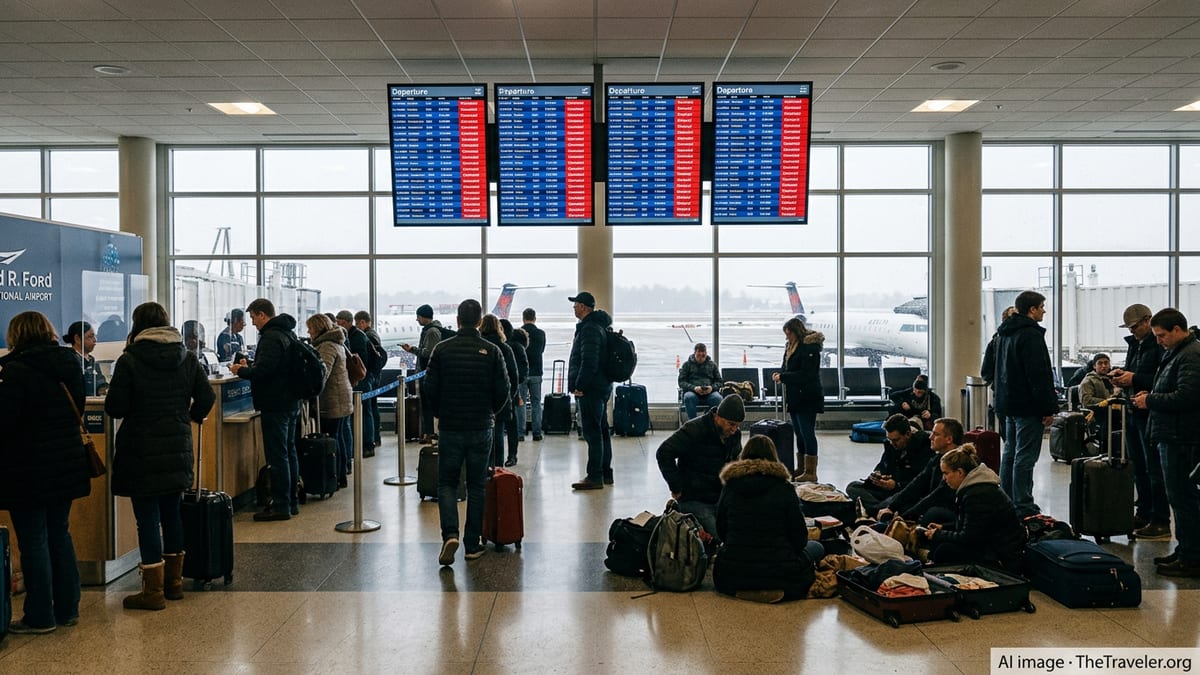
A wave of abrupt flight cancellations at Gerald R. Ford International Airport in Grand Rapids on March 16 has rippled far beyond western Michigan, stranding travelers, snarling connections, and underscoring how quickly regional weather and airline schedule disruptions can cascade across the United States air network.
Get the latest news straight to your inbox!
Weather Shock Meets a Fragile Flight Network
The cancellations in Grand Rapids come as a powerful March storm system bears down on large portions of the United States, bringing a volatile mix of snow, wind, freezing rain, and severe thunderstorms from the northern Plains through the Midwest and into the East Coast. Publicly available forecasts describe the pattern as a broad, erratic patchwork of hazardous conditions affecting both road and air travel, with airports across several regions bracing for operational slowdowns.
In recent days, forecasters have highlighted successive “punches” of winter weather, from heavy snow bands in the Upper Midwest to high winds farther south and east. Aviation analysts note that even when a smaller regional airport like Grand Rapids escapes the worst of the storm, conditions at its primary hubs and along major flight corridors can still trigger cancellations and diversions.
Grand Rapids is tightly connected to larger hubs such as Chicago, Detroit, and various East Coast and southern gateways. When those hubs introduce ground delays, deicing backlogs, or temporary ground stops, inbound and outbound aircraft and crews for Michigan flights can quickly fall out of position, leaving local passengers facing last minute schedule changes.
The resulting pattern over the weekend and into March 16 is one in which localized cancellations at a mid-sized airport feed into a much larger web of missed connections, lost seats on downstream legs, and rolling delays that reach well beyond the Great Lakes region.
From Grand Rapids to Nationwide Havoc
According to published airline advisories and traveler reports, multiple carriers have activated weather-related travel waivers over the past several days for key hubs in the Midwest, the Great Lakes, and on the East Coast. These waivers, which allow passengers to change itineraries without standard change fees under specific conditions, are typically issued in anticipation of severe weather that threatens to disrupt large swaths of the network.
Recent waivers have covered cities such as Chicago, Milwaukee, and major East Coast airports, as well as destinations in the central and southern United States affected by thunderstorms and potential tornado outbreaks. When such policies are active, airlines often preemptively cancel flights at spoke airports like Grand Rapids in order to thin schedules, concentrate limited aircraft and crews on higher-priority routes, and reduce the risk of widespread same-day chaos.
Publicly available information from passenger forums and flight-tracking services indicates that travelers connecting through Grand Rapids this weekend have encountered combinations of outright cancellations, extensive departure delays, and unexpected re-routes via alternative hubs. Some itineraries that would ordinarily require a single connection have ballooned into two or three stops, while others have been pushed into overnight stays.
This kind of cascading disruption illustrates how vulnerable modern air travel is to sudden stress. Even a modest wave of cancellations at an airport of Grand Rapids’ size can resonate through the broader system, affecting flights that never come near Michigan as aircraft and crews are shuffled to recover the schedule.
Why So Many Flights Were Cut So Quickly
Several overlapping factors typically drive the sort of abrupt cancellations seen at Grand Rapids, and current conditions across the country align with many of them. Weather remains the most visible trigger. Strong crosswinds, low visibility, freezing precipitation, and lightning within a few miles of airports or flight paths can immediately slow or halt operations, forcing crews and dispatchers to rework departure queues.
However, weather is only part of the picture. Airlines must also contend with aircraft and crew displacement when storms or ground stops hit earlier in the day at other airports. If a plane scheduled to operate an evening departure from Grand Rapids is stuck undergoing deicing in another city, or if its pilots exceed duty-hour limits while waiting out a delay elsewhere, the carrier may have little choice but to cancel the segment rather than risk safety or regulatory violations.
Industry guidance documents on recent disruptions describe how these ripple effects can cascade, with one delayed morning flight potentially forcing the cancellation of multiple later flights that depended on the same plane or crew. Operational constraints such as limited spare aircraft, congested airspace around major hubs, and reduced flexibility in staffing further limit the system’s ability to absorb unexpected shocks.
Reports on this month’s disruptions also point to the role of preventative schedule thinning, where airlines intentionally remove flights ahead of forecast storms. While this strategy can reduce last-minute chaos at the gate, it concentrates the impact on specific departure banks and can leave smaller markets like Grand Rapids facing outsized cancellation percentages compared with larger hubs that have more redundancy in their schedules.
What Travelers Through Grand Rapids Should Expect Now
For passengers with upcoming itineraries involving Grand Rapids, the immediate reality is a period of elevated uncertainty. Published coverage of this storm pattern suggests that disruptive weather may continue shifting across the Midwest and East Coast through at least March 17, with the potential for additional knock-on issues even after the worst conditions pass.
Travelers who are still at home and have not yet headed to the airport can expect that same-day schedule changes remain possible, particularly for early morning and late evening departures that are more vulnerable to crew availability constraints. Cancellations may be announced in waves as airlines adjust to evolving weather data, so it is possible to see a flight appear as on-time in the early morning and then be pulled from the schedule a few hours later.
Those already in transit or connecting through larger hubs may face rebooking onto later flights, unplanned overnight stays, or rerouting through entirely different cities than initially ticketed. With many carriers operating at or near capacity, especially during peak travel windows, available seats on replacement flights may be limited, raising the risk of extended delays in reaching final destinations.
Given the breadth of the current storm system, travelers whose journeys do not pass through Grand Rapids or the Great Lakes region could still feel the impact. Aircraft that would otherwise serve routes between the South, the coasts, or the Mountain West may be temporarily reassigned to recover critical Midwestern schedules, further tightening capacity across the domestic network.
Key Steps Travelers Can Take Right Now
While the underlying causes of the cancellations lie largely outside individual travelers’ control, there are several practical steps that can reduce the likelihood of being stranded. Publicly available airline advisories and aviation guidance consistently emphasize the importance of monitoring flight status frequently on the day of travel, beginning several hours before departure.
Given the widespread nature of the current disruptions, same-day trip adjustments may be constrained, but travelers booked to or from Grand Rapids can often take advantage of active weather waivers to move flights to different dates or times without standard change fees. Rebooking as early as possible can be crucial, as seat availability typically tightens quickly once large numbers of flights are canceled.
For those already at the airport when cancellations occur, understanding the structure of the broader network can help in negotiating alternatives. In many cases, routing through less stressed hubs or accepting longer, multi-stop itineraries increases the chances of reaching a destination within a reasonable timeframe. Remaining flexible about departure times and, where feasible, nearby airports can also open up additional options.
Ultimately, the turmoil centered on Grand Rapids serves as a reminder of how quickly localized weather and operational challenges can ripple through the modern aviation system. For travelers, staying informed, acting early when rebooking options appear, and building extra time into tight connections are becoming essential strategies in an era of increasingly volatile weather and tightly stretched airline operations.