

More news on this day
Great Lakes cruising is headed for its strongest modern season in 2026, with new ships, expanded itineraries, and forecasts pointing to a record 300 million dollars in economic impact for ports and communities across the binational region.
Get the latest news straight to your inbox!
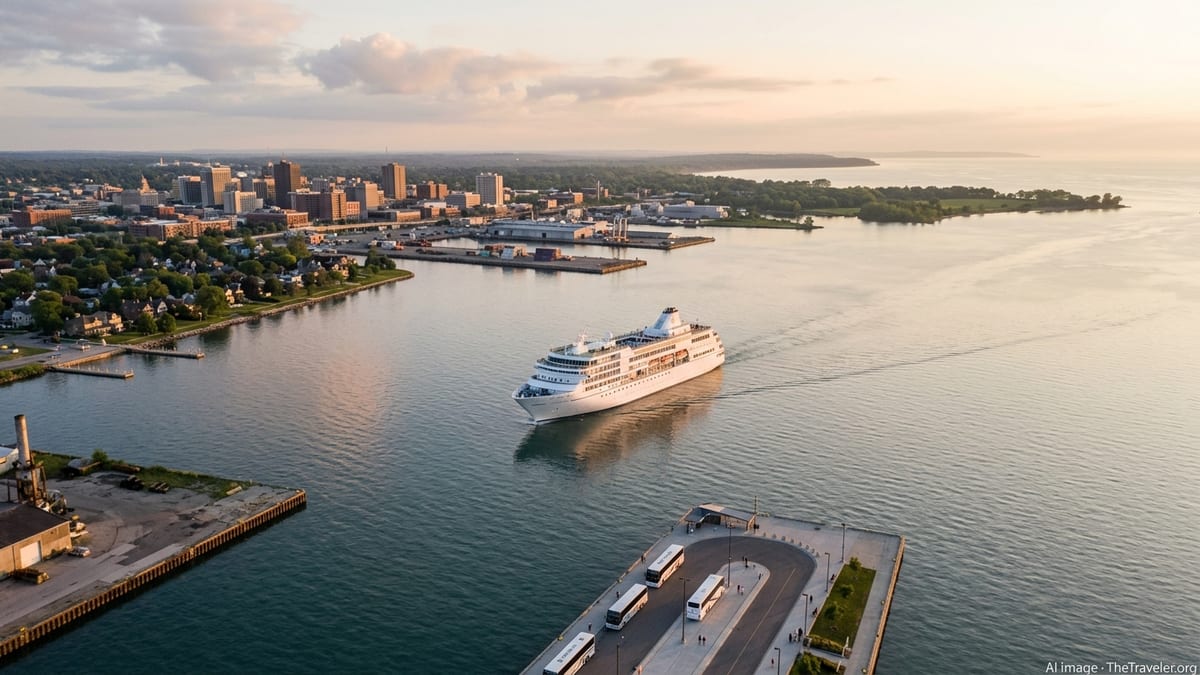
Record Forecast: 175,000 Passengers and 300 Million Dollars in Impact
New projections from regional tourism and maritime organizations indicate that nearly 175,000 cruise passenger visits are expected on the Great Lakes in 2026, setting a new high-water mark for the still-young sector. Publicly available forecasts compiled by Cruise the Great Lakes and partner destinations suggest that passenger volumes will climb by roughly one quarter compared with 2025 levels, extending several consecutive years of growth.
The anticipated 300 million dollar economic impact represents a step-change for a niche cruise market that, only a few years ago, was generating under half that amount. Earlier analyses of the 2022 and 2024 seasons put total regional impact in the 120 to 125 million dollar range as the sector rebuilt after the pandemic and more vessels were redeployed into the region. The latest figures indicate that spending by cruise guests, crew, and cruise lines on shore-based services is now spreading more widely across both large cities and smaller lakeside communities.
While the Great Lakes remain a small fraction of the global cruise sector, their growth rate now rivals that of major ocean destinations. Industry-wide projections from cruise and travel research groups such as AAA and Tourism Economics point to a broader rebound in cruising through 2026, and the Lakes appear to be capturing a growing share of North American itineraries that favor domestic or close-to-home voyages.
Fleet Expansion and New Itineraries Reshape the Market
The 2026 boom is being driven in part by additional ships and more diverse routes. Publicly available schedules show a growing roster of small and midsize vessels operating on the Lakes, including U.S.-flag and international ships designed to meet Seaway lock size constraints. Operators are layering new itineraries onto existing routes that connect cities such as Chicago, Milwaukee, Toronto, Cleveland, Detroit, Thunder Bay, and Québec-region ports via the St. Lawrence Seaway.
New deployments are particularly visible in the U.S. Great Lakes. Coverage of upcoming seasons shows American Cruise Lines introducing additional sailings and itineraries, including a U.S.-only route built around “passport-light” travel preferences. Other established operators, such as Pearl Seas Cruises and lines affiliated with Victory brand ships, continue to refine their Great Lakes programs following interior refurbishments and fleet redeployments.
Itineraries are also shifting from simple point-to-point journeys to more complex circuits featuring themed experiences. Schedules and marketing materials emphasize cultural and Indigenous tourism, industrial heritage, nature and freshwater science, as well as food-focused calls in smaller communities. This diversification is intended to lengthen the season and distribute calls across more ports, extending economic benefits beyond the most established gateways.
Ports Race to Upgrade Infrastructure for Larger and More Frequent Calls
As ship traffic increases, ports around the Lakes are accelerating investments in cruise-ready infrastructure. Recent planning documents and regional news coverage highlight a wave of public and private spending on dedicated cruise docks, terminal reception areas, shore power readiness, and improved wayfinding between piers and city centers.
Port Milwaukee, Duluth, Cleveland, Green Bay, and several Ontario and Québec ports are among those featured in recent reports as expanding or reconfiguring waterfront space to better accommodate passenger vessels without disrupting cargo operations. Upgrades range from modest pier improvements and gangway systems to more ambitious projects that carve out dedicated Seawaymax-capable berths distinct from bulk and container facilities.
Municipal tourism agencies are aligning their strategies with these port plans, promoting cruise calls as anchors for broader waterfront renewal. Examples include proposals for enhanced public spaces around cruise berths, improved transit links for day visitors, and partnerships with local attractions and small businesses. Collectively, these measures are designed to increase per-passenger spending and encourage some travelers to extend their stay before or after a voyage.
Economic Ripple Effects Reach Deep into Lakeside Communities
The projected 300 million dollar impact in 2026 reflects more than just ticket sales. Economic modeling released by regional tourism coalitions suggests that direct spending on guided excursions, restaurant visits, retail shopping, and cultural attractions is increasingly being matched by indirect and induced effects in hospitality, transport, and local services.
Recent season summaries from cities such as Cleveland and Milwaukee detail how even a few dozen ship calls can translate into millions of dollars in visitor spending within a single year. As the number of passenger visits rises, smaller ports on Lakes Superior, Huron, and Michigan are beginning to quantify similar gains, citing lodging demand, seasonal employment, and expanded operating hours for museums and waterfront attractions.
Regional leaders also link the cruise upswing to broader efforts to brand the Great Lakes as a coherent freshwater destination, comparable in some respects to ocean cruising but differentiated by its cultural and environmental focus. Marketing collaborations under banners such as Cruise the Great Lakes are intended to keep more visitor spending within the binational region, particularly in shoulder months when traditional leisure travel can be more volatile.
Balancing Growth with Environmental and Community Priorities
Alongside the optimistic forecasts, the 2026 season is prompting fresh debate about how to manage growth on a sensitive freshwater system. Policy documents and public discussions in Great Lakes cities increasingly focus on ship emissions, wastewater handling, and the risks associated with higher marine traffic in narrow channels and near urban waterfronts.
Port authorities and cruise operators are responding by emphasizing smaller ship sizes compared with large ocean-going vessels, along with the relatively limited number of calls spread across dozens of ports. Some itineraries now highlight environmental programming on board and partnerships with local research institutions, using the cruise experience to interpret the Lakes’ unique ecology and drinking water role for tens of millions of residents.
Community groups are also paying close attention to how cruise expansion intersects with housing, congestion, and waterfront access. So far, the relatively modest scale of Great Lakes cruising has avoided some of the pressures seen in major ocean cruise hubs. However, with passenger volumes expected to keep rising beyond 2026, city planners and tourism agencies are starting to frame long-term strategies that aim to capture economic gains while preserving the character and livability of lakeside neighborhoods.