

More news on this day
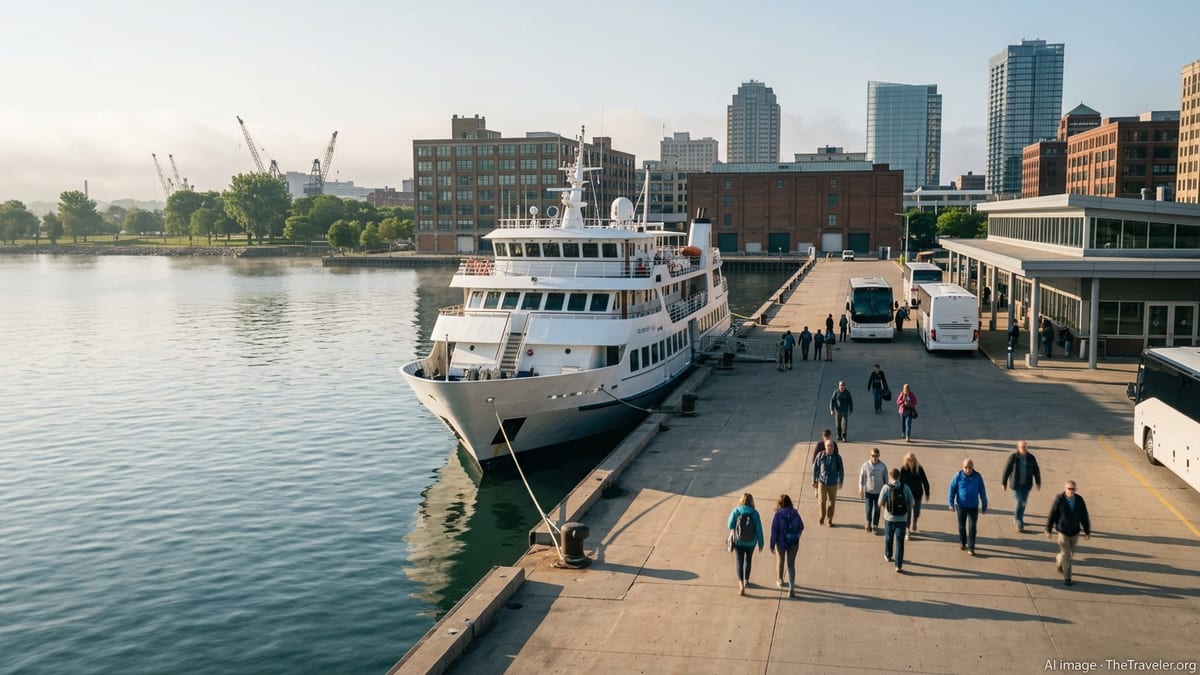
The Great Lakes cruise sector is preparing for a landmark 2026 season, with regional forecasts pointing to record passenger numbers, expanded port calls and a projected economic impact that is set to outpace any previous year.
Get the latest news straight to your inbox!
Passenger Traffic Set to Hit New Highs
Publicly available forecasts from Cruise the Great Lakes and regional partners indicate that total cruise passenger visits across the Great Lakes are expected to exceed 175,000 in 2026. That figure represents roughly a 15 percent rise over 2025 and continues a growth trend that has been building over the past several seasons as travelers seek alternatives to traditional ocean itineraries.
The passenger surge mirrors global cruise industry momentum but is particularly notable in a freshwater region that only a decade ago hosted a fraction of today’s traffic. Industry summaries show that demand during the 2025 Great Lakes season approached capacity on many small expedition and luxury ships, with some itineraries selling out months in advance for both 2025 and 2026.
Several operators now market the Great Lakes as a warm-season counterpart to polar expeditions, pairing nature-focused excursions with small-ship comfort. Ships such as Viking Octantis and other expedition vessels are scheduled to spend their northern summer months in the region before shifting to Antarctic or coastal routes, keeping cabins largely occupied throughout the year.
Industry coverage also points to a strong advance-booking curve for 2026, with cruise lines reporting limited remaining inventory on select sailings and a growing share of repeat guests. Analysts describe the pattern as a sign that the Great Lakes have matured from a niche itinerary into a consistently sought-after cruise destination.
Ports Race to Capture Cruise Dollars
As passenger counts climb, port cities around the Great Lakes are moving quickly to capture more of the associated spending. A forecast circulated by the Great Lakes St. Lawrence Governors and Premiers and highlighted by Cruise the Great Lakes projects the region’s cruise-related economic impact at more than 300 million dollars in 2026, an increase of about 25 percent compared with 2025.
In Cleveland, local reporting for the 2025 season noted the city’s biggest cruise year on record, with a spike in ship calls and an estimated multimillion-dollar boost to the local economy from passenger spending on food, attractions and tours. New itineraries launching in 2026 are expected to make the city not only a stop but a regular embarkation point, encouraging pre- and post-cruise hotel stays and additional visitor spending.
Other long-established ports, including Milwaukee and Toronto, are leaning into the growth with infrastructure investments and dedicated cruise facilities designed for small and midsize vessels. Coverage from regional business outlets describes higher port fees, upgraded berths and streamlined passenger handling as tools to both accommodate increasing traffic and return more revenue to municipal budgets.
Smaller communities are also seeing tangible benefits. Case studies from Northern Ontario and Lake Superior ports, including Thunder Bay and Duluth, show that even a modest number of ship calls can translate into millions of dollars in direct and indirect economic activity, particularly for local tour providers, hospitality businesses and cultural attractions.
New Itineraries Stretch Across All Five Lakes
The rapid expansion of routes is another factor behind the projected 2026 growth. Itinerary catalogs for the 2025 and 2026 seasons show a dense network of voyages linking all five Great Lakes along with the St. Lawrence River, creating more options for both first-time and repeat passengers.
Specialist operators have introduced extended journeys that combine classic destinations such as Niagara Falls, Mackinac Island and Georgian Bay with emerging calls in places like Thunder Bay, Duluth and smaller ports along Lake Superior and Lake Huron. According to cruise line materials, many of these newer routes are explicitly marketed as “life-sized expeditions,” emphasizing nature, Indigenous history and remote landscapes.
Several cruise companies have also announced expanded Great Lakes programs beginning in 2026. American Cruise Lines has publicized three dedicated Great Lakes itineraries debuting that year, while Victory Cruise Lines has outlined a two-ship 2026 season that adds new ports of call. In parallel, international brands including Hapag-Lloyd Cruises have scheduled additional Great Lakes voyages for 2026 and beyond after reporting strong advance demand.
These layered deployments are resulting in more frequent ship visits throughout the May to October sailing window. Regional tourism analyses suggest that, taken together, the new routes will spread passenger traffic more evenly across the season and across a wider set of coastal communities.
Secondary Ports Emerge as Cruise Gateways
One of the clearest signs of the 2026 expansion is the rise of secondary ports that only recently began hosting regular cruise calls. Local announcements from Green Bay, Wisconsin, for example, indicate that cruise ship visits there are slated to triple in 2026 compared with 2025, with ships scheduled to dock six times at Leicht Memorial Park.
Similarly, coverage from Ohio points to Toledo’s inclusion on multiple Great Lakes cruise itineraries following a successful 2025 season. Regional leaders have framed the new calls as part of a broader effort to position Lake Erie communities as gateways for small-ship tourism, complementing established cruise traffic in Cleveland and Detroit.
On Lake Michigan and Lake Superior, incremental increases in ship arrivals are being reported in ports such as Duluth and smaller Wisconsin cities. Tourism analysts note that even a handful of additional turnarounds or transit calls can justify improved dock infrastructure, new visitor services and expanded shore excursion offerings.
Industry observers add that the diversification of ports helps distribute economic gains more widely while giving cruise lines flexibility to adjust itineraries in response to operational constraints, weather patterns or water level conditions on particular lakes.
Balancing Booming Tourism With Environmental Realities
While the Great Lakes cruise outlook for 2026 is broadly positive, the region is also facing environmental and operational questions. Shipping and maritime community discussions in early 2026 highlight forecasts of lower-than-average water levels on some of the lakes, which could reduce cargo ship loading even as passenger traffic climbs.
Industry watchers note that cruise vessels, generally smaller than bulk freighters, are less directly affected by draft restrictions but still rely on careful navigation and port planning. Lower water levels and shifting seasonal conditions may require itinerary tweaks, more conservative scheduling around canal openings and lock operations, and increased coordination with port authorities.
At the same time, cruise lines and ports are under growing pressure to demonstrate sustainable practices. Across the wider cruise industry, shore power connections, advanced wastewater treatment systems and fuel-efficiency upgrades are becoming more common, and Great Lakes ports are beginning to explore or expand similar initiatives to align with regional climate and water-quality goals.
Analysts suggest that how the Great Lakes cruise market manages these environmental and infrastructure challenges in the coming seasons will help determine whether the projected 2026 boom becomes a durable new baseline or a short-lived peak. For now, however, the combination of strong demand, new ships and an expanding map of ports points to a pivotal year ahead for this distinctive freshwater cruise region.