

More news on this day
Greater Poland’s regional rail network is preparing for a major capacity and comfort upgrade as new Stadler FLIRT electric multiple units join existing fleets across Poland, signalling a broader shift toward faster, more accessible and more sustainable public transport in the region.
Get the latest news straight to your inbox!
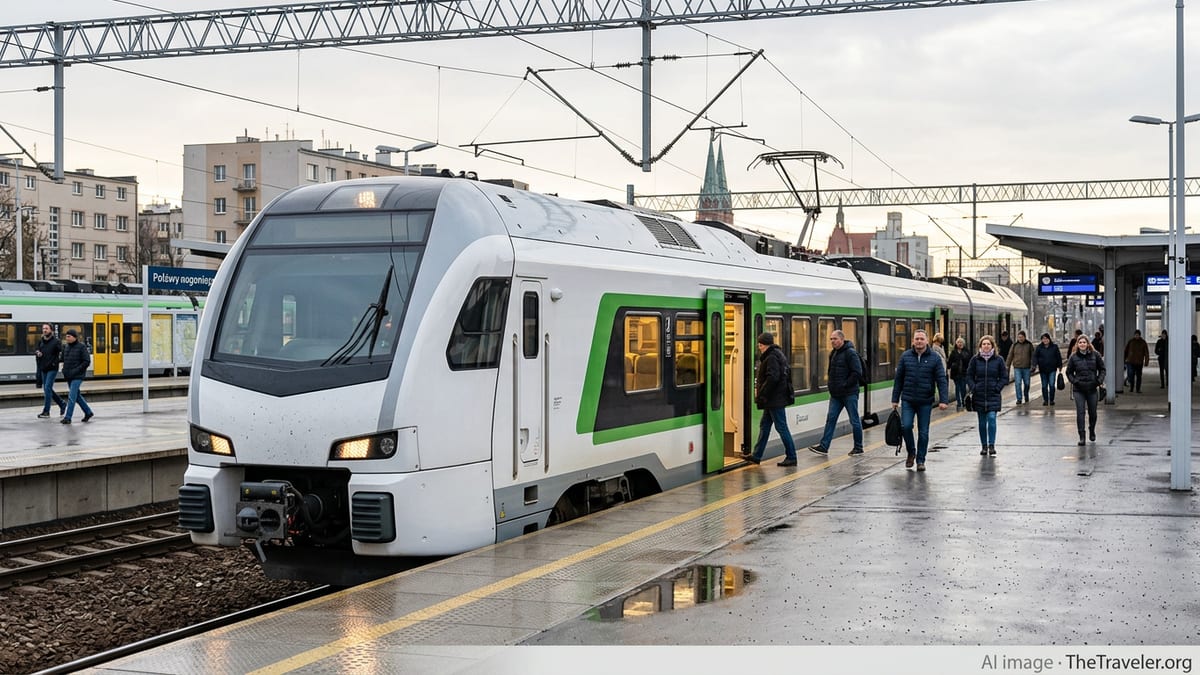
New FLIRT Trains Strengthen Poland’s Regional Rail Modernisation
Publicly available information on recent Stadler contracts in Poland shows a rapid acceleration in the deployment of FLIRT trains for regional operators, with new vehicles earmarked for key voivodeships such as Masovia and other fast-growing regions. Although the latest framework agreements are formally tied to specific operators, the overall expansion of FLIRT production capacity and deliveries is expected to benefit interconnected regional networks, including routes serving Greater Poland.
Reports on Stadler’s long-running cooperation with Polish regional rail companies indicate that more than 200 FLIRT units are already operating in the country, providing a standardized, modern platform for suburban and regional services. The growing pool of compatible rolling stock improves the ability of authorities to plan through services, share technical know-how and benchmark performance across regions like Greater Poland, Masovia and Silesia.
Industry coverage highlights that these new orders build on nearly two decades of FLIRT operations in Poland, during which early-generation units have remained in front-line service. Their proven reliability appears to be a key factor in the decision to further expand the fleet, enabling regional planners to prioritize timetable upgrades and service extensions with a familiar train platform.
For passengers in Greater Poland, this broader national investment translates into a more consistent travel experience: recognizable trains, modern interiors and harmonized accessibility features, even when crossing borders between voivodeships or changing between regional and long-distance services.
Passenger Comfort, Accessibility and Onboard Experience
Technical documentation and railway-sector reporting on the latest FLIRT generations in Poland emphasize a strong focus on passenger comfort, with bright, air-conditioned interiors, wide doors and open gangways between cars. For daily commuters in Greater Poland, these design choices are expected to reduce crowding at peak times and shorten dwell times at busy stations.
The trains are designed with low-floor entrances and level boarding at compatible platforms, supporting easier access for passengers with reduced mobility, parents with strollers and cyclists. Information from recent Polish FLIRT procurements shows that dedicated multi-purpose spaces, wheelchair areas and accessible toilets have become standard features, reflecting evolving regulatory and social expectations around inclusive transport.
Electronic passenger information systems, interior CCTV and energy-efficient LED lighting are also characteristic of the latest FLIRT fleets ordered for Polish regions. These features contribute to a perception of safety and clarity on board, which can be particularly important for visitors and occasional travelers navigating Greater Poland’s rail network for the first time.
While individual interior layouts vary between operators, the underlying FLIRT platform allows regional authorities to specify seating, luggage space and bicycle capacity in line with local travel patterns. For Greater Poland, where regional trains often serve both daily commuting and weekend leisure traffic, this flexibility can support a more balanced and seasonally adaptive interior configuration.
Faster, More Efficient Regional Services
Technical data published for FLIRT units in Poland indicates that these trains combine relatively high maximum speeds, often up to 160 kilometers per hour on suitable lines, with strong acceleration. In practice, this makes them well suited to regional routes that blend short station spacing with longer rural stretches, a pattern seen on many corridors serving Greater Poland’s medium-sized cities and towns.
Improved acceleration and braking performance can reduce journey times without major changes to existing infrastructure, provided that signalling and track conditions permit. Rail sector analysis of FLIRT deployments in Central Europe notes that timetable planners frequently translate these performance gains into denser service patterns, allowing more trains to operate over a given route while keeping travel times competitive with road transport.
The operational efficiency of modern electric multiple units also supports better punctuality. Distributed traction reduces the impact of single-point failures, and modern diagnostic systems make it easier for maintenance teams to identify issues before they disrupt service. As Greater Poland’s network integrates more FLIRT-style trains, passengers are likely to experience a more stable and predictable timetable, especially on busy commuter axes.
For regional authorities, the use of a common train family across multiple operators can simplify driver training, depot procedures and spare-parts logistics. This, in turn, can lower lifecycle costs and free up budget for network improvements such as station upgrades, accessibility work and additional services.
Environmental Benefits and Alignment with EU Policy
European transport policy has increasingly encouraged member states and regions to shift passenger traffic from private cars to rail and other low-emission modes. The roll-out of modern FLIRT electric trains in Poland aligns closely with these objectives by offering a more attractive alternative to driving, particularly for medium-distance regional trips in and around Greater Poland.
Electric multiple units generate no exhaust emissions at the point of use, and their regenerative braking systems can return energy to the grid or to onboard systems. Industry analyses of FLIRT operations in Europe describe them as significantly more energy-efficient than older locomotive-hauled sets, especially on routes with frequent stops where acceleration and braking cycles are intensive.
Greater Poland’s participation in this wider decarbonization trend positions the region to benefit from European funding mechanisms tied to sustainable mobility and climate goals. As more FLIRT units enter service on Polish networks, there is potential for coordinated marketing and ticketing campaigns that highlight both the comfort and environmental advantages of regional rail travel.
These developments may be particularly relevant to domestic tourism within Poland, where travelers increasingly weigh environmental impact alongside price and journey time. A modern, visibly high-quality train fleet can help reposition regional rail in Greater Poland as a first-choice mode for weekend trips, business travel and access to cultural and natural attractions.
What the Upgrade Means for Travelers to Greater Poland
For visitors arriving from other parts of Poland or neighboring countries, the spread of Stadler FLIRT trains across regional routes creates a more uniform and modern first impression of rail travel. Travelers heading to Greater Poland’s main hubs, such as Poznań and surrounding towns, are increasingly likely to encounter contemporary train interiors, clear passenger information and reliable connections that link seamlessly with long-distance services.
Improved comfort and accessibility can make it easier to plan multi-stop itineraries that combine city breaks with excursions to smaller historic towns, lakes or countryside destinations. With more space for luggage and bicycles on many FLIRT-equipped services, regional rail becomes a practical option for travelers carrying outdoor gear or touring by bike.
As operators continue to take delivery of new units and integrate them into their timetables, published coverage suggests that further service increases and route enhancements are likely over the coming years. For Greater Poland, this could mean more frequent trains on key regional corridors, better evening and weekend connections and smoother transfers at interchange stations.
For TheTraveler.org readers planning trips in and around Greater Poland, monitoring regional rail updates and new-train introductions can help identify routes where the latest Stadler FLIRT units are already in operation. Choosing these services offers not only a comfortable journey but also a way to support the region’s broader shift toward cleaner and more efficient public transport.