

More news on this day
As the regional conflict centered on Iran disrupts air corridors across the Gulf, Greece has mounted a rare, pet-inclusive airlift from the United Arab Emirates to Athens, with Aegean Airlines operating special evacuation flights that prioritize keeping families and their animals together.
Get the latest news straight to your inbox!
A Historic Airlift Linking Greece, the UAE and a Region in Turmoil
The latest repatriation flights between Abu Dhabi and Athens are unfolding against the backdrop of the 2026 Iran war, which has led to missile and drone attacks, temporary airspace closures and widespread disruption of civil aviation across the Middle East. Flight cancellations and diversions have stranded large numbers of foreign nationals in major hubs such as Dubai and Abu Dhabi, intensifying demand for government-organized evacuation options.
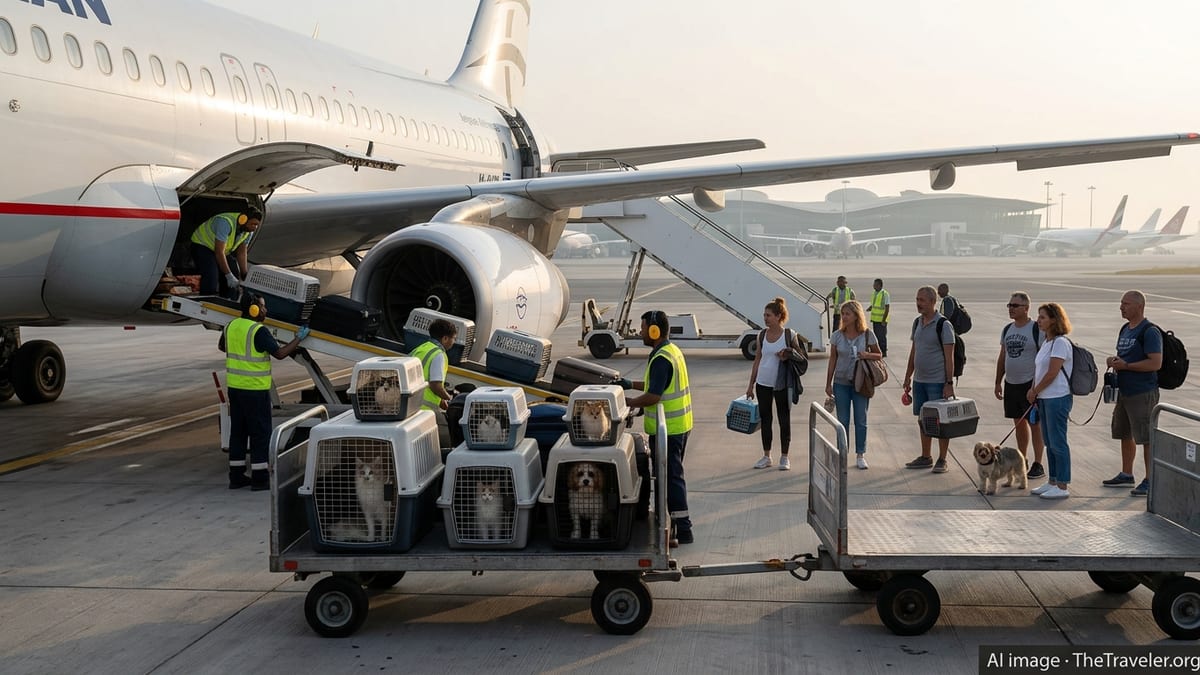
Within this volatile environment, Greece has organized special flights from the United Arab Emirates to bring home its citizens and permanent residents. Recent coverage of one operation described an Aegean Airlines service from Abu Dhabi to Athens carrying more than 100 passengers alongside dozens of cats and dogs, underscoring how the crisis has affected not only people but also their companion animals.
The inclusion of pets on these services marks a notable shift from earlier evacuation efforts in other regional conflicts, when animal transport was often restricted or left to individual arrangements. In the current situation, public information indicates that Greek authorities coordinated with Aegean Airlines to dedicate cargo and cabin space, as well as on-the-ground handling, specifically for pets traveling with their owners from the UAE.
The flights are part of a broader pattern of emergency movements across the Middle East since late February 2026, as multiple governments seek to retrieve citizens from areas affected by the expanding confrontation between Iran, the United States and regional allies. For Greek nationals living or working in the Gulf, the Abu Dhabi to Athens corridor has become a lifeline.
Aegean Airlines at the Center of Greece’s Repatriation Strategy
Aegean Airlines, Greece’s largest carrier, has been placed at the center of this airlift effort. Publicly available information about the most recent evacuation highlights the use of a dedicated Aegean aircraft configured to carry both passengers and pets from Abu Dhabi to Athens, turning a routine regional route into a humanitarian-style operation.
The airline already maintains an established presence in the wider Gulf region, with scheduled services linking Athens to key Middle Eastern gateways. This existing network, combined with operational flexibility and experience in charter and special missions, has enabled Aegean to step in quickly as commercial schedules across the Gulf are repeatedly reshaped by security concerns and airspace restrictions.
Reports indicate that coordination for the repatriation flights extends well beyond simply assigning an aircraft. Ground handling arrangements at Abu Dhabi have included designated areas for pet check-in, veterinary documentation review and the loading of approved travel crates. On board, crew members have been tasked with monitoring cabin pets and providing additional guidance to owners about keeping animals calm during extended periods of turbulence and occasional route changes.
On arrival in Athens, the airline’s role continues as airport teams assist with the staged disembarkation of pets and passengers, the delivery of crates to baggage areas and the handover of animals for any further veterinary checks. These procedures, normally seen on a far smaller scale in everyday pet travel, have been expanded to accommodate dozens of animals on a single flight.
Why Pets Became Central to the UAE–Athens Evacuation Story
The decision to explicitly accommodate pets on the Abu Dhabi to Athens repatriation flights reflects the specific nature of this crisis in the United Arab Emirates. Since Iranian strikes and related security incidents began to affect the country, international media and animal welfare groups have documented a surge in abandoned pets in cities such as Dubai, where some expatriates reportedly left animals behind in their rush to depart.
In this context, Greece’s approach of enabling citizens to evacuate with their animals has taken on broader symbolic weight. Publicly available coverage of the Athens arrivals has focused on scenes of dogs and cats being released from travel crates in the terminal, with owners describing them not as baggage but as core members of the family. These images stand in contrast to reports from elsewhere in the region, where overwhelmed shelters and veterinary clinics have struggled with a rising number of ownerless animals.
The UAE also presents unique logistical challenges for pet evacuation. Many long-haul airlines that typically accept pets in the cabin or cargo hold have reduced or suspended services during the conflict period, and remaining flights have been subject to last-minute schedule changes and route diversions. Prospective travelers have shared accounts of struggling to find any carrier willing to transport animals out of the country, particularly on routes connecting through other conflict-affected hubs.
For Greek residents of the UAE, the Aegean flights represent a rare opportunity to leave without making the difficult choice between personal safety and animal welfare. The strong response to the initial Abu Dhabi to Athens operation suggests that demand for additional pet-inclusive flights is likely to remain high as long as the conflict continues to disrupt normal commercial options.
How the Repatriation Flights Work: From Registration to Landing in Athens
Repatriation flights for crisis zones typically begin with a registration process, and public information about Greece’s current efforts indicates a similar pattern for citizens in the UAE. Nationals and permanent residents are asked to provide personal details, passport information and contact numbers, along with declaring whether they are traveling with pets and, if so, how many animals and of which species and size.
This data allows planners to allocate limited space for pet carriers in both cabin and cargo holds, complying with international aviation rules on live animal transport. Travelers are generally required to present up-to-date vaccination records, microchip documentation where applicable and any export permits mandated by Emirati regulations, alongside meeting European Union and Greek entry requirements for companion animals.
On the day of departure, passengers and pets are requested to arrive at the airport earlier than for a normal commercial flight to accommodate additional inspections and paperwork. Crates must meet airline and International Air Transport Association standards, providing pets enough room to stand and turn while being secure enough to withstand turbulence and repeated handling.
Once aboard the Aegean aircraft, seating plans are adjusted so that passengers traveling with cabin pets are grouped where possible, helping crew manage the unique needs of the flight. Some repatriation services may route around high-risk airspace, slightly extending flight time but reducing exposure to potential missile activity. After landing in Athens, pets and owners clear border formalities, including any spot veterinary checks, before continuing on to destinations across Greece or elsewhere in Europe.
What Travelers Should Know if Further Flights Are Announced
For Greek citizens and residents still in the UAE, the evolving security situation means that new repatriation flights may be announced with limited notice. Travelers considering these services are advised by publicly available guidance to ensure that travel documents, including passports and residence permits, remain valid and accessible, and that pet documentation is prepared in advance.
Those seeking to leave with animals should be prepared for strict limits on the number and size of pets per household, reflecting both aircraft capacity and welfare considerations. In many cases, priority is likely to go to families traveling with small to medium-sized companion animals that can be safely accommodated in line with existing airline protocols.
Given the fluid nature of airspace restrictions during the current conflict, travelers may also face last-minute changes to departure times or even departure airports within the UAE. Publicly available travel advisories encourage flexibility, readiness to move quickly when a seat is confirmed and ongoing monitoring of official announcements and airline notices for operational updates.
For now, the Aegean-operated Abu Dhabi to Athens airlift stands out as one of the clearest examples of a European country structuring emergency flights specifically to keep people and their pets together. As the crisis continues to reshape travel across the Gulf, the operation is likely to serve as a reference point for future repatriation efforts that seek to balance security, logistics and the emotional realities of modern family life.