

Flying into Greece can feel surprisingly simple once you understand how its airport network works. From major international hubs that handle millions of passengers each year to tiny island runways where planes touch down a few steps from the sea, the country’s aviation system is built around both tourism and local life. This guide explains how Greece’s airports are organized, what to expect at the main gateways, and how to navigate the smaller island airports that unlock the country’s famous archipelagos.
The Greek Airport Network at a Glance
Greece has a dense network of commercial airports spread across the mainland and islands, reflecting its geography and tourism focus. The system is anchored by Athens International Airport, the country’s primary hub and one of the busiest airports in Europe by connectivity and passenger numbers. Around it sit several important regional international airports in cities like Thessaloniki and Heraklion, as well as dozens of smaller island airports that mostly serve seasonal holiday traffic.
Operational responsibility is split between state authorities and private operators. Athens International Airport is run under a concession with a dedicated airport company. Fourteen of the busiest regional airports, including major island gateways such as Rhodes, Santorini and Mykonos, are managed by Fraport Greece under a long term concession focused on upgrades and capacity improvements. The remaining airports, many of them on smaller islands, are operated directly by the Hellenic Civil Aviation Authority.
For travelers, this structure matters less than understanding how flights typically flow. Most long haul services from outside Europe land in Athens, with some seasonal direct links from North America and the Middle East to a few key islands. Within Europe and particularly within the Schengen area, airlines operate a web of direct flights to popular islands in summer, while domestic services from Athens, Thessaloniki and Heraklion knit together the rest of the country year round.
The result is a two speed system. From April to October, island airports can feel busy and well connected, with frequent charter and low cost flights from across Europe. In winter, many of those same airports shrink to a handful of weekly domestic services, or close temporarily for runway and terminal upgrades. Planning around this seasonality is essential when designing your Greek itinerary.
Major International Gateways: Athens and Thessaloniki
Athens International Airport, commonly known as Eleftherios Venizelos, is Greece’s principal gateway and a major regional hub. Located about 20 kilometers east of central Athens, it handles the majority of long haul flights into the country and serves as the base for Aegean Airlines and other Greek carriers. In recent years it has climbed into the top tier of European airports for connectivity, with a broad mix of full service and low cost airlines and an expanding network of routes.
The airport has a main terminal and a satellite terminal connected via an underground link. Facilities are modern, with clear bilingual signage, efficient security lanes relative to regional standards, and a wide range of food, retail and lounge options. Recent and ongoing expansion projects focus on increasing terminal space, remote stands and parking capacity, reflecting sustained growth in passenger numbers. Travelers connecting through Athens generally find the airport straightforward to navigate, with domestic and Schengen departures grouped, and non Schengen gates clearly separated with dedicated passport control points.
Thessaloniki Airport in northern Greece is the country’s second major international gateway. It serves the city of Thessaloniki and the wider region of Macedonia, and has become an important alternative entry point for travelers heading to Halkidiki’s beaches or the northern mainland. The airport has been undergoing modernization and capacity upgrades in recent years, improving its terminal layout, baggage handling and apron operations. It handles a mix of year round European services and seasonal charter flights, plus domestic links to Athens and key islands.
For many travelers, the choice between flying into Athens or Thessaloniki depends on the broader itinerary. Athens offers the most connections, especially if you are combining mainland sightseeing with island hopping. Thessaloniki works well if you plan to explore northern Greece or cross by land into neighboring countries. Both airports are integrated with local transport systems, offering buses and taxis into the city, and in Athens’ case a dedicated suburban rail and metro connection.
Key Island Hubs: Crete, Rhodes and the Cyclades
Beyond the mainland, several island airports operate as regional hubs in their own right, handling large numbers of international passengers in summer. On Crete, Heraklion International Airport is the primary gateway, serving the north coast resort belt and major archaeological sites. It is one of Greece’s busiest airports by passenger volume, with heavy seasonal traffic from across Europe. Facilities can feel stretched at peak times, but ongoing improvements and the development of a new airport for the region aim to relieve pressure in the coming years.
Rhodes International Airport on the Dodecanese island of Rhodes is another significant hub. It handles a combination of scheduled services and sizable charter operations catering to package holidays. The airport’s single main runway accommodates a steady stream of medium haul jets in summer, and terminal facilities have gradually been upgraded under private management. Passengers should still anticipate queues at peak arrival and departure banks, particularly on weekends when charter operations are at their busiest.
In the Cyclades, Santorini and Mykonos airports punch far above their physical size. Both sit on small islands with limited room for expansion, yet each handles well over a million passengers per year. A mix of full service and low cost carriers operate direct summer flights from European cities, while domestic links from Athens and Thessaloniki provide year round access. Runway and apron limitations can lead to tight scheduling and occasional delays, especially when strong winds or low visibility affect operations.
These island hubs often act as transfer points for nearby smaller islands lacking their own airports, or served only by very small aircraft. Ferries and local boats connect travelers onward, so it is common to fly into a hub such as Santorini or Rhodes and continue by sea. When planning such combinations, build in generous connecting time, as island weather can disrupt both flights and ferries, and ticketing is rarely on a single, protected itinerary.
Smaller Island Airports: What to Expect
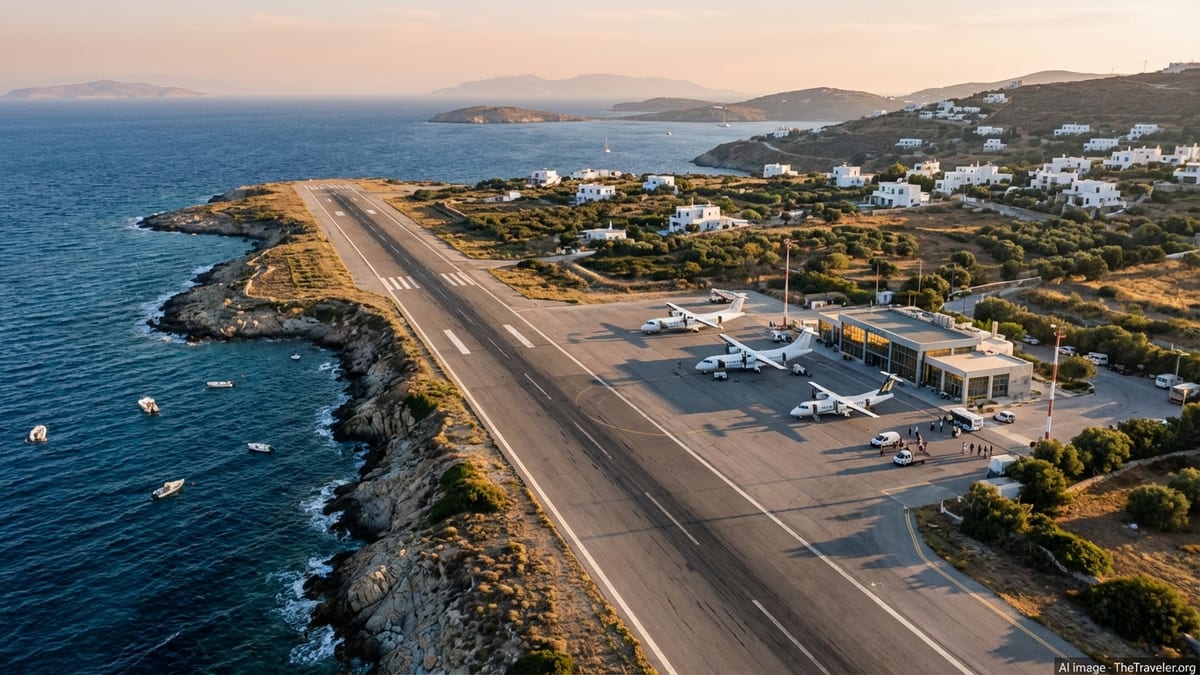
Beyond the well known hubs lies a web of small island airports that give Greece’s aviation network its distinctive character. Many of these facilities consist of a single short runway and a compact terminal building, often just steps from the apron. They serve islands such as Paros, Naxos, Milos, Karpathos, Astypalaia and many others, typically with turboprop aircraft operated by domestic or regional airlines. During the high season they can be busy, but the experience remains informal compared with larger international gateways.
Infrastructure at these smaller airports is improving but remains basic in places. Expect limited food and retail options, minimal or no airbridges, and boarding directly from the apron. Security screening and check in are usually efficient simply because of the low passenger throughput, yet queues can form when several flights depart back to back. Waiting areas can be crowded in midsummer, and seating may be limited, so arriving earlier than the minimum recommended time is wise.
Runway length is a key constraint at many island airports. Several have short runways that restrict operations to turboprop aircraft and occasionally lead to weight limitations in hot weather or strong winds. This can result in last minute baggage offloads or minor delays when conditions are marginal. While safety standards are aligned with European regulations, travelers should be prepared for a more weather sensitive operation than they might encounter at large continental airports.
Ground transport is often straightforward but simple. Many small island airports are located close to the main town or port, with taxis and local buses waiting at arrivals during flight times. On some islands, prearranged hotel transfers or rental cars are the most reliable option, especially outside peak season. Facilities for people with reduced mobility are improving, although advance notification to the airline and airport is still recommended to ensure assistance is available on arrival.
Domestic vs International Flights and Schengen Rules
Understanding how domestic and international flights are organized in Greece helps when planning itineraries and connections. Domestic flights operate entirely within the country, linking Athens, Thessaloniki and Heraklion with regional mainland cities and islands. These flights generally depart from dedicated domestic or Schengen areas of airport terminals, with security screening but no passport control for passengers traveling on national or Schengen identification documents.
International flights break into two categories. Schengen flights connect Greece with other countries that participate in the Schengen Area. For these, passport checks usually take place only at the point where you first enter or finally leave Schengen, so flights between Greece and another Schengen country function similarly to domestic services in terms of airport flow. Non Schengen flights, such as those to the United Kingdom, North America, parts of the Middle East or some Balkan states, involve full passport control procedures at departure and arrival.
Greece is in the process of implementing the European Union’s new Entry Exit System for non EU nationals entering and leaving the Schengen Zone. This system will gradually replace manual passport stamps with biometric checks and digital registration. Travelers from outside the EU should anticipate slightly longer border processing times during the rollout, especially at busy airports like Athens where large numbers of non European visitors arrive in peak season. Arriving with completed documentation and being prepared for biometric recording can help keep queues moving.
When connecting between domestic and international flights, pay attention to whether you are moving between Schengen and non Schengen zones. At Athens and Thessaloniki this typically means an extra passport control step between arrival and departure gates. Minimum connection times set by airlines take this into account, but independent travelers booking separate tickets should allow additional buffer time, particularly during summer weekends when airports are busiest.
Seasonality, Runway Works and Disruptions
Seasonality is the defining feature of air travel in Greece. From late spring through early autumn, demand rises sharply as holidaymakers flock to the islands. Airlines respond by adding frequencies, operating larger aircraft and launching new seasonal routes. Airports that may feel sleepy in March or November become crowded in July and August, with peak travel days often coinciding with school holidays in key source markets such as Germany, the United Kingdom and northern Europe.
In the quieter winter months, the picture reverses. Many island airports see scheduled traffic cut back to a handful of weekly domestic flights, sometimes operated only on specific days. This period is also when operators schedule runway resurfacing and terminal upgrades, since the impact on tourism is lower. In recent years, coordinated programs of works have led to temporary runway closures at several regional airports, including popular islands such as Santorini, Mykonos, Rhodes, Corfu and Zakynthos.
These closures can range from complete shutdowns for a few weeks to partial closures on certain days of the week while work progresses. Airlines typically adjust schedules or reroute flights to nearby airports, but travelers already holding tickets may face time changes, rebookings or in some cases cancellations. Because work plans can be confirmed months in advance, checking the latest notices from your airline and monitoring airport announcements is prudent if you plan off season journeys to the islands.
Weather related disruption is another factor to consider. Strong Meltemi winds in the Aegean during summer, occasional winter storms and low visibility can all affect operations at smaller island airports with short runways and limited navigation aids. While pilots and ground teams are accustomed to these conditions, it is wise to avoid planning tight same day connections between islands and international long haul flights, especially on separate tickets that do not include protection for missed connections.
Practical Tips for Connecting Through Greek Airports
For many visitors, Greece’s airports are part of a larger journey involving ferries, buses and rental cars. A few simple strategies can make those movements smoother. If you are flying long haul into Athens and continuing directly to an island, consider building in at least a few hours between flights to account for possible delays at passport control, baggage reclaim and security. Booking through on a single ticket with the same or partner airlines often means your connection is protected and your luggage checked to your final destination.
When traveling between islands, weigh the pros and cons of air versus sea. Flights can be quicker and more comfortable during rough weather, but seat availability is limited, and fares may be higher at short notice. Ferries are more frequent on popular routes and can carry more passengers, yet are also more vulnerable to cancellations when winds rise. Combining a flight to a regional hub like Heraklion, Rhodes or Santorini with a ferry onward offers flexibility, provided you leave adequate time between modes.
At smaller airports, check in and security procedures are often brisk, but facilities such as left luggage, lounges or extensive shopping are rare. Arriving 90 minutes before a domestic departure and at least two hours before an international flight is generally sufficient, but in peak summer months many travelers prefer to add extra margin to avoid stress. Prebooking airport transfers or checking local bus timetables in advance can also prevent last minute scrambles on arrival.
Finally, keep in mind that Greek airports are modernizing rapidly. Passenger numbers have been rising steadily, and both Athens and the regional airports are investing in expanded terminals, better runways and enhanced passenger services. While this sometimes means short term inconvenience from construction works, the overall trend is toward smoother journeys, improved comfort and more flight options to both major hubs and smaller islands.
The Takeaway
Greece’s aviation network combines a major international hub in Athens with a constellation of regional and island airports that mirror the country’s geography. For travelers, this can be a significant advantage, offering the chance to fly close to final destinations and reduce overland transfers. It also requires a bit of planning, especially when moving between large hubs and small island airstrips where weather, runway works and seasonal schedules all play a role.
By understanding how domestic and international flights are organized, being aware of Schengen rules and new border control systems, and respecting the realities of seasonal demand, you can design connections that are realistic rather than optimistic. Allowing generous buffers, checking for planned airport works in the quieter months and mixing flights with ferry travel where appropriate all contribute to a smoother Greek journey.
Whether you first touch down at a sprawling international terminal outside Athens or step off a turboprop onto a sunbaked island runway, Greece’s airports are the front door to some of Europe’s most compelling landscapes and historic sites. With a little preparation, they become not a source of stress, but an efficient and even memorable part of your trip.
FAQ
Q1. Which airport should I fly into for my first trip to Greece
Athens International Airport is usually the best entry point, especially if you are coming from outside Europe or plan to combine mainland sightseeing with visits to multiple islands.
Q2. Can I fly directly to the Greek islands from outside Europe
Direct long haul flights to islands are limited and mostly seasonal. Most travelers connect through a European hub or Athens before taking a shorter flight to major islands such as Crete, Rhodes, Santorini or Mykonos.
Q3. How early should I arrive at Greek airports before my flight
For domestic flights, arriving around 90 minutes before departure is usually enough. For international flights, especially in summer, aim for at least two hours and allow extra time at Athens.
Q4. Are Greek island airports safe given their short runways
Yes. Greek airports operate under European safety regulations. Short runways do mean more weather sensitivity and occasional weight limits, but safety standards are strict.
Q5. What happens if my island airport is closed for runway works
Airlines typically reroute, reschedule or cancel affected flights and offer rebooking options. You may need to fly to a nearby airport and continue by ferry, so staying flexible helps.
Q6. Do I need to go through passport control when flying from Athens to another Schengen country
Passport checks usually happen when you first enter or finally exit the Schengen Area. Flights between Greece and another Schengen country are treated much like domestic flights once you have cleared entry formalities.
Q7. Is it better to book island connections on one ticket or separately
A single ticket generally offers more protection, as airlines will take responsibility for missed connections and through check your bags. Separate tickets give flexibility but carry more risk if delays occur.
Q8. How reliable are flights to smaller islands in bad weather
Operations are generally reliable, but strong winds or storms can cause delays or cancellations, especially at airports with short runways. Build buffer time into your schedule and avoid tight same day long haul connections.
Q9. Are there public transport options from Greek airports to town
Major airports like Athens and Thessaloniki have buses and, in Athens, a metro and suburban rail link. Many island airports have local buses and taxis timed to flights, though options can be limited late at night or in low season.
Q10. Can I rely on English at Greek airports
Yes. English is widely spoken at Greek airports, and signage is generally in both Greek and English. Staff at check in, security and information desks are accustomed to assisting international travelers.