

More news on this day
As US and Israeli strikes on Iran ignite a fast‑escalating regional war, Greece and Cyprus have been thrust from quiet Mediterranean gateways into Europe’s exposed frontline, scrambling to protect air bases, sea lanes and stranded travelers as the conflict spills west from the Middle East.
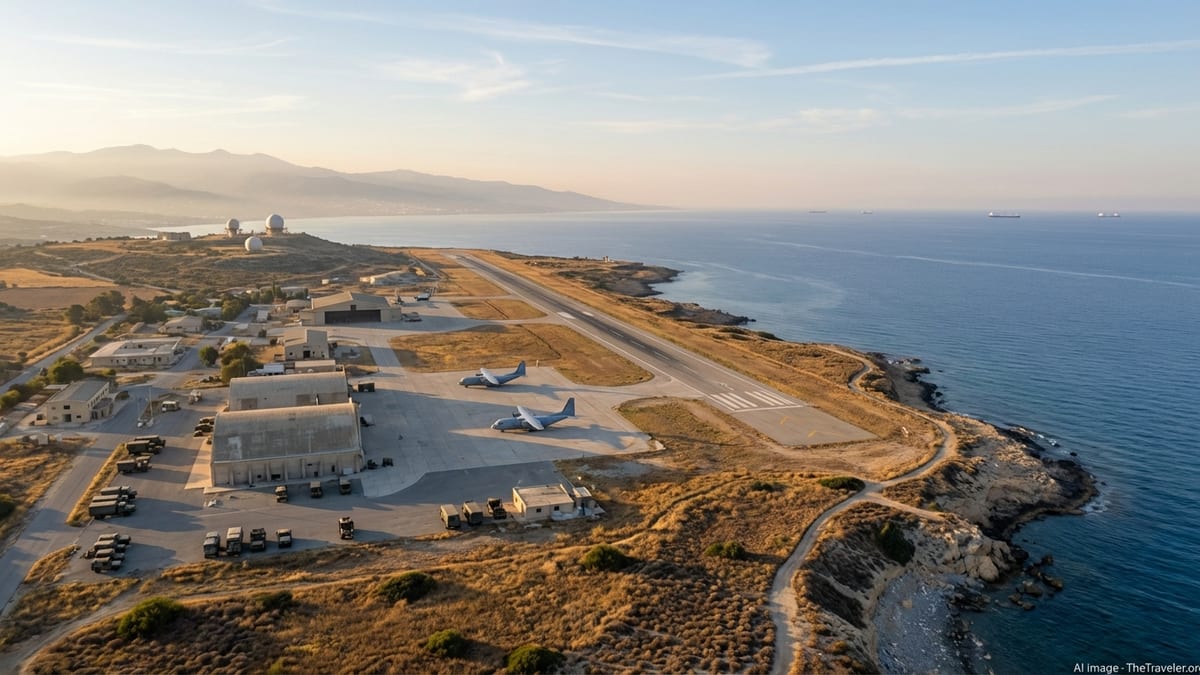
Cyprus Rocked by Drone Strike on British Base
Cyprus awoke to the reality of nearby war after a suspected Iranian-designed drone slammed into the runway of Britain’s RAF Akrotiri overnight, in what officials say is the first external attack on the island since Turkey’s 1974 invasion. The strike, followed by the interception of two additional drones, caused minor damage but triggered evacuations of military families and residents near the sprawling base on the island’s southern coast.
The British government insists it is not at war, even as Akrotiri again becomes a pivotal launchpad for operations across the Middle East. London has authorized the United States to use the base for limited strikes on Iranian missile infrastructure, underscoring the island’s role as a critical Western platform in a conflict that has quickly spread from the Strait of Hormuz to Lebanon and the Gulf.
Cypriot President Nikos Christodoulides moved swiftly to stress that Cyprus itself is not a target, while simultaneously condemning attacks that have drawn the island into the blast radius of a confrontation it did not choose. Officials privately concede, however, that the presence of major foreign bases makes the small EU member inescapably exposed as the war’s geography widens.
Humanitarian Hub Turns Evacuation Lifeline
Even before the drones reached Akrotiri, Nicosia had activated its national ESTIA plan, a standing framework that transforms Cyprus into a reception and transit hub for civilians fleeing Middle East crises. With commercial flights across the region suspended or heavily disrupted and airspace closures multiplying, Cypriot diplomats say they are preparing for a surge of evacuees from Gulf states and conflict zones seeking a safe European gateway.
Foreign Minister Constantinos Kombos told European counterparts at an emergency meeting that the island is ready once more to function as a humanitarian bridge, providing temporary shelter, medical screening and onward passage for EU and third‑country nationals. Officials are coordinating closely with airlines, shipowners and neighboring states to re-route both air and sea traffic through Cypriot facilities where possible.
The sudden shift reinforces Cyprus’s paradoxical status: a frontline state that is also attempting to brand itself as a neutral corridor for humanitarian operations. Balancing those dual roles is becoming increasingly complex as Western militaries operate from its territory while Iranian officials and allied militias rail against foreign bases across the region.
Greece Activates Crisis Unit as Eastern Mediterranean Tensions Spike
Across the water in Athens, the Greek government has moved into crisis-management mode as the war ripples along vital trade and energy corridors that connect the Middle East to Europe. The Foreign Ministry has activated its Crisis Management Unit, placing embassies in the wider region on high alert and preparing coordinated repatriation efforts for Greek nationals if conditions deteriorate further.
Officials say their immediate priorities are consular support and the safety of citizens residing or traveling in Iran, Israel, Lebanon and the Gulf. Greece has issued advisories urging caution and close contact with diplomatic missions, as aviation disruptions and security incidents multiply from the Red Sea to the Arabian Gulf.
At the same time, Athens is watching the maritime fallout with mounting concern. The effective shutdown of shipping through the Strait of Hormuz and attacks on energy infrastructure threaten to reroute tanker traffic and strain Europe’s already fragile energy security. Greek authorities have underscored the need to safeguard freedom of navigation, particularly given the country’s dominant role in global shipping and its participation in EU naval missions protecting vessels in the Red Sea and adjacent waters.
Naval Deployments and the New Eastern Mediterranean Front
The widening conflict is accelerating a strategic shift that has been quietly under way for years: the transformation of the Eastern Mediterranean into a de facto extension of the Middle East security theater. EU naval mission Aspides, headquartered in Greece and tasked with protecting merchant vessels from missile and drone threats in the Red Sea and nearby sea lanes, has moved to a heightened state of readiness as Iranian-aligned forces test Western red lines at sea.
Greek naval assets and air force units are now positioned as both shield and signal, aiming to deter attacks on commercial shipping and European infrastructure. Defense planners in Athens say the country’s ports, air bases and islands are increasingly central to any Western effort to contain the conflict’s maritime fallout while keeping vital trade arteries open.
That role carries risks. Analysts warn that as Greece becomes more embedded in US and EU security architecture, it could be perceived in Tehran and among its regional proxies as part of an expanded hostile perimeter, potentially inviting asymmetric pressure in cyberspace or through threats to shipping interests linked to Greek companies.
Allied Diplomacy Races to Contain Escalation
Diplomacy is racing to catch up with the rapidly changing realities on the ground and at sea. In recent days Greek Foreign Minister Giorgos Gerapetritis has deepened consultations with Washington, securing plans for a high‑level strategic dialogue in Athens focused in large part on energy routes, maritime security and the stability of the Eastern Mediterranean as a staging area for relief and deterrence operations.
Cyprus, for its part, has used emergency EU meetings to press for greater coordination on evacuations, airspace management and crisis communications, arguing that the bloc must treat the Eastern Mediterranean as a single, integrated theater in the face of long‑range drone and missile threats. Nicosia is also quietly pushing for clearer rules governing the use of foreign bases on its soil, keen to avoid being seen domestically as an unwitting launchpad for offensive missions.
European diplomats acknowledge that Greece and Cyprus now sit at the hinge point between a volatile Middle East and a nervous continent wary of being dragged into another protracted war. Whether the current crisis cements their roles as stabilizing hubs or exposes them to greater insecurity will depend heavily on how quickly the conflict’s main protagonists choose to cap escalation that has already reached far beyond the traditional front lines.