

More news on this day
Greece has secured a fifth consecutive title as the best tourism destination for Americans, cementing its position at the top of US travelers’ wish lists and reshaping how holidays to the country are planned, priced and experienced.
Get the latest news straight to your inbox!
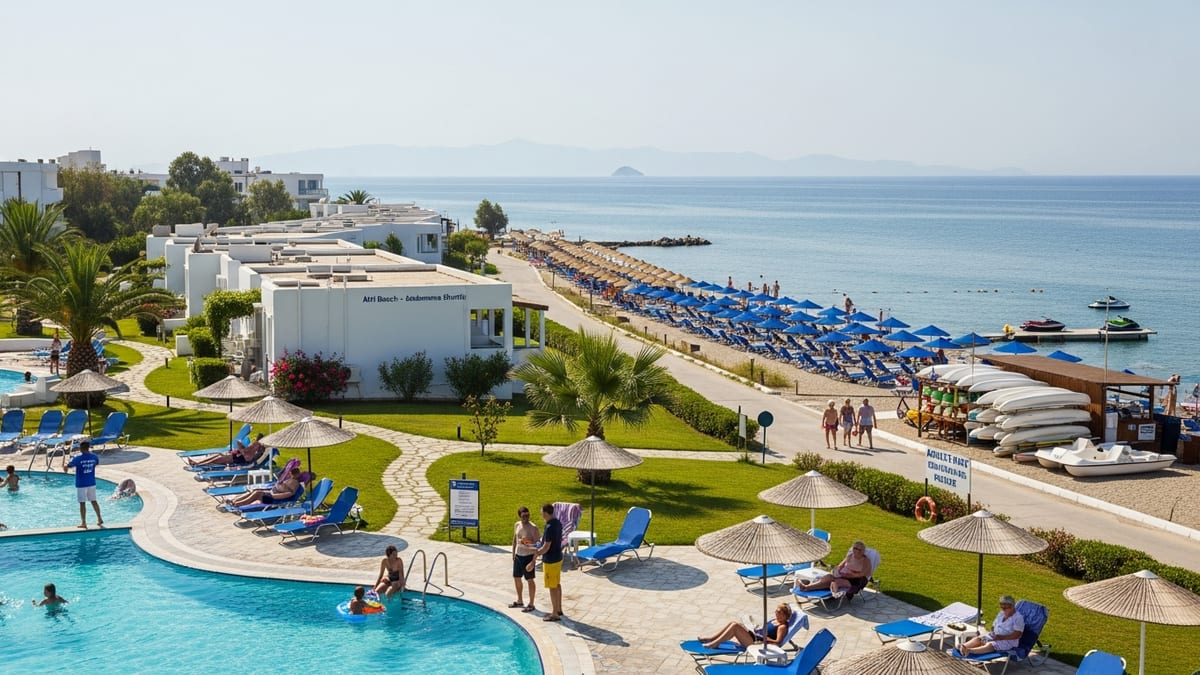
Five-Year Streak Confirms Greece’s Pull on US Travelers
Recent award results from a leading US travel readership survey show Greece taking first place in the “Best Tourism Destination” category for the fifth year in a row, ahead of other European favorites such as Ireland and Spain. According to published coverage of the survey, the ranking is based on reader voting, highlighting a sustained shift in US traveler preferences rather than a one-off spike in interest.
The recognition comes on the heels of record tourism performance. Official data reported in European and Greek media indicate that Greece welcomed more than 36 million international visitors in 2023 and moved on to fresh records in 2024 and 2025, with travel receipts rising to around 23.6 billion euros last year. A disproportionate share of that growth is coming from high-spending long-haul markets, including the United States.
US arrivals alone surpassed 1.5 million in 2024, according to figures cited by Greek economic outlets, with Americans generating well over 1.5 billion euros in revenue. Industry analyses note that US visitors are among the highest spenders per trip, with average outlays significantly above the overall market, which helps explain why US demand has become a strategic focus for Greek tourism planners.
Sentiment tracking studies published in 2025 by tourism research organizations also show American travelers rating their experience in Greece at more than nine out of ten on average, placing the country among the top performers in Europe for visitor satisfaction. That combination of strong demand and high ratings is seen as a key factor behind Greece’s enduring lead in US travel polls.
What the Boom Means for Flights, Fares and Peak Crowds
The five-year streak as top US destination is closely tied to a rapid build-up in air capacity between the two countries. Industry reports indicate that US airlines have expanded direct services from East Coast hubs to Athens to more than one hundred weekly flights at the height of summer, while new routes from the US interior and West Coast are being added for upcoming seasons.
Travel trade publications describe a “historic boom” in non-stop links for summer 2025, with at least twenty additional weekly flights compared with the previous year. Announced plans for 2026 include further service from Dallas Fort Worth to Athens, alongside upgraded aircraft on existing routes from Washington, D.C. and other major cities. For US travelers, this translates into shorter journey times, more options to connect to the islands and, at certain times of year, more competitive pricing.
However, the same capacity surge is contributing to denser crowds in headline destinations. Reports from Greek and international media note that tourism employment reached record highs in 2024, and key island airports such as those in Santorini, Mykonos and Rhodes continue to post strong passenger growth. During July and August, hotel occupancy in these hotspots often approaches saturation, with premium sea-view rooms and boutique stays selling out months in advance.
Fare data compiled by travel agencies show that transatlantic ticket prices into Athens can climb steeply around US holiday weekends and mid-summer, especially in premium cabins that are popular with American leisure travelers. The practical impact of Greece’s five-year winning streak is therefore a widening price gap between high and shoulder seasons, and sharper competition for well-located accommodation in the most photogenic areas.
Shifting Holiday Patterns Toward Shoulder Seasons and New Regions
As demand from the US remains strong, Greek tourism officials and analysts are observing a gradual redistribution of visitor flows across the calendar and the map. Economic reports for 2024 and 2025 highlight notable growth in mainland and off-peak travel, with autumn and spring stays rising faster than traditional summer visits.
New sustainability-focused fees, described in recent tourism statistics briefings, are part of this adjustment. These include higher levies on top-end accommodation and new or proposed charges on cruise passengers, intended to manage pressure on popular islands and historic centers. Analysts suggest that such measures are encouraging some travelers to consider less crowded regions, including the Peloponnese, Epirus and lesser-known Aegean and Ionian islands.
For Americans specifically, destination surveys and travel media reports point to a growing appetite for “second-city” and “second-island” choices. While Santorini and Mykonos remain marquee names in US marketing, visitors are increasingly combining them with slower-paced stops, from Naxos and Paros in the Cyclades to Nafplio and Mani in the Peloponnese. This diversification offers more availability and potentially better value, while still delivering the seascapes and heritage that underpin Greece’s appeal.
The trend also aligns with a broader shift toward more meaningful, community-oriented travel. Articles in specialist outlets note that US travelers are spending more on local food, wine and cultural activities, and are more willing to trade a packed sightseeing schedule for longer stays in a single region. Greece’s mix of small-scale family-run hotels, village-based tourism and outdoor experiences appears well suited to this evolving demand.
Key Practical Updates for US Travelers Planning 2026 Holidays
The sustained popularity of Greece among US tourists overlaps with a changing regulatory landscape for travel to Europe. Public guidance from European institutions and consumer finance publications explains that the European Union’s new Entry/Exit System is being rolled out across Schengen border points, including Greece, from late 2025 into 2026.
For Americans, this means that passport checks at airports and ferry ports will increasingly be handled through automated systems that record biometric data and track days spent in the Schengen area. Advisory notes indicate that the long-standing rule still applies: US citizens can visit Greece and other Schengen countries without a visa for up to 90 days within any 180-day period, provided their passport is valid for at least six months beyond arrival.
A separate scheme, the European Travel Information and Authorization System, is scheduled to start in the final quarter of 2026. Once in effect, US travelers making short stays in Greece will need to obtain an online travel authorization before departure, similar to existing systems used by other regions. Consumer travel reports recommend that holidaymakers monitor official announcements as their trip date approaches and build in extra time for airport formalities while the new border technology settles in.
In the meantime, travel specialists advise booking flights and accommodation earlier than in previous years if visiting in high season, particularly for island-hopping itineraries that rely on limited-capacity ferries and smaller hotels. The combination of Greece’s top ranking among American travelers, strong airline capacity and evolving border procedures makes forward planning more important for anyone hoping to secure peak-summer dates.
How to Take Advantage of Greece’s Moment While Avoiding the Pitfalls
For US holidaymakers, Greece’s five-year winning streak offers both opportunities and challenges. On the positive side, robust demand has attracted more competition among airlines and tour operators, which can create attractive package deals in shoulder months and a wider range of itineraries tailored to American tastes, from wine-focused mainland routes to multi-island sailing trips.
At the same time, the country’s elevated profile means that travelers who wait too long to book may encounter higher prices and fewer options in the most sought-after areas. Industry booking patterns suggest that the best balance between pleasant weather, manageable crowds and reasonable rates is increasingly found in late April to early June and September to mid-October, especially for first-time visitors keen to see classic highlights without peak-season stress.
Travel commentators point out that exploring beyond the most photographed spots is now one of the smartest ways to experience Greece. With reliable domestic flight and ferry networks, Americans can pair a short stay in a marquee destination with time in emerging regions, accessing quieter beaches, local festivals and lower nightly rates. As Greece consolidates its status at the top of US travel rankings, those willing to look one step beyond the obvious are likely to enjoy the richest rewards.