

More news on this day
Greece has become the latest European country to clamp down on short-term holiday rentals, freezing new licenses in saturated districts and aligning itself with a growing bloc of EU states that are curbing platforms such as Airbnb in response to mounting housing crises.
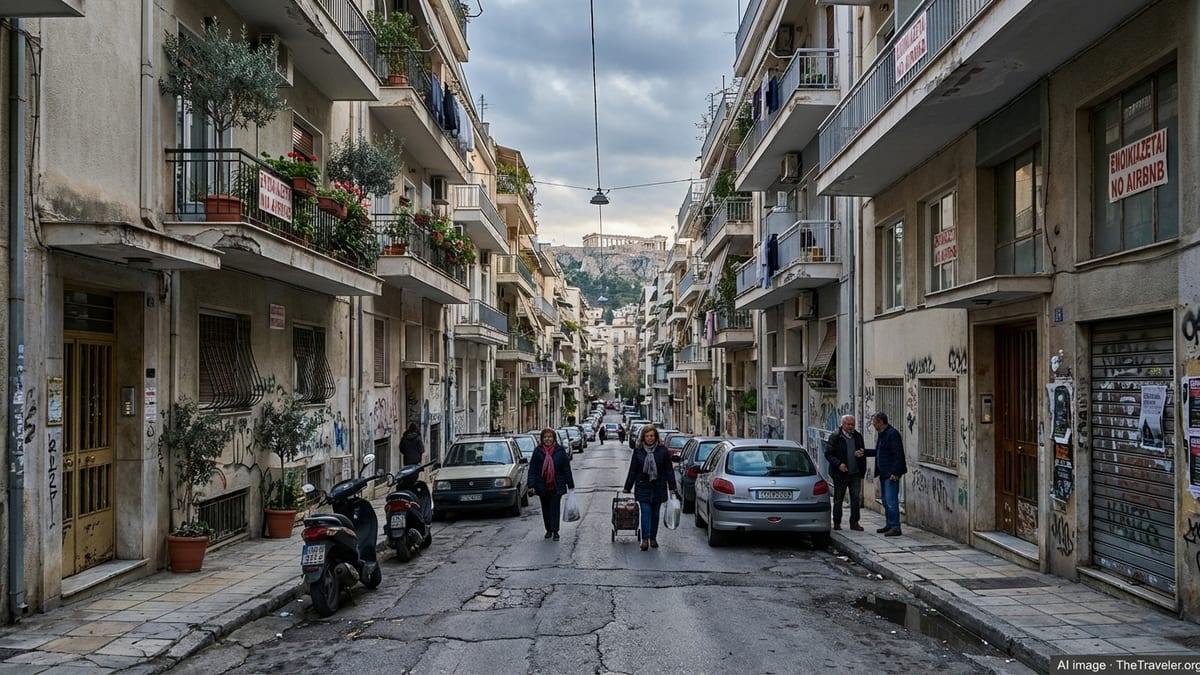
Athens Joins Europe’s Growing Short-Term Rental Freeze
The Greek government has moved from piecemeal regulation to outright freezes in key neighborhoods, halting new short-term rental registrations in parts of central Athens and several highly touristed islands as of late 2025 and early 2026. Authorities have stopped issuing new license numbers in designated “saturated” zones, including historic areas of the capital, after years of complaints from residents about spiraling rents and dwindling long-term housing supply.
In Athens, a one-year registration freeze took effect in 2025 across central districts such as Kolonaki, Koukaki and Exarchia, with fines reaching tens of thousands of euros for violations. From January 2026, new moratoriums and tighter caps have extended to additional high-demand areas, while national rules now require every listing to appear in a centralized registry. The message is clear: converting residential stock into quasi-hotel inventory will no longer go unchecked.
Greece’s crackdown mirrors a broader shift across Europe, where governments are attempting to reconcile tourism-driven revenue with social pressure over housing affordability. By freezing new listings in the most crowded markets, policymakers hope to cool speculative purchases and steer investors toward longer-term leases or different locations.
Spain, Portugal, France and the Netherlands Tighten the Screws
Greece is not acting in isolation. Spain has already forced platforms to purge tens of thousands of unlicensed or non-compliant listings in regions from Catalonia to Andalusia, following a wave of housing protests in cities such as Barcelona and Madrid. National consumer and housing authorities have pushed platforms to verify license numbers and block listings that do not meet regional rules, dramatically shrinking the pool of short-term rentals in some hot spots.
Portugal, once a darling of global digital nomads, has similarly shifted course. Lisbon and Porto introduced moratoriums on new holiday-rental licenses in central neighborhoods, targeting streets where tourist apartments began to outnumber permanent residents. National legislation has discouraged new short-term rental investments in densely populated areas and created incentives to convert tourist units back into standard housing, reflecting growing unease over displacement and rent inflation.
In France, strict local frameworks in Paris, Lyon, Marseille and other cities have effectively amounted to freezes on new full-time tourist listings in central districts. Many municipalities require owners to obtain change-of-use permissions and, in some cases, to create equivalent residential space elsewhere before adding another holiday rental. The Netherlands has also implemented caps and seasonal windows, with cities like Amsterdam limiting the number of nights properties can be let to tourists and sharply restricting new permits in historic quarters that have struggled with overtourism.
Taken together, these policies reveal an emergent European model in which short-term rentals are tolerated but tightly corralled. New supply is being choked off in core urban neighborhoods as governments use freezes and licensing hurdles to contain the sector’s footprint.
Hungary’s Budapest Moratorium Signals a New Phase
Hungary has become a key test case for how far local authorities will go. In Budapest, the national government introduced a two-year citywide moratorium on new short-term rental registrations starting January 1, 2025 and running through the end of 2026. No new permits are being issued during this period, effectively freezing the legal expansion of Airbnb-style accommodation in the Hungarian capital.
The clampdown is even more dramatic in the city’s District VI, Terézváros, where local leaders secured court approval for a complete ban on short-term rentals from January 1, 2026. In a dense central neighborhood where thousands of apartments had shifted to tourist use, the measure has overnight transformed the market: existing holiday rentals are being wound down, and only hotels and traditional guesthouses can continue operating.
Officials argue the moratorium and district-level ban are necessary to restore balance in a city where private tourist accommodation had grown faster than hotel capacity and long-term rental supply. For housing advocates elsewhere in Europe, Budapest’s example is likely to be closely watched as they press for similar powers in their own cities.
Tourism Flows Redirected Across the European Map
The rapid expansion of freezes and moratoriums is beginning to redraw Europe’s tourism geography. As central Athens, Lisbon’s old quarters, Amsterdam’s canal ring and Budapest’s nightlife districts become harder places to list a new apartment, investors are scouting secondary cities and suburbs where rules are looser and local authorities are still courting visitor spending.
For travelers, the immediate impact is a shrinking pool of legal whole-apartment rentals in historic centers, combined with an uptick in prices for the remaining licensed stock. Many guests are being nudged back toward mid-range hotels, serviced apartments and officially registered guesthouses that are exempt from the freezes. At the same time, tourism boards are promoting lesser-known neighborhoods or nearby towns as alternatives, in an effort to spread visitor traffic more evenly and ease pressure on old-city streets.
Industry analysts note that platforms are having to pivot away from a growth strategy based on ever-expanding urban inventories. Instead, they are investing in compliance tools, data-sharing agreements with local governments and marketing campaigns that highlight rural stays, villas, agritourism and longer-term bookings. The net result is a gradual decentering of urban short stays within Europe’s wider tourism mix.
Housing Markets React as Investors Recalculate
The freezes are also reshaping local housing markets. In parts of Budapest’s District VI, early data already point to cooling prices as some investors exit and properties are re-listed for long-term tenants. Similar trends have been reported in pockets of Lisbon, Porto and Barcelona, where tightened rules and tougher enforcement have reduced the profitability of heavily leveraged short-term rental portfolios.
In Greece, real estate professionals report growing caution among buyers who once counted on year-round tourist income from central Athens or popular islands. With license freezes, higher tourist taxes and stricter classification of multi-property hosts as businesses, some investors are shifting their focus to suburban areas or to traditional long-term leases. That rebalancing, policymakers hope, will gradually ease supply constraints for residents while avoiding a hard crash in property values.
Yet the adjustment is far from painless. Owners who bought at peak prices with short-term rental income in mind face squeezed margins or outright losses, and local economies that had come to depend on high-spending visitors risk a period of disruption. As more European countries follow Greece, Spain, Hungary, France, the Netherlands and Portugal in freezing or rationing new listings, debates over who should bear the cost of restoring housing affordability are likely to intensify.