

More news on this day
Rising tensions linked to the Iran conflict and public threats against Western interests and symbolic sites are prompting Greece to quietly step up security around major tourist landmarks and transport hubs, even as officials signal they want the 2026 summer season to proceed as normally as possible.
Get the latest news straight to your inbox!
Regional Conflict Puts Greece in a Sensitive Position
The escalation of the war involving Iran, the United States and regional allies since late February has sharpened concerns about the safety of high-profile sites worldwide. Publicly available analysis of Iranian messaging indicates a focus on Western-linked interests, energy infrastructure and symbolic locations associated with the United States and its partners, raising questions for countries that rely heavily on tourism but sit on the edge of the crisis zone.
Greece is geographically distant from the Gulf but closely tied to the Eastern Mediterranean. Reports from regional media and policy institutes describe how Iranian drones and missiles have already struck targets in Oman and the United Arab Emirates, while military facilities in Cyprus have come under attack, contributing to a sharp drop in bookings there. Analysts note that such incidents have prompted travelers to reconsider plans across the wider region, including Greece, even though the country itself has not been targeted.
European commentary over the past month has repeatedly highlighted Greece’s dependence on tourism and its exposure to wider Middle East instability. Earlier discussions about Iran’s regional role already flagged the risk that a broader conflict could disrupt visitor flows, raise insurance costs and unsettle airlines and cruise operators using Greek ports. Those concerns have resurfaced as fighting intensifies.
At the same time, travel and security briefings point out that Iran has generally avoided direct confrontation with European Union territory, focusing instead on military, energy and logistical assets closer to home. That pattern has informed the risk assessments now being issued to travelers, which differentiate between countries facing direct attacks and those, like Greece, where the main exposure is indirect.
UNESCO Sites in the Spotlight as Cultural Heritage Comes Under Threat
International cultural organizations have raised alarms in recent weeks about the vulnerability of historic monuments in and around active conflict zones. UNESCO and heritage watchdogs report that several Iranian World Heritage sites, including the Golestan Palace in Tehran and the Masjed-e Jameh in Isfahan, have suffered damage or nearby blast impacts since the air campaign began. Separate updates have documented strikes on protected sites in other war-affected regions, underscoring the fragility of cultural treasures during modern conflicts.
These developments have sharpened global sensitivity to the safety of iconic ruins, museums and sacred places, particularly those that draw large numbers of foreign visitors. Analysts and heritage specialists warn that once such sites are damaged, loss is often irreversible. The images of cracked tilework and shattered windows in centuries-old buildings across the Middle East are reverberating far beyond the immediate battlefields.
In Greece, home to some of the world’s most visited archaeological areas, this international debate has immediate resonance. The Acropolis, Delphi, Meteora and the medieval city of Rhodes all sit under the umbrella of international conventions designed to protect cultural property in times of conflict. Greek cultural bodies and academic voices have used recent events to remind the public that safeguarding these landmarks is not only a national priority but also a shared global responsibility.
Security specialists following open-source information say there is currently no specific or credible indication of an imminent threat to Greek heritage sites linked to the Iran war. However, they also note that the symbolic value of such locations means they are routinely included in contingency planning, especially after Iran-linked groups publicly referenced attacks on global tourist and cultural symbols in their rhetoric.
Heightened Security and Cyber Vigilance Across Greece
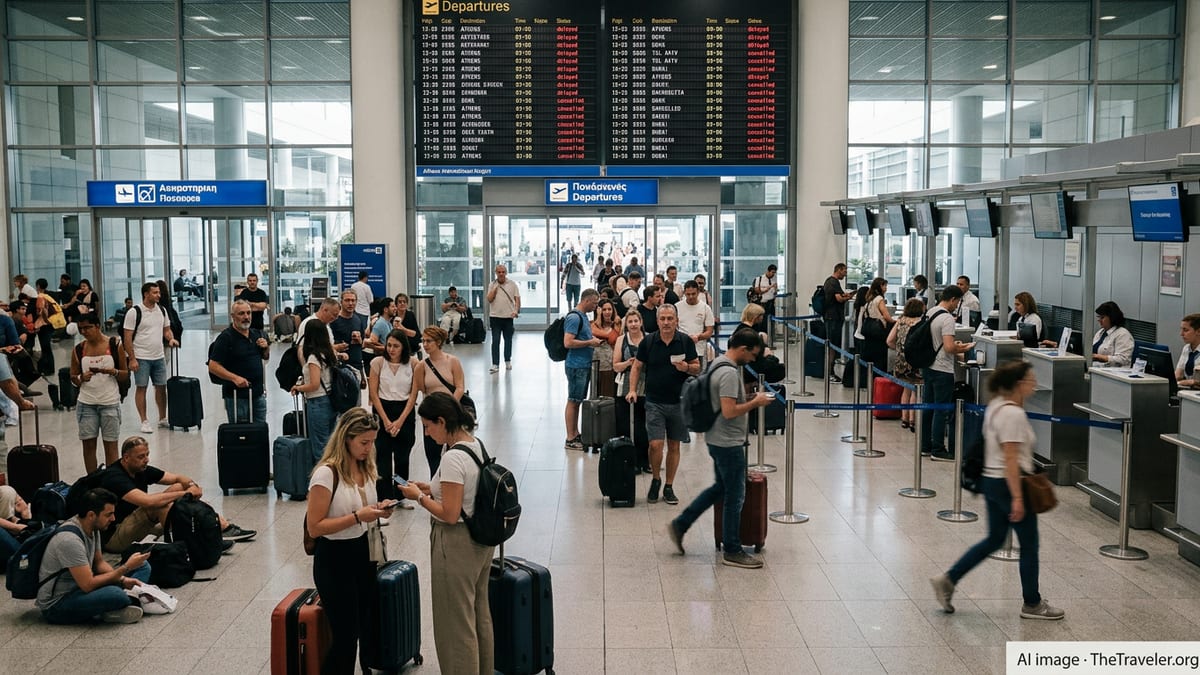
Within Greece, the most visible impact of the crisis so far is the gradual tightening of security measures rather than any disruption to daily life. Publicly available reports describe increased checks at airports and ports, more patrols around popular archaeological sites and closer coordination between police, military and private security providers. Travelers can expect additional screening at entry points and potentially more frequent ID checks at crowded tourist areas as the summer season approaches.
The threat is not limited to physical targets. In mid-March, Reuters and other outlets reported that Greek companies, particularly in critical sectors such as energy and shipping, had begun scanning systems for signs of hostile cyber activity linked to the Iran conflict. According to that coverage, early indicators suggested probing and attempted intrusions consistent with sophisticated threat actors, though no major attack on Greek infrastructure had been confirmed.
This cyber dimension matters for tourism because airports, ferries, hotel chains and booking platforms all depend on resilient networks. Industry observers point out that while travelers might not notice behind-the-scenes cybersecurity upgrades, any successful attack on payment systems, airline operations or port logistics could disrupt itineraries on short notice. Greek businesses appear to be prioritizing preventive action to reduce that risk.
Regional security advisories also highlight the possibility of protests or demonstrations related to the Iran war or broader Middle East issues in Athens and other major cities. Such events are generally peaceful but can cause local transport delays. Travelers are being encouraged by risk consultancies and government notices to monitor local news and avoid large political gatherings, a standard recommendation during periods of heightened tension.
Tourism Demand Shifts, but Greece Remains Open
So far, Greece’s tourism prospects for 2026 remain cautiously positive, even as nearby destinations feel more immediate pressure. Greek and Cypriot travel media report that Cyprus, closer to recent military activity, has experienced a notable wave of cancellations and slow early-season bookings, especially from markets sensitive to regional risk. Industry voices there describe a difficult outlook for spring and early summer.
By contrast, broader European coverage suggests that some travelers are redirecting holidays away from parts of the Eastern Mediterranean and Gulf region, opting instead for destinations perceived as less exposed to the Iran conflict. Analysts cited by Spanish media predict that this could benefit countries such as Spain, Italy and Greece, which are viewed as relatively stable within the wider Mediterranean basin.
Greek tourism operators quoted in local outlets acknowledge increased inquiries from visitors asking whether the Iran war could affect trips to Athens and the islands. Their responses generally stress that flights, ferries and hotels are operating normally, that Greece is not part of the combat zone, and that day-to-day life for residents and visitors continues as usual. At the same time, there is recognition that perceptions can change quickly if the conflict escalates or spreads westward.
Airlines and cruise companies using Greek ports have not announced large-scale schedule changes specifically tied to Iran-related threats, according to current timetables and public statements. However, planners are watching developments around key choke points such as the Suez Canal and the wider Eastern Mediterranean airspace, since any extended disruption there could force longer routes, raise costs or, in a worst-case scenario, prompt selective cancellations.
What Travelers Should Do Before and During a Trip to Greece
For individual travelers, the emerging consensus from government advisories and private security briefings is that Greece remains a viable and generally safe destination, provided visitors stay informed and take sensible precautions. Several Western governments have issued global or region-wide alerts in recent days, urging citizens to exercise increased caution due to the Iran conflict and related threats against Western interests, but they have not issued specific warnings against travel to Greece itself.
Published guidance typically recommends that travelers review their home country’s latest advisory for both Greece and any transit hubs on their route, check airline communications regularly and maintain flexible plans where possible. Those planning stopovers or connections in states closer to current hostilities, particularly in the Gulf, are being encouraged to pay special attention to airspace closures, schedule changes and security restrictions at major hubs.
Once on the ground in Greece, risk consultants advise standard urban travel habits: remain aware of surroundings, avoid crowded political demonstrations, keep copies of important documents, and share itineraries with family or friends. Visitors are also encouraged to limit real-time posting of location details on social media, a practice that many security professionals have begun to highlight more often in light of the current global alert environment.
Travel insurance that explicitly covers geopolitical disruption, airspace closures and last-minute cancellations is another recurring recommendation. Policy wording can vary significantly, and experts suggest travelers confirm in writing that their coverage applies if flight routes are altered due to regional tension rather than events inside Greece itself. Given the dynamic nature of the Iran conflict, flexibility and clear documentation are being framed as the best tools for maintaining peace of mind.
For now, Greece’s ancient temples, island harbors and coastal resorts remain open and busy preparing for the high season. The atmosphere on the streets of Athens and the Cycladic islands still resembles a normal spring rather than a crisis zone, even as the country quietly adapts its security posture to a more volatile neighborhood. Travelers who stay informed, heed official guidance from their own governments and allow extra margin for logistical changes are expected to continue enjoying the country’s celebrated mix of history, culture and sea.