

More news on this day
Taxi services across Greece are expected to grind to a halt from March 17 as drivers begin an indefinite nationwide strike, raising concerns over disruption to airport, port and intercity travel at the start of the spring tourism period.
Get the latest news straight to your inbox!
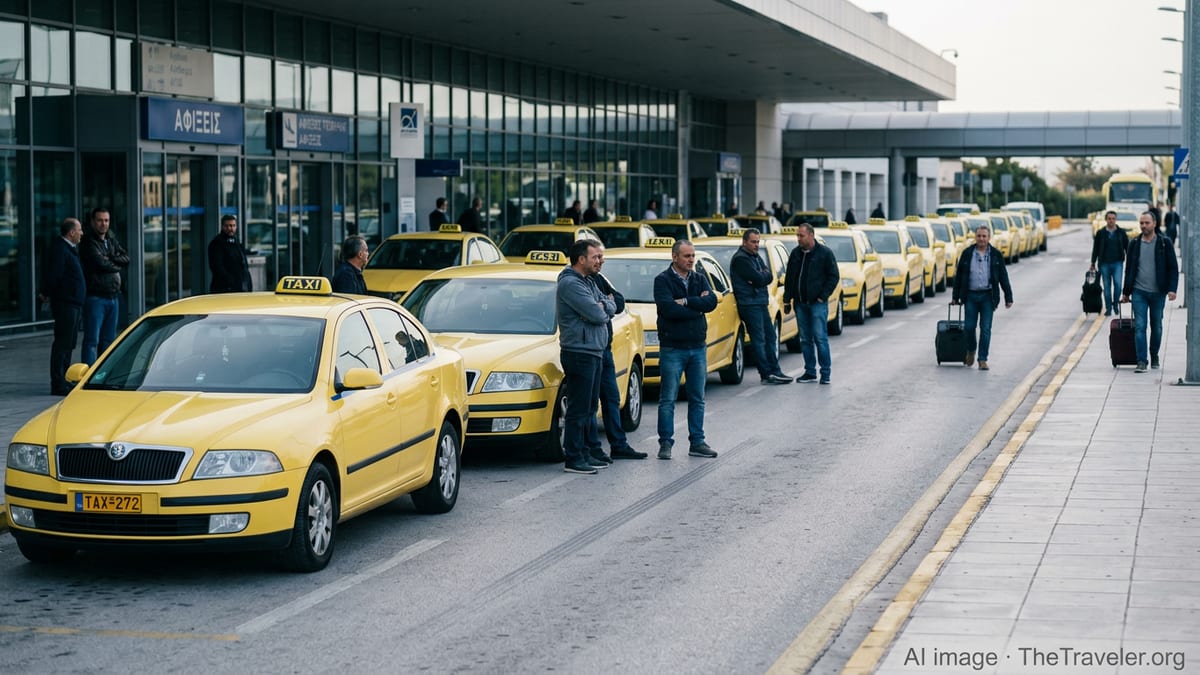
Nationwide Walkout Targets Key Transport Hubs
Reports from Greek media indicate that taxi unions have called an open-ended strike from Monday, March 17, with participation expected in Athens, Thessaloniki and a wide range of mainland and island destinations. The action is set to affect both urban routes and long-distance transfers, including popular corridors between Athens International Airport, Piraeus Port and central hotels.
Early indications suggest that organized pickets and work stoppages will be concentrated around major gateways such as airports, cruise terminals and intercity bus and rail stations. Travelers arriving in Greece during the strike period are likely to encounter queues, reduced availability of licensed taxis and potential delays in reaching their final destinations.
While some private transfer companies and app-based services may continue to operate, the loss of conventional taxi capacity in major cities is expected to place additional pressure on public transport, rental cars and pre-booked shuttle services. Local coverage notes that previous short-term strikes in the sector have already tested the resilience of urban transport networks, particularly during peak arrival hours.
The move to an indefinite rather than time-limited walkout marks an escalation from the 24 and 48-hour stoppages that have punctuated the past year, signaling deeper frustration among drivers as the tourism season approaches.
Drivers Protest New Rules and Competitive Pressures
According to publicly available information, the strike centers on opposition to a package of regulatory changes affecting licensing, operating conditions and environmental standards in the taxi sector. Driver associations have raised concerns about requirements for fleet modernization, including tighter rules around low-emission or electric vehicles, arguing that the upfront costs are disproportionate for many small owner-operators.
Taxi representatives also point to growing competition from ride-hailing platforms and pre-booked transfer firms, which they claim benefit from more flexible operating models and different regulatory treatment. Published coverage in Greek outlets has highlighted grievances over the way digital platforms connect passengers and drivers, revenue-sharing arrangements and the perceived erosion of traditional taxi ranks at key locations.
Additional points of contention reported in recent months include limits on access to dedicated bus lanes, stricter tax enforcement and new obligations for electronic receipts and payment systems. Driver organizations maintain that the combined effect of these measures is to increase operating costs while simultaneously making it harder to attract sufficient fares, particularly during off-peak periods.
Government officials have previously framed transport reforms as part of a broader modernization effort aimed at improving air quality, traffic flow and consumer protection. However, the decision by taxi unions to proceed with an open-ended strike suggests that attempts at dialogue have not yet resolved key disagreements over how fast and on what terms such changes should be implemented.
Impact on Tourists, Business Travelers and Local Residents
The timing of the strike is likely to cause particular concern in the travel industry as Greece begins to transition from winter into the early phases of its tourism season. March is typically a period when city-break visitors, cruise passengers and business travelers start to arrive in greater numbers, and many rely on taxis for early-morning or late-night transfers when other options may be limited.
Travel advisories and discussion among visitors indicate that those landing at Athens International Airport or Thessaloniki Airport during the strike may need to rely on suburban rail, metro lines, express buses or pre-arranged private transfers. Major ports such as Piraeus, Rafina and Heraklion, which serve ferry routes to the islands, are also expected to feel the strain as passengers compete for alternative ways to connect between ships and accommodation.
For residents, the walkout adds pressure to already busy public transport systems and may lengthen commuting times, especially in districts less well served by metro or tram networks. Individuals with limited mobility, families with small children and travelers carrying bulky luggage are among those likely to feel the absence of taxis most acutely.
Industry commentators note that hotels, tour operators and cruise lines are monitoring the situation closely and may adjust transfer arrangements, offering guidance to guests on alternative routes and local transport options where possible. Some accommodation providers are reported to be expanding cooperation with licensed private transfer companies in an effort to maintain reliable links with airports and ports.
Travel Advice: Planning Around the Strike
Travel organizations and consumer groups are encouraging visitors to Greece in the coming days and weeks to build extra time into journeys and to confirm transfer plans well in advance. For those arriving or departing on March 17 and subsequent days, the most robust alternatives in major cities are expected to be airport express buses, metro connections where available and pre-booked shuttle or car services that are not directly tied to taxi unions.
Passengers are advised in public guidance to check the latest information from airlines, ferry operators, hotel reception desks and local news sources before travel, as adjustments to departure times, meeting points and recommended routes may occur at short notice. In some cases, it may be practical to walk short distances from central railway or bus stations to accommodation, particularly in compact city centers like central Athens, provided luggage and mobility needs allow.
Those planning inter-island itineraries or tight same-day connections between flights and ferries may wish to review their schedules and consider more generous transfer windows. In previous episodes of transport disruption, travelers reported that longer layovers between legs of a journey reduced stress and allowed flexibility when switching between buses, metro services and overground trains.
Visitors intending to rent a car as a workaround are encouraged to factor in urban traffic conditions, parking availability and local driving regulations. Car rentals may experience increased demand around the strike dates, and bookings can sell out quickly in peak areas, particularly near airports and popular island gateways.
Uncertain Timeline for Resolution
Because the current action has been announced as an indefinite strike, there is no fixed end date, and the duration will depend on the outcome of negotiations between taxi unions and government representatives. Past transport disputes in Greece have varied widely in length, from brief stoppages lasting a day or two to longer periods of rolling action punctuated by partial service restorations.
Observers of the sector suggest that if the disruption extends into April and overlaps with rising tourist arrivals, pressure could build on all sides to seek a compromise. Key points for any potential agreement are likely to include the pace of vehicle fleet upgrades, specific conditions for app-based ride services and the restoration or adjustment of privileges such as bus lane access at congested times.
For now, travelers with imminent plans to visit Greece are being urged through public information channels to monitor developments closely and to remain flexible about how they move between airports, ports, stations and accommodation. While the country’s extensive network of buses, trains, trams and metro lines continues to operate, the absence of taxis removes one of the most convenient and adaptable components of the transport system at a sensitive moment for the tourism economy.
With both economic and environmental policy goals at stake, the unfolding strike is emerging as a test of how Greece balances modernizing its urban mobility framework with safeguarding livelihoods in a sector that remains central to the visitor experience.