

More news on this day
Greece is entering the 2026 peak travel season with record visitor momentum and a growing reputation as one of the Mediterranean’s safest, best-managed and most visually dramatic destinations, drawing travellers who are increasingly weighing security and stability alongside sea views.
Get the latest news straight to your inbox!
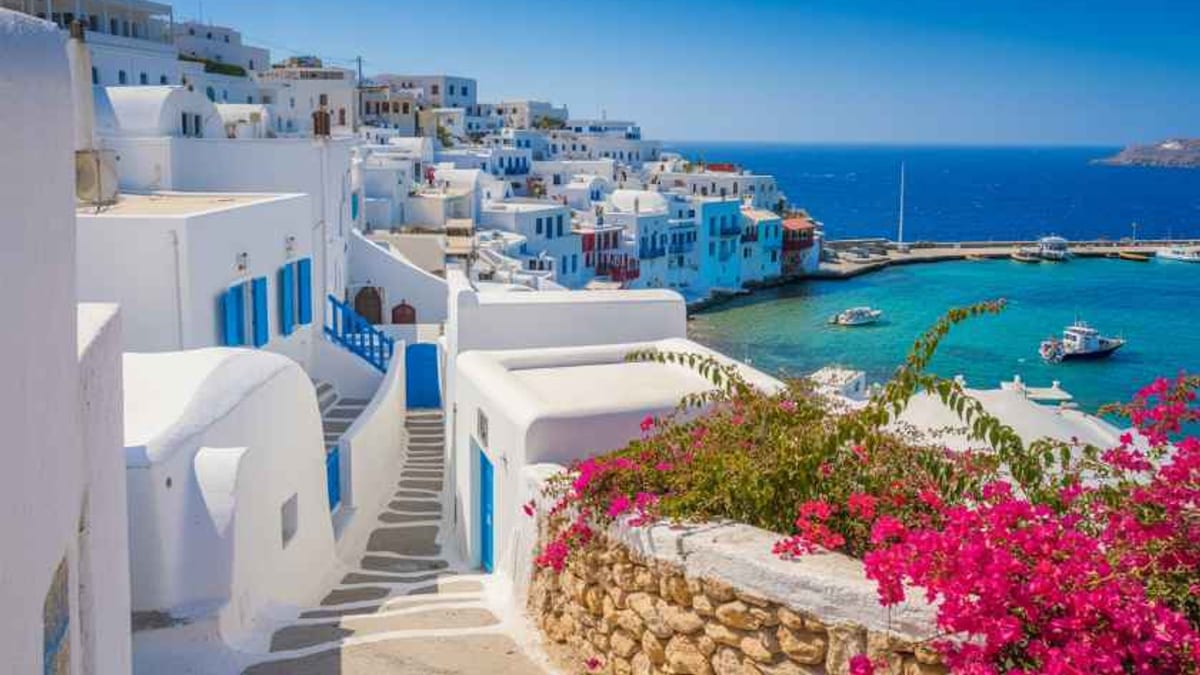
Image by Travel And Tour World
Record-Breaking Growth Underpins Greece’s New Safe-Haven Image
Recent tourism data shows Greece moving into 2026 on the back of multiple consecutive record years for visitor arrivals and spending. National banking and tourism analyses indicate that international arrivals in 2024 exceeded pre-pandemic levels by a significant margin, while early figures and industry briefings for 2025 point to another all-time high in both passenger traffic and tourism receipts. Athens International Airport has reported sharp year-on-year growth, with the country consolidating its position among Europe’s busiest aviation hubs, a sign that carriers and travellers alike view the destination as a reliable year-round option.
Sector snapshots from international institutions, including travel and tourism development indices compiled with UN tourism data, place Greece among the world’s top performers for tourism competitiveness. The country’s travel economy is estimated to contribute close to one fifth of national GDP and a similar share of employment, underlining the political and economic incentives to maintain a secure and predictable environment for visitors. Publicly available information points to sustained investment in policing of key tourist corridors, port infrastructure and airport security screening, as authorities seek to protect a core pillar of growth.
Industry reporting for early 2026 suggests that bookings are spreading more evenly across the calendar, reducing the pressure of extreme summer peaks. Tourism analyses from Greek and European research bodies describe a gradual shift toward shoulder-season travel in spring and autumn, which can ease crowding in historic centres and islands, lower the likelihood of overcrowding-related safety incidents and support a calmer experience for visitors seeking a sense of refuge.
Low Violent Crime and Stable Politics Appeal to Cautious Travellers
For many global travellers, Greece’s attraction in 2026 goes beyond beaches and antiquities. Travel advisories from major source markets currently characterise the country as a relatively low-risk destination in terms of violent crime, with most issues limited to non-violent theft in busy urban and tourist areas. Publicly available crime statistics and international comparisons generally place Greece below many large European cities on measures such as homicide and serious assault, a contrast that resonates with visitors monitoring global headlines about conflict and instability elsewhere in the region.
The country’s political environment is also viewed as comparatively predictable within the wider Eastern Mediterranean. While Greece faces the same pressures of inflation, migration and climate stress as its neighbours, it is a member of both the European Union and the Schengen travel area, operating within shared regulatory and security frameworks. Reports on border management and maritime patrols point to ongoing efforts to balance migration control with the smooth functioning of ferry networks and cruise itineraries that are vital to island economies.
Public coverage of major events in Athens and other cities over the past two years shows that demonstrations and strikes, when they occur, are typically announced in advance and concentrated in specific districts, allowing tourism operators to adjust routes and schedules. This level of predictability, combined with well-established emergency services and healthcare facilities, contributes to Greece’s emerging image as a safe harbour for visitors who might be reconsidering alternative destinations affected by conflict or heightened security alerts.
From Wildfire Shock to Climate-Resilient Tourism Model
The 2023 wildfire season, particularly on Rhodes and parts of mainland Greece, exposed the vulnerabilities of a climate-dependent tourism economy. European environment agencies have documented the financial and ecological toll of those fires, as well as of subsequent heatwaves in 2024, noting rising climate-related losses that directly touch tourism, agriculture and housing. Rather than deterring visitors in the medium term, however, the crisis has accelerated a wave of adaptation measures that are now reshaping perceptions of safety.
New reporting from Greek and European tourism bodies highlights the rapid deployment of smart fire-detection systems on high-profile islands such as Rhodes, funded in part through EU resilience and recovery instruments. These systems combine sensors, cameras and real-time monitoring to spot ignition points early and coordinate responses. At the same time, national reforestation plans are targeting tens of millions of new trees over a decade, including thousands of hectares in affected tourist regions, with the aim of restoring landscapes while designing more defensible green zones around settlements and resorts.
Coverage of Greece’s response has also drawn attention to an unprecedented compensation scheme for holidaymakers whose trips were disrupted by the Rhodes fires, allowing affected travellers to claim subsidised return stays in subsequent seasons. Travel industry analysts describe this as a symbolic turning point, signalling that the government and local partners are prepared to share climate risk with visitors. For many travellers in 2026, the sense that contingency planning and crisis-management protocols are in place is becoming as important as the baseline probability of an incident occurring.
Island Geography and Diversified Destinations Enhance Perceived Security
Greece’s distinctive geography is another factor behind its safe-haven appeal. With more than 200 inhabited islands spread across the Aegean and Ionian seas, the country offers a patchwork of relatively contained micro-destinations, from heavily visited hubs like Santorini, Mykonos and Corfu to quieter Cycladic, Dodecanese and Ionian islands. Travel commentators note that this dispersion gives visitors and tour operators flexibility to shift demand away from crowded areas or regions facing short-term disruption, whether due to weather, infrastructure work or localised incidents.
Post-pandemic route maps from airlines and ferry companies show an ongoing expansion of direct international links to secondary islands, reducing reliance on a single gateway and shortening transfer times. Regional airports on islands such as Rhodes, Chania and Heraklion have reported record or near-record passenger volumes, supported by upgraded terminal facilities and security screening equipment. This network effect allows travellers to select destinations that match their individual comfort levels regarding crowd size, nightlife intensity and remoteness.
At the same time, tourism boards and private-sector operators are promoting inland and lesser-known coastal regions on the mainland, from Epirus and the Peloponnese to northern mountain areas. These locations combine dramatic scenery with lower population density and often milder summer temperatures than the most exposed islands. The diversification not only spreads economic benefit but also offers alternatives for travellers specifically seeking quieter, more secluded environments that feel insulated from the pressures of mass tourism.
Upgraded Infrastructure, Digital Tools and Visitor Education
Behind the scenes of Greece’s 2026 tourism story lies a broader program of infrastructure and digital modernisation. Major EU-funded projects in recent years have targeted roads, ports and energy systems in key tourist regions, improving evacuation routes, emergency access and power reliability. Airport operators have rolled out new screening technologies and passenger-flow management tools, while port authorities have invested in berths and terminal facilities capable of handling larger cruise vessels under stricter safety and crowd-control protocols.
Publicly available information from national and regional tourism organizations points to the rollout of mobile applications and online platforms that centralise real-time updates on weather, wildfire risk, transport disruptions and health advisories. These tools, often coordinated with the European Union’s civil protection mechanisms, give travellers clearer visibility of conditions on the ground and support more informed decision-making when planning excursions or island-hopping itineraries.
Visitor education campaigns, promoted through airlines, tour operators and accommodation providers, are increasingly emphasising heat awareness, responsible hiking practices and respect for local fire regulations. By foregrounding practical guidance alongside imagery of beaches and historic sites, Greece is aligning its marketing with a more safety-conscious global audience. For many travellers weighing options across the Mediterranean in 2026, the combination of transparent risk communication, visible investment in resilience and the enduring draw of whitewashed villages and turquoise bays is making Greece feel less like a gamble and more like a calculated, and deeply rewarding, choice.