

More news on this day
Greece has issued a fresh travel advisory urging its citizens to avoid all but absolutely essential trips to Iran, Israel and the Palestinian territories, as a deepening standoff between the United States and Iran fuels fears of a broader regional conflict in the Middle East.
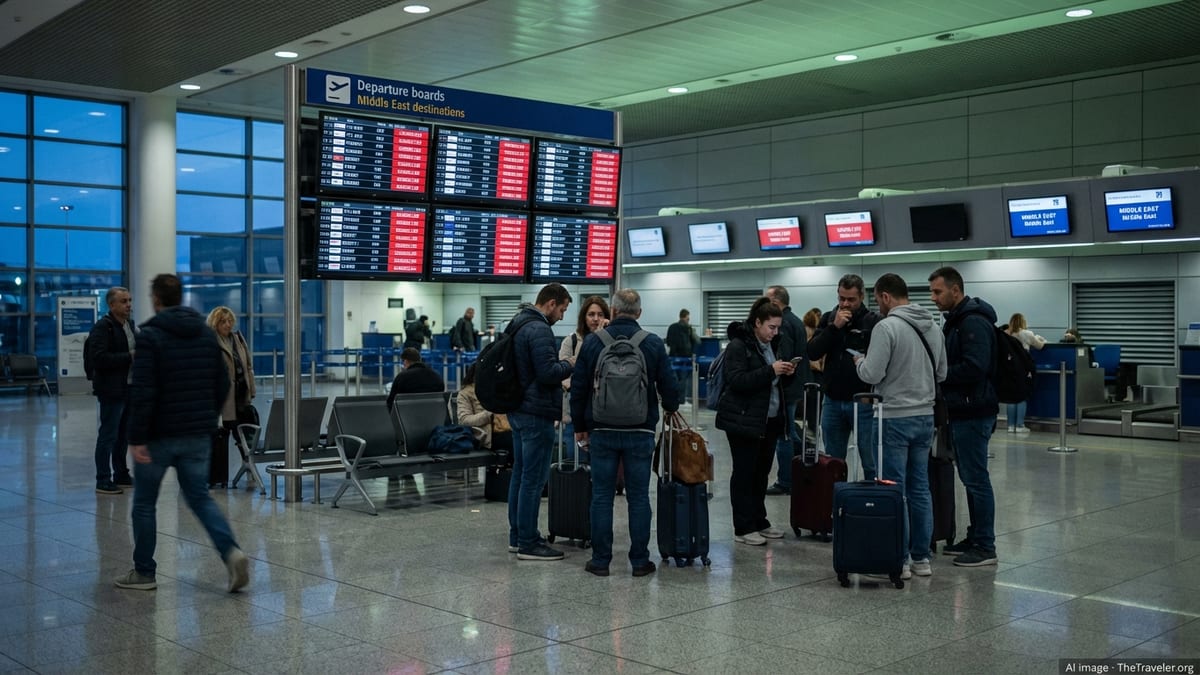
New Advisory From Athens Amid Rapidly Deteriorating Security Climate
The Hellenic Ministry of Foreign Affairs announced the updated guidance on February 27, advising Greek nationals to postpone or cancel non-essential journeys to Iran, Israel and the Palestinian territories. Officials cited what they described as a rapidly evolving and unpredictable security environment across the wider region.
The ministry said its decision took into account the “developing situation in the Middle East,” where tensions between Washington and Tehran have intensified following the collapse of the latest round of nuclear talks and a substantial buildup of U.S. military assets near Iran. Greek authorities warned that any escalation could quickly spill over into neighboring countries, directly affecting civilian air travel, critical infrastructure and tourist centers.
While the advisory stops short of an outright ban, it marks a clear shift toward a more cautious stance. Greece has previously urged vigilance for travelers to parts of the Middle East, but the explicit reference to Iran alongside Israel and the Palestinian territories underscores heightened concern in Athens over a potential conflict involving key regional powers.
Greek citizens who must travel to the affected destinations for urgent family, business or humanitarian reasons are being advised to register their presence with Greek consular authorities and to maintain regular contact in case conditions deteriorate suddenly.
U.S.-Iran Standoff Drives Fears of Wider Middle East Conflict
The Greek move comes as the United States and Iran remain locked in a high-risk confrontation centered on Iran’s nuclear program and its regional activities. Recent indirect talks in Europe aimed at reviving or reshaping nuclear constraints have stalled, with negotiators reporting little progress on core issues such as uranium enrichment levels and international inspections.
In parallel, the U.S. has positioned additional warships, aircraft and support units across the Eastern Mediterranean and the Gulf, in what military analysts describe as one of the most visible buildups in years. The USS Gerald R. Ford carrier strike group has been operating within range of Iran, amplifying concerns that a miscalculation or deliberate strike could trigger open hostilities.
American officials insist they still prefer a diplomatic resolution, but senior figures in Washington have repeatedly warned that military options remain on the table if Iran does not accept tighter constraints on its nuclear activities. Iranian leaders, for their part, claim their program is peaceful and have vowed to respond forcefully to any attack on their territory or nuclear sites.
This standoff has immediate implications for nearby countries. Israel remains a central actor, given its long-standing opposition to Iran’s nuclear program and its reported role in previous covert operations and strikes against Iranian-linked targets. The Palestinian territories, located at the heart of Israel’s security challenges, face the risk of further instability if violence spreads or if non-state armed groups attempt to exploit a wider regional crisis.
Wave of International Travel Warnings Highlights Growing Alarm
Greece is far from alone in tightening its travel guidance. In recent days, several European governments have urged their citizens to avoid travel to Iran and to reconsider non-essential trips to Israel and parts of the Palestinian territories, while advising those already in the region to consider leaving while commercial routes remain open.
Belgium has asked nationals to avoid any travel to Iran and to leave the country as soon as possible, while also advising against non-essential visits to Israel and Lebanon. Germany has toughened its own Israel advisory, citing the risk that any U.S. strike on Iran could lead to retaliatory attacks affecting Israeli cities and border areas.
Outside Europe, major powers including the United States and China have authorized or encouraged the departure of non-essential staff and citizens from Israel and, in some cases, Iran. The U.S. Embassy in Jerusalem has been permitted to send home non-emergency personnel and their families, warning that flight availability could shrink quickly if the security situation worsens or if airlines reroute away from potential conflict zones.
This cascade of warnings reflects a shared concern that commercial aviation, tourism and cross-border business could face abrupt disruption. Insurance premiums for airlines and shipping firms transiting the Eastern Mediterranean and Gulf are already under pressure, and travel industry analysts say more carriers may adjust schedules or introduce flexible policies for passengers with tickets to high-risk destinations.
Implications for Greek Travelers and the Wider Tourism Sector
For Greek travelers, the latest advisory means that trips long planned to religious sites, heritage landmarks or business hubs in Israel and the Palestinian territories may need to be postponed. Organized pilgrimages and cultural tours, often scheduled months in advance, are among the journeys most likely to be affected.
Greek tour operators that specialize in regional itineraries are closely monitoring developments, with some already offering alternative routes through safer neighboring countries or allowing clients to shift bookings to later in the year. Industry representatives say traveler sentiment has turned noticeably more cautious, with many customers requesting clear contingency plans and cancellation options before committing to new bookings in the broader Middle East.
The advisory has particular resonance in Greece, a country with strong maritime links and a sizeable shipping sector that frequently operates in and around the Gulf. While the guidance targets private travelers rather than commercial crews, any escalation that threatens key sea lanes could have knock-on effects for Greek-owned vessels, as well as for energy prices and regional trade.
Officials in Athens are balancing these economic considerations with their duty-of-care obligations toward citizens abroad. The foreign ministry has emphasized that safety must take precedence, urging travelers to carefully assess whether their planned journeys are truly essential and to stay in close touch with airlines and travel agencies for the latest operational updates.
What Travelers Should Watch in the Coming Days
Security experts say the coming days will be critical in determining whether the U.S.-Iran standoff edges closer to confrontation or drifts back toward intensive diplomacy. Any sign of renewed talks, back-channel contacts or confidence-building measures could ease pressure and, in time, allow governments to reassess the severity of their travel advisories.
Conversely, indicators such as further military deployments, public evacuation orders, cyberattacks or strikes attributed to proxy groups could point to a deteriorating environment. For travelers, that may translate into sudden airport closures, flight cancellations or restrictions on movement within affected countries.
Greek authorities are urging citizens who are already in Iran, Israel or the Palestinian territories to maintain a low profile, avoid protests and large gatherings, and follow the instructions of local authorities and their airline or tour operator. They are also encouraged to keep mobile devices charged, monitor traditional and local-language media for changes on the ground, and be prepared for rapid adjustments to their travel plans.
As the region waits to see whether diplomacy or deterrence prevails, one message from Athens is unambiguous: unless a journey is truly essential, Greeks should stay away from these flashpoints for now.