

Greece is often imagined as a land of whitewashed villages, blue-domed churches, and lazy taverna lunches by the sea. Yet what makes travel here truly memorable is not just the scenery but the human warmth and social codes that underpin daily life. Understanding a few key Greek traditions and etiquette rules will help you avoid unintentional missteps, navigate everything from church visits to taverna dinners, and connect more deeply with the people who welcome you.
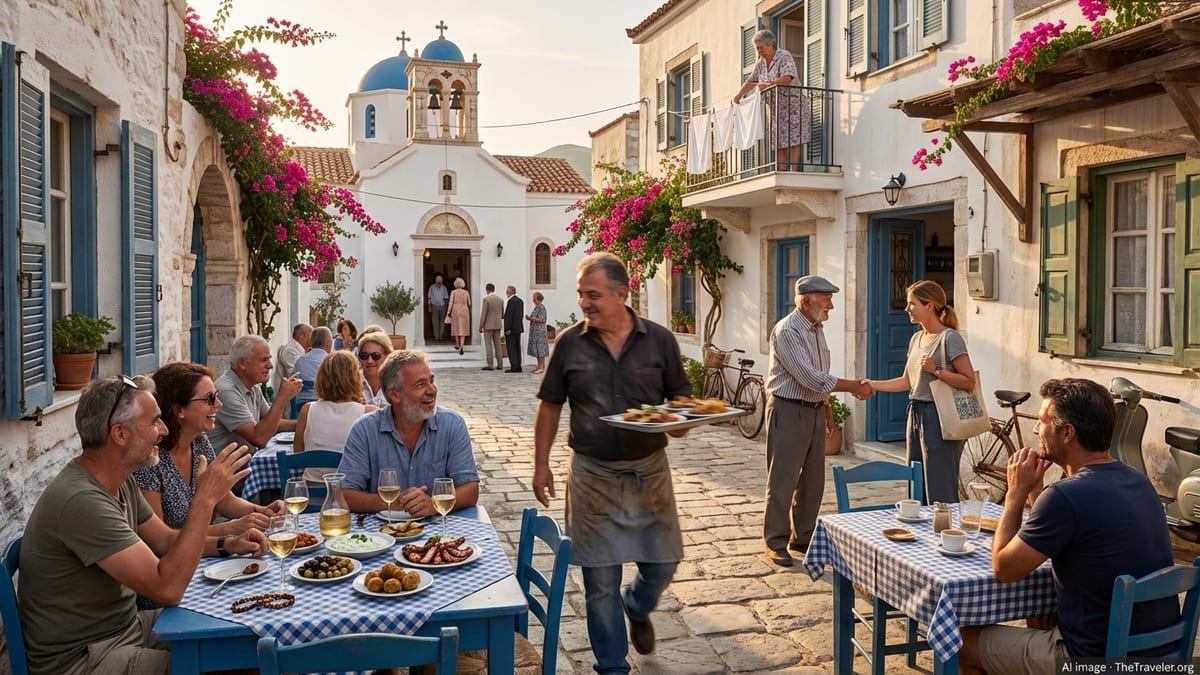
Understanding Greek Social Warmth and First Impressions
Greeks are known for their hospitality and expressiveness, and visitors quickly notice how central personal relationships are to daily life. Conversation tends to be open and animated, and people may stand closer to one another than is common in many Northern European or North American cultures. Friendly eye contact, a relaxed posture, and a willingness to chat about where you are from go a long way in building rapport, even if you only share a few words of Greek.
When you first meet someone, a simple "Yasou" or "Yasas" works well as a greeting. The informal "Yasou" is commonly used with peers or younger people, while "Yasas" is a bit more polite and is suitable for most interactions with adults you do not know. In hotels, small shops, and cafes, it is appreciated if you greet staff when you enter and say a clear goodbye or "Efharistó" as you leave rather than walking out silently.
Handshakes are common when you are introduced, usually firm but not overly so, and accompanied by direct eye contact. Among friends and family, you will often see cheek kissing or hugs, but this is not expected of visitors. Follow the other person’s lead; if they simply offer a hand, do the same. Greeks can be quite direct in conversation and may ask questions about your family or job early on, not because they are intrusive, but because personal background is part of getting to know someone.
Politeness in Greece is less about rigid formality and more about warmth and respect. A friendly tone and basic greetings mean more than perfect manners. Loud arguments can happen in public, but so can enthusiastic laughter and joking. Do not confuse intense conversation with hostility; what sounds emotional to outsiders is often just a lively way of speaking.
Greetings, Gestures, and Body Language to Use Carefully
Greek body language includes a few gestures that can surprise visitors. Nodding and shaking the head are broadly similar to many Western countries, but some older Greeks may still use a slight upward tilt of the chin with a tongue click to mean "no." You do not need to copy this, but be aware of it so you recognize it in conversation. When in doubt, a clear verbal "nai" for yes and "ohi" for no avoids confusion.
One of the most important taboos is the open palm gesture. Spreading your fingers and showing your palm toward someone, especially with an outward push, can be interpreted as a strong insult rooted in an old gesture called the "moutza." Tourists sometimes do this unconsciously in traffic or when waving someone away. To beckon or signal, keep your palm facing yourself or use a smaller, less dramatic motion.
Pointing directly at people can also be considered rude. If you need to indicate a person or a religious icon, a subtle nod or a hand gesture with the fingers together is more respectful. In churches and monasteries, pointing at frescoes or icons should be done discreetly, if at all, and photography may be restricted, especially during services.
Public displays of affection between couples are widely seen in tourist zones, and handholding is normal, but explicit behavior is frowned upon in conservative or rural areas, especially around religious sites. Greeks are used to visitors, but dressing modestly and showing restraint in intimate gestures near churches or family areas signals respect for local sensibilities.
Respecting Religious Traditions and Sacred Spaces
The Greek Orthodox Church plays a significant role in cultural life, even for people who may not attend services regularly. Churches and monasteries are active places of worship, not just historical monuments, and visitors are expected to treat them as such. It is perfectly acceptable for non-Orthodox travelers to enter many churches, light a candle, and quietly admire the art, provided they do so with discretion.
Dress codes at religious sites are often stricter than in everyday public spaces. As a general rule, men should wear long trousers and covered shoulders, while women are expected to cover their knees and shoulders, ideally with skirts or dresses rather than shorts. Many monasteries in particular insist on long skirts for women and may provide wraparound skirts or shawls at the entrance if needed. Bringing a light scarf or large wrap in your day bag is an easy way to comply without feeling overdressed elsewhere.
Silence and reverence are essential inside churches. Conversations should be kept to a whisper, mobile phones silenced, and hats removed. If a service is in progress and you do not intend to participate, it is usually better to observe quietly from the back or wait until the service ends before walking around. Flash photography is often forbidden and, in some monasteries, any form of photography is restricted. Always look for signs or ask a warden before taking photos.
Certain religious spaces have additional rules. The monastic community of Mount Athos, for example, has long maintained a traditional restriction where only men are allowed to visit, and entry requires a special permit arranged in advance. Elsewhere in Greece, women and men are welcome in churches, but expectations of modesty remain strong. Around major religious holidays such as Easter and the Assumption of the Virgin Mary in mid-August, churches and village squares can be crowded with locals attending services and processions. Visitors are usually welcome to watch, but give priority to worshippers and avoid pushing forward for photos.
Dining, Drinking, and Taverna Etiquette
Greek meals are often unhurried social events and represent one of the most enjoyable ways to experience local culture. In traditional tavernas, it is common to share many small dishes rather than each person ordering a separate main course. You might start with salads, dips, and simple plates like grilled vegetables or fried cheese, followed by grilled meats or seafood for the table. Ask the server for recommendations, especially for fresh catch of the day on the islands.
Table etiquette is relaxed but not careless. It is fine to linger over a meal for several hours, and no one will rush you away from your table as long as the restaurant is not closing. Bread is often placed on the table and may carry a small per-person charge; this is normal and not a hidden fee. Using your bread to accompany salads and dips is completely acceptable. Napkins might be paper in simpler tavernas, but cleanliness and hospitality remain points of pride.
In many places, tipping is appreciated rather than strictly required. A small round-up of the bill or leaving around 5 to 10 percent in cash is generally considered polite for good service, especially in family-run establishments. If a service charge is clearly included, an extra euro or two left on the table as a personal gesture is still welcomed. Paying at the table is now standard in most tourist areas, though at some traditional cafes you may still go to the counter to settle the bill.
Alcohol is part of the dining experience but is usually consumed in moderation. Wine, ouzo, tsipouro, and local spirits are enjoyed slowly alongside food. Public drunkenness is frowned upon, particularly in towns and villages where families live nearby. Tourist nightlife districts on certain islands may feel more permissive, but even there, loud, disruptive behavior in residential streets after hours can upset locals. If a host offers you a small glass of homemade liqueur or spirit at the end of a meal, it is a gesture of hospitality; you may politely sip or, if you prefer to decline, do so with a smile and a brief explanation rather than refusing abruptly.
Visiting Villages, Homes, and Local Festivals
Outside the main cities and resort hubs, Greek villages often preserve a slower rhythm and more traditional customs. It is common to see older residents sitting outside their homes or at the local kafeneio, the traditional coffeehouse that functions as a social hub. A friendly "kalimera" in the morning or "kalispera" in the evening, offered as you pass by, is usually met with a smile and sometimes an invitation to chat. Even if you speak little Greek, acknowledging people rather than walking by in silence shows respect.
If you are invited into a Greek home, it is customary to bring a small gift. Sweets from a local bakery, quality chocolate, or a modest bottle of wine are appreciated choices. Shoes may or may not be removed at the door, depending on the household; look at what your hosts do or ask discreetly. Once inside, you will likely be offered coffee, a drink, or something to eat, and refusing everything repeatedly can be taken as a sign of distance rather than politeness. Accepting at least a small portion is a good way to honor your hosts’ generosity.
Local festivals, known as panigyria, are held throughout the year, often tied to the feast day of a village’s patron saint or to seasonal milestones. These events can last well into the night and are centered around live music, dancing, and communal food. Visitors are generally welcome to join in, but it is courteous to watch how the dances unfold before stepping into the circle. Dances often start with experienced locals at the front; if you are invited to join, keep the steps simple and follow the person ahead of you.
At festivals and village gatherings, modest clothing and respectful behavior are important, even if the atmosphere is festive. Children, grandparents, and clergy may all be present, so behavior that might be tolerated in a beach bar will be out of place here. If you take photos of performances or traditional costumes, try to ask permission first, particularly for close-up shots of individuals. Many people are proud to be photographed in traditional dress, but asking remains a basic courtesy.
Dress, Beach Culture, and Seasonal Sensitivities
Dress standards in contemporary Greece vary according to setting. In urban centers such as Athens and Thessaloniki, people dress much like in other European cities, and smart-casual attire works almost everywhere. On islands and coastal resorts, beachwear is expected at the shore but not in town streets, shops, or religious spaces. Walking into a supermarket or taverna in swimwear or without a shirt is widely considered disrespectful, even in very touristy areas.
Topless sunbathing may be accepted on some beaches, especially more remote or unofficially nudist spots, but it is less appropriate on family-oriented or village beaches where locals gather with children. If you are unsure, observe what others are doing and err on the side of modesty. Nude bathing is tolerated only in specific areas and can be illegal or socially unacceptable elsewhere, so research and discretion are important.
Seasonality shapes local life more than many visitors realize. During the Orthodox Easter period, which usually falls between April and May, and around mid-August, when many Greeks take their summer holidays, traffic on roads, ferries, and at pilgrimage sites increases significantly. In these periods, religious observances and family reunions take precedence, and visitors should be prepared for crowded churches, busier restaurants, and occasional closures of small shops so owners can participate in services or village gatherings.
Climate also influences etiquette. During high summer, when temperatures can be very hot, Greeks adjust their day around the heat, often resting or slowing down in the early afternoon. In some quieter areas, small businesses may close for a few hours after lunch and reopen in the early evening. Planning your errands and visits around this rhythm and accepting that not everything operates on a nonstop schedule will make your stay more relaxed and harmonious.
Etiquette at Archaeological Sites, Museums, and Natural Landscapes
Greece is rich in archaeological sites, from hilltop acropolises and ancient theaters to Roman ruins and Byzantine fortresses. These locations are protected heritage areas, and visitor behavior is increasingly monitored as tourism grows. Walking on walls, climbing on fragile structures, or removing stones and pottery fragments is strictly forbidden and can lead to fines. Even seemingly harmless acts, such as sitting on a roped-off column for a photo, can contribute to long-term damage.
Stay within marked paths and respect barriers, which are usually set not only for preservation but also for safety. Many ancient sites have uneven surfaces, steep drops, or loose stones. Comfortable footwear is essential, and high heels are often banned in stadiums and theaters for both conservation and safety reasons. Eating and smoking are typically prohibited inside archaeological zones, though water bottles are generally allowed, especially during hot months.
Museums have their own codes of conduct. Backpacks may need to be left in a cloakroom or carried at your side to avoid bumping displays. Touching statues, vases, or mosaics, even lightly, is discouraged because skin oils and repeated contact can erode delicate surfaces. Flash photography is commonly restricted, and in some special exhibitions photography of any kind may be banned. Quiet conversation is acceptable, but speaking loudly or making video calls inside galleries disturbs other visitors.
Natural sites such as gorges, mountain trails, and marine reserves are receiving more attention, with authorities and local organizations urging visitors to protect biodiversity and avoid leaving litter. Staying on marked trails helps prevent erosion and protects native plants. In recent years, Greek initiatives have highlighted archaeological sites as both cultural monuments and important habitats, making it even more vital for visitors to treat them as shared spaces where culture and nature meet.
Practical Everyday Courtesies: Language, Money, and Transport
Even a handful of Greek words can transform your interactions. Common phrases like "kalimera" for good morning, "kalispera" for good evening, "parakaló" for please or you are welcome, and "efharistó" for thank you are widely appreciated. Many people in tourist areas speak good English, especially younger Greeks and those working in hospitality, but starting an interaction with a Greek greeting signals respect and often leads to warmer service.
When it comes to money, cash is still widely used, particularly in smaller villages, family-run businesses, and for small purchases such as coffee or bus tickets. Card payments are widely accepted in cities, hotels, and larger restaurants, but it is wise to carry some cash for tips, taxi fares, or remote locations. Haggling is not a major part of Greek shopping culture, aside from perhaps open-air markets where modest negotiation over the price of souvenirs or produce may occur. In regular shops, prices are usually fixed, and bargaining can feel awkward for staff.
Public transport etiquette is straightforward. On buses, metros, and trams, priority seats are reserved for older passengers, pregnant women, and those with disabilities. Offering your seat when someone clearly needs it more is both expected and noticed. Queues can be loosely formed at busy times, especially around ticket counters or bus doors, but a calm, patient approach is generally rewarded. Greek drivers can be assertive, and crossing streets requires attention; use designated crossings where possible and follow local pedestrians’ lead rather than stepping into traffic abruptly.
Taxis and ride services operate in most cities and tourist regions. It is courteous to greet the driver, state your destination clearly, and confirm the approximate fare if you are unsure. Official taxis are metered, and drivers are expected to use the meter; if the meter is not turned on in a city where this is standard, politely request it. A small tip or rounding up the fare is appreciated. In smaller towns, taxi drivers may also act as informal guides, offering local recommendations; while they may hope for your business on a later excursion, you are not obliged to accept, but a friendly refusal keeps the interaction positive.
The Takeaway
Greek traditions and etiquette are rooted in a blend of hospitality, faith, family ties, and respect for history. Visitors are not expected to master every nuance, but showing awareness of key customs makes travel smoother and more rewarding. A modest outfit at a monastery, a simple greeting in Greek, or a moment of patience when a village shop closes for an afternoon break all communicate that you see yourself as a guest rather than merely a consumer.
By approaching Greece with curiosity and consideration, you will find that locals are often eager to share their stories, recommend hidden corners, and invite you into the rhythms of everyday life. The more you tune into the country’s social cues, the more your experience will move beyond postcard views to genuine connection, making your journey through Greece not just a trip but a shared cultural encounter.
FAQ
Q1. Is it necessary to speak Greek to travel comfortably in Greece?
It is not necessary, as many people in tourist areas speak English, but learning a few basic Greek greetings and polite phrases shows respect and often leads to warmer interactions.
Q2. What should I wear when visiting Greek churches and monasteries?
Dress modestly, with shoulders and knees covered. Men should wear long trousers, women are often expected to wear skirts or dresses below the knee, and a light scarf is useful for covering shoulders.
Q3. Is tipping expected in restaurants and cafes?
Tipping is appreciated rather than strictly required. Rounding up the bill or leaving around 5 to 10 percent for good service in restaurants and a small coin in cafes is considered polite.
Q4. Can I wear beachwear in town or when shopping?
Beachwear should be kept to the beach or pool area. In towns, shops, and tavernas, it is respectful to wear regular clothes and avoid walking around in swimsuits or without a shirt.
Q5. Are there any hand gestures I should avoid in Greece?
Yes. Showing your open palm with fingers spread toward someone, especially in a pushing motion, can be taken as an insult. Use smaller, more neutral gestures instead.
Q6. How should I behave at archaeological sites and museums?
Stay on marked paths, do not climb on ruins, avoid touching exhibits, respect photography rules, and keep noise to a minimum so others can enjoy the site.
Q7. Is public affection acceptable in Greece?
Holding hands and light affection are generally fine, especially in tourist areas, but overtly intimate behavior is frowned upon, particularly in villages and near religious sites.
Q8. What is the etiquette if I am invited to a Greek home?
Bring a small gift such as sweets or wine, accept at least a small amount of what is offered to eat or drink, and be prepared for warm, generous hospitality that you acknowledge with thanks.
Q9. How do Greeks feel about tourists photographing them?
Many people do not mind casual photos, but it is courteous to ask permission, especially for close-up portraits, children, or people in religious dress or traditional costumes.
Q10. Are there special customs I should know about during Easter and religious holidays?
Churches and villages can be very busy, with processions and late-night services. Visitors are welcome to observe but should dress modestly, give priority to worshippers, and keep photography discreet.