

More news on this day
Travellers heading to Spain for Easter 2026 are being urged to brace for possible airport disruption, as a series of ground handling strikes and related stoppages collide with one of the country’s busiest travel periods, Semana Santa.
Get the latest news straight to your inbox!
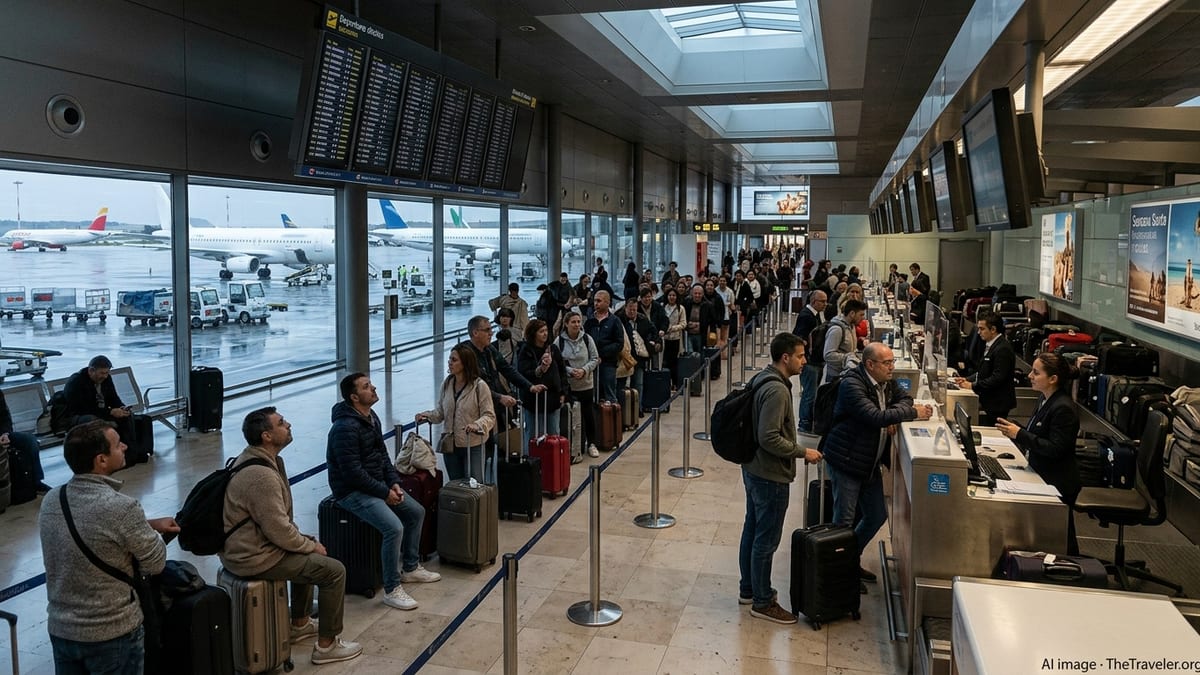
Semana Santa 2026 Collides With Industrial Unrest
Holy Week in 2026 falls in the final days of March and the first week of April, with key dates including Good Friday on April 3 and Easter Monday on April 6. Publicly available information shows that Spanish destinations such as Seville, Málaga, Granada and coastal hotspots are already preparing for a surge in domestic and international visitors around these dates, continuing a strong post‑pandemic recovery in demand.
At the same time, Spain’s aviation sector is grappling with a rolling wave of labour disputes involving ground handling staff at several operators. Data compiled by strike monitoring platforms and Spanish media coverage indicates that industrial action that began in 2025 and early 2026 at companies including Azul Handling, South Europe Ground Services and maintenance providers at Madrid‑Barajas has not been fully resolved, raising concerns that further walkouts could be scheduled during peak holiday periods.
The overlap between an exceptionally busy Semana Santa calendar and the potential for renewed strikes is prompting warnings from travel advisors and industry analysts that Spain’s airports may again face bottlenecks at check‑in, baggage and on the apron just as demand peaks.
Where Strikes Are Already Under Way
Ground handling workers at Ryanair group subsidiary Azul Handling have been engaged in prolonged industrial action since mid‑2025 at airports in Spain, with an indefinite strike at Vitoria‑Gasteiz (Foronda) still listed as active in March 2026, according to specialized strike‑tracking services and regional labour bulletins. Reports indicate that although this is a smaller airport, the dispute forms part of a wider confrontation over pay, staffing and conditions for low‑cost carriers’ support operations.
In Madrid, the country’s main international hub, a separate conflict is affecting the automated baggage system. Travel alert services describe ongoing strikes by maintenance staff working on the baggage handling system at Adolfo Suárez Madrid‑Barajas Airport, taking place on specific days of the week through late May 2026. While these stoppages do not directly involve ramp agents or check‑in staff, they have the potential to slow baggage delivery and increase the risk of delays and missed connections around busy holiday periods.
Meanwhile, Spanish aviation media have documented a series of targeted strikes by South Europe Ground Services, a handling provider linked to an IAG carrier, at Madrid‑Barajas over the 2025–2026 winter season. Those actions, focused on limited time windows across several days into January 2026, were called over grievances ranging from scheduling and pay supplements to training and safety on the ramp. Although those specific dates have passed, union statements cited in coverage show there is continuing tension over workload and staffing that could resurface later in the year.
Why Easter Week Is So Vulnerable
Semana Santa is traditionally one of the most pressured periods of the year for Spanish airports, as both domestic travellers and international visitors converge on the country. Aena’s traffic statistics for recent years highlight steady growth in passenger volumes in March and April, with hubs such as Madrid‑Barajas and Barcelona‑El Prat, as well as leisure gateways like Málaga‑Costa del Sol, Palma de Mallorca, Alicante‑Elche and Tenerife Sur, handling record or near‑record traffic.
This combination of dense flight schedules and tight turnarounds on popular holiday routes leaves little margin for disruption in ground operations. Even short work stoppages by baggage handlers, ramp agents or aircraft dispatchers can quickly ripple across the day’s flights, particularly at airports with a heavy presence of low‑cost carriers that rely on rapid turnaround times.
While Spanish legislation requires minimum service levels during strikes in essential transport sectors, experience from previous aviation disputes shows that cancellations, significant delays and long queues can still occur. During earlier walkouts by Iberia and other ground staff in Spain, travellers faced disrupted connections, rebookings and lost baggage, even when core services were maintained on paper.
What Travellers Can Expect at Key Airports
Industry observers note that the greatest vulnerability over Easter 2026 is concentrated at Spain’s largest hubs and tourist gateways. Madrid‑Barajas, already contending with intermittent industrial action linked to its baggage system and handling providers, acts as a critical connecting point for long‑haul services from the Americas, the Middle East and other parts of Europe. Any slowdown in ground handling there can affect onward links to Andalusia and the islands that are popular for Holy Week trips.
Barcelona‑El Prat, Málaga‑Costa del Sol and Palma de Mallorca are also flagged as high‑risk for congestion during Semana Santa because of the intensity of their short‑haul and intra‑European schedules. Reports from the 2025 summer strike wave involving ground crew at major Spanish airports described long queues at check‑in, delays in baggage offloading and occasional diversions or consolidations of flights on the busiest days.
Smaller regional airports, including Vitoria‑Gasteiz, Murcia, Girona and some Canary and Balearic island gateways, may see more targeted disruption if local handling conflicts continue or re‑emerge. In these locations, the presence of a single dominant ground services provider and fewer alternative flights can amplify the impact of any stoppage.
How Airlines and Passengers Are Preparing
Recent disputes suggest that airlines serving Spain are increasingly adjusting their operations in anticipation of industrial action by ground handling providers. In the 2025 Azul Handling conflict, Ryanair publicly stated that it expected to maintain its schedule by relying on minimum service requirements and contingency planning, even as unions warned of pressure on staffing levels. Similar strategies, including schedule thinning, aircraft swaps and extended connection times, are likely to be used again if new strike dates are called close to Easter 2026.
Travel industry guidance emerging from past Spanish strikes recommends that passengers due to fly around Semana Santa monitor their airline’s communication channels frequently in the weeks before departure, paying particular attention to flights operated by carriers that rely heavily on outsourced handling. Flexible fares, travel insurance with disruption cover and allowing extra time at departure airports are highlighted as practical steps to mitigate the risk of missed flights or lost luggage.
Consumer protection bodies in Spain and the wider European Union also underline that EU air passenger rights regulations apply when flights are cancelled or heavily delayed because of ground handling strikes. These rules can entitle travellers to rerouting, refunds and in some cases compensation, although the exact entitlements depend on the circumstances of each disruption and whether it is classified as extraordinary.
With labour tensions in the aviation sector still simmering and travel demand for Holy Week continuing to rise, Spain’s airports face a challenging test over Easter 2026. Travellers planning to experience Semana Santa processions or coastal getaways are being encouraged to prepare for a more unpredictable journey than in quieter years.