

More news on this day
Spain’s key holiday gateways, including Barcelona, Madrid, Málaga, Alicante, Palma de Mallorca and Valencia, are bracing for severe disruption as a fresh wave of ground handling strikes collides with the Easter travel rush, putting millions of passenger journeys at risk of delays, missed connections and last‑minute cancellations.
Get the latest news straight to your inbox!
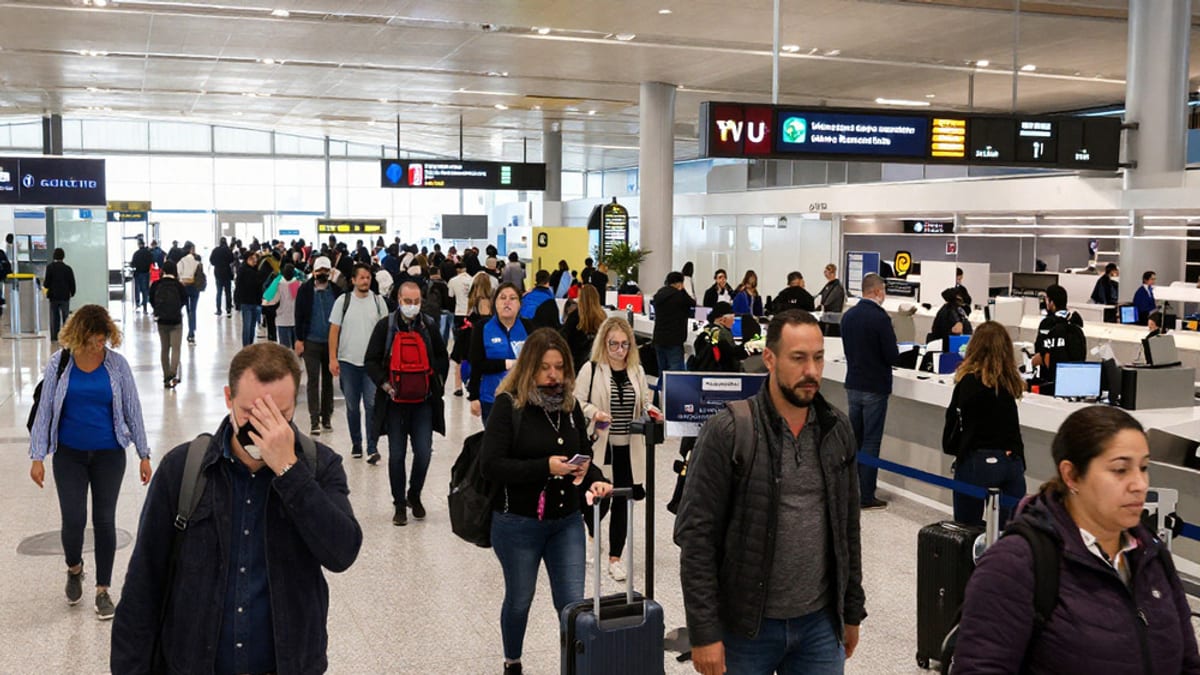
Image by Global Travel Alerts, Advisories, International Travel Alerts
Indefinite Groundforce Walkout Expands to 12 Major Airports
Published coverage in Spanish media indicates that Groundforce, one of Spain’s largest ground handling companies and part of the Globalia group, is now at the center of an indefinite strike affecting 12 high-traffic airports. The company provides ramp, baggage and passenger services at Madrid-Barajas, Barcelona-El Prat, Málaga-Costa del Sol, Alicante-Elche, Valencia, Palma de Mallorca, Ibiza, Bilbao, Las Palmas, Tenerife, Lanzarote and Fuerteventura.
The industrial action, called by several of Spain’s main transport unions, is reported to stem from a dispute over wage updates linked to inflation and the interpretation of key clauses in the sector’s collective agreement. Union statements cited in national press reports argue that years of rising prices have eroded purchasing power, while accusing the company of using a restrictive reading of the agreement to avoid automatic pay revisions.
The strike was initially expected to begin over the Easter weekend but was ultimately scheduled to start on Monday 30 March, only days before peak Holy Week departures. Public information about the strike plan highlights three daily windows of stoppages, in early morning, midday and late evening, times that coincide with some of the busiest waves of departures and arrivals at Spain’s main airports.
Because the strike is indefinite rather than limited to a few symbolic days, aviation analysts quoted across Spanish business and travel media are warning that disruption could spread unevenly into April if no agreement is reached, complicating operations well beyond the core Easter holidays.
Barcelona Joins Madrid and Coastal Hubs in a Growing Flashpoint
Barcelona-El Prat’s inclusion in the Groundforce dispute is significant, as publicly available traffic statistics show it is one of Spain’s top three airports by passenger volume, alongside Madrid and Palma de Mallorca. A large share of its movements depend on third-party handlers for check-in, ramp operations and baggage, making it particularly vulnerable when those staff stage coordinated walkouts.
Reports from Spanish outlets in recent days describe long queues at check-in and baggage drop in the first limited stoppages, as well as slower aircraft turnaround times. Social media posts and online travel forums are already circulating images of crowded departure halls at Barcelona, where passengers have been advised by airlines to arrive earlier than usual and to travel with hand luggage only where possible.
Along the Mediterranean coast, Málaga, Alicante and Valencia are emerging as additional pressure points. These airports are vital for the Costa del Sol and Costa Blanca tourism economies and handle large volumes of leisure traffic from the United Kingdom, Germany, Scandinavia and other European markets during Easter. With many flights operated by carriers that rely entirely on outsourced ground handling, the risk of knock-on effects from even short stoppages is particularly acute.
In the Balearic Islands, Palma de Mallorca and Ibiza are also covered by the strike call, raising the prospect of bottlenecks for island residents and holidaymakers alike. Local tourism bodies, in comments reported by regional media, have expressed concern that disruption at the very start of the spring season could weigh on bookings and damage Spain’s reputation for reliability at a time of fierce competition from rival Mediterranean destinations.
Easter Timing Raises Stakes for Airlines and Passengers
The timing of the industrial action is especially sensitive. In 2026, Easter Sunday falls on 5 April, and Holy Week traditionally triggers one of the busiest travel periods of the year for Spain’s airports. Data from recent years collected by aviation and tourism industry groups show that Holy Week traffic can rival or even exceed some peak summer days on core domestic and European leisure routes.
With the Groundforce stoppages scheduled in three daily blocks that overlap with popular departure waves, airlines are recalculating which flights can be operated within legal service minimums and available staffing. A combination of rerouted aircraft, retimed departures and proactive cancellations is already being used on some routes to contain the risk of congestion and to comply with Spain’s minimum service requirements for transport strikes.
Passengers, however, may perceive this planning as sudden cuts to their travel options. Consumer advocacy groups and travel law specialists quoted in European media note that strikes by airport service providers are typically classified as extraordinary circumstances, which can limit cash compensation rights under European passenger regulations, even when disruption is severe. Travelers may still be entitled to rerouting, care and, in some cases, refunds, but not necessarily to additional payouts.
At the same time, the industrial conflict is unfolding against a backdrop of record passenger numbers across Spain’s main airports. Recent traffic reports suggest that airports such as Madrid, Barcelona, Málaga, Alicante and Valencia have seen strong growth since 2023, leaving little spare capacity in their daily schedules. Any prolonged ground handling disruption, even if partial, could therefore translate quickly into cascading delays.
Additional Handling Operators and Wider System Strain
Groundforce is not the only actor in Spain’s ground handling landscape. Another major operator, Menzies Aviation, has also been mentioned in Spanish economic coverage in recent days in connection with a separate labor dispute and the possibility of its own strike action. Menzies holds handling licenses at several key airports, among them Barcelona and Palma de Mallorca, meaning that parallel stoppages could significantly complicate contingency planning if they go ahead.
Union communications cited in national press call for the airport authority and policymakers to review how ground handling contracts are tendered and supervised, arguing that aggressive competition on price has intensified pressure on working conditions. Representatives claim that frequent changes of contractor, combined with widespread use of part-time contracts and overtime, have contributed to rising labor tensions across the sector.
For airlines, the strikes arrive after several years in which Europe’s aviation system has already been tested by a mix of rapid post-pandemic demand recovery, staffing shortages and infrastructure constraints. Many carriers have sought to build more slack into schedules and improve coordination with handling providers, but observers warn that an indefinite dispute covering a dozen strategic airports is testing those buffers.
Aviation analysts quoted by European travel media suggest that while some large network airlines may be partially shielded where they employ their own ground staff, point-to-point and low-cost carriers that depend fully on third-party handlers are more exposed. The geographic spread of the strike, from mainland hubs to island gateways, also complicates the use of alternative airports or rerouting options within Spain.
What Easter Travelers Should Expect in the Coming Days
With the first full days of strike action set to overlap with the outbound Easter rush, travelers heading to or from Spain in late March and early April are being urged by airlines, airports and travel agents to monitor flight status closely. Many carriers have already issued flexible rebooking policies, allowing passengers to move their trips to non-strike days or different flights without change fees, subject to availability.
Operational forecasts shared in the travel trade press indicate that early morning and midday departures are likely to be most affected, given the alignment with the planned stoppage windows. Short-haul European flights and domestic services on popular leisure routes are particularly vulnerable to knock-on delays when aircraft and crews are rotated through multiple strike-affected airports in a single day.
Passengers already in Spain are being advised by tourism information channels to build extra time into airport journeys, especially from city centers to large hubs such as Madrid and Barcelona. Recommendations include checking in online where possible, traveling with cabin baggage only, and ensuring that any tight self-connecting itineraries or separately booked onward journeys allow for potential disruption.
Looking beyond Easter, industry watchers note that the trajectory of the dispute will depend on whether the parties are able to reach a compromise on pay and working conditions in the coming days. If no agreement emerges, the combination of ongoing industrial action in ground handling and strong demand heading into the summer season could leave Spain facing repeated waves of airport disruption at precisely the moment when millions of travelers are returning to the skies.