

More news on this day
Travelers at Washington Dulles International Airport faced fresh disruption on March 28 as a cluster of suspended and heavily delayed regional flights operated by Republic and GoJet rippled across major routes to New York, Philadelphia, Toronto, Brussels, Frankfurt and other key hubs.
Get the latest news straight to your inbox!
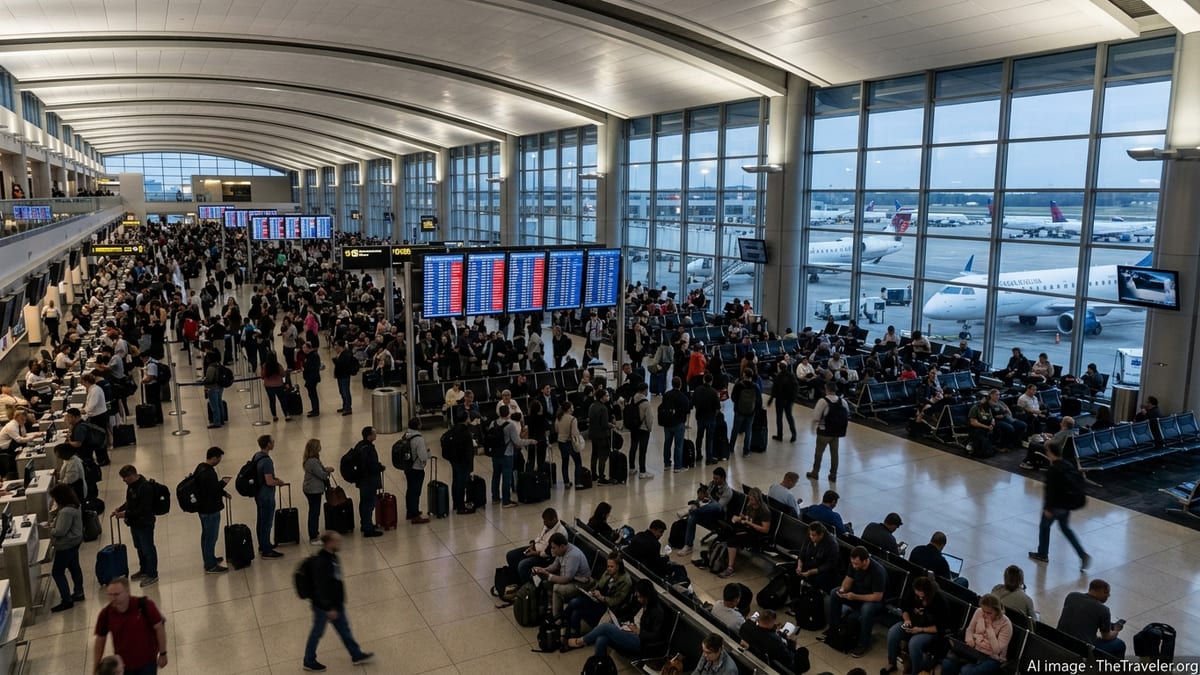
Regional Carriers Pull Flights Amid Wider Washington Airspace Turmoil
Publicly available flight-tracking information on March 28 shows that at least five regional services operated for major US airlines by Republic and GoJet were suspended or heavily delayed from Washington Dulles, amplifying an already strained travel environment in the capital region. The affected flights linked Dulles with core Northeast and international gateways, including New York, Philadelphia and Toronto, where onward connections feed long haul services to Europe.
The disruption comes on the heels of multiple ground stops this month affecting Washington area airports, triggered by technical and environmental issues at Potomac Consolidated TRACON, the Federal Aviation Administration facility in Warrenton, Virginia that manages approach control for Dulles, Reagan National and Baltimore/Washington. Recent incidents at the facility prompted temporary halts in departures and arrivals, with passengers reporting diversions, hours long delays and rapidly shifting departure boards across the region.
While Friday’s issues centered on regional operations at Dulles, the knock on effects were felt on long haul itineraries to Brussels, Frankfurt and beyond, as missed connections stranded passengers and forced rebookings on later transatlantic departures. Data from recent disruption reports already ranks the Dulles Frankfurt corridor among the more delay prone US Europe routes, leaving travelers particularly exposed when feeder flights from smaller cities fail to depart on time.
The latest wave of irregular operations underscores how dependent many international passengers remain on smaller regional jets operated by contractors such as Republic and GoJet for the first and last legs of global journeys. When those flights are pulled or pushed back, even a limited number of cancellations can quickly cascade into lost connections at crowded hubs.
Ground Stops and Hazmat Scares Add to Passenger Uncertainty
This month’s turmoil at Dulles has not been limited to routine weather and crew availability challenges. Earlier in March, a strong chemical odor at the Potomac TRACON facility prompted an evacuation and temporary halt in air traffic for Washington area airports, according to local broadcast and national wire service coverage. That event produced broad ground stops at Dulles, Reagan National, Baltimore/Washington and several smaller regional fields served from the same airspace.
Travelers documented diversions to alternate airports, extended tarmac waits and deplanings across social media and aviation forums, offering a granular view of how quickly operations can unravel when the region’s central radar and control hub is forced offline. In some cases, aircraft already inbound to Dulles were rerouted to cities hundreds of miles away, where crews timed out and onward travel plans collapsed.
Reports from those earlier episodes indicate that departures did resume after several hours, but the staggered restart left airlines working through a backlog of aircraft and crews that cascaded into the following day’s schedule. Combined with a separate East Coast thunderstorm system that triggered a broad travel waiver for mid March, the result has been a sustained period of operational volatility for Dulles and its partner carriers.
Against that backdrop, the suspension and delay of multiple Republic and GoJet flights on March 28 added to a perception among travelers that the Washington area has faced an unusually high concentration of disruptions this month, even by the standards of a busy late winter travel period.
Impact on Key Routes to New York, Philadelphia, Toronto and Europe
The suspended regional departures at Dulles struck particularly hard at spokes feeding into New York, Philadelphia and Toronto, all of which function as important reliever or partner hubs for transatlantic services. New York area airports and Philadelphia are among the principal departure points for flights to Brussels and Frankfurt, meaning delays at the regional level often cascade into missed overnight connections to Europe.
Travel analytics published this year already place Dulles to Frankfurt among the more delay affected transatlantic pairings in the US, with a substantial share of passengers experiencing arrival or departure setbacks. When fresh day of cancellations hit regional feeders, travelers bound for Germany and other European destinations may face rebookings that push departures back by 24 hours or more, particularly in peak travel windows when alternative seats are limited.
Toronto also plays a critical role in this network, functioning as a major Canadian hub for services into Europe and beyond. Disruptions on cross border routes between Dulles and Toronto can sever onward links for passengers booked through to Brussels, Frankfurt and other European cities on alliance carriers, forcing complex itinerary changes that spill across multiple airlines.
In practice, even a handful of suspended flights at the regional level can have an outsize influence on long haul connectivity. Passengers arriving late from smaller East Coast cities or interior US markets may find that their Brussels or Frankfurt departures have already closed, triggering hotel stays, unplanned overnights at intermediate hubs or rerouting through entirely different gateways.
Why Regional Operations at Dulles Are So Vulnerable
Regional airlines such as Republic and GoJet operate most of their Dulles services under capacity purchase agreements with the largest US carriers, flying smaller jets that carry codes of mainline brands but are staffed and managed by separate companies. According to airline fleet and schedule data, these operators collectively handle hundreds of daily departures across the United States, often using tight aircraft rotations and lean crew scheduling to serve secondary cities.
That operating model can heighten vulnerability to cascading delays. A late inbound aircraft to Dulles can easily disrupt a subsequent departure to New York or Philadelphia if there is no spare jet available. Similarly, if a crew hits federally mandated duty limits after a diversion or extended tarmac delay, flights may be canceled outright rather than retimed, particularly at off peak hours when replacement staff are scarce.
Public transportation statistics compiled by federal oversight bodies have repeatedly shown that smaller regional carriers tend to experience a higher percentage of delays, diversions and cancellations than their mainline partners, in part due to their concentration at congested hubs and exposure to tight turn times. For travelers, the distinction between mainline and regional brands is often invisible until irregular operations reveal how fragile these feeder systems can be.
Dulles also occupies a complex position in the Washington airspace system. As a major international gateway, the airport competes for runway and airspace priority with Reagan National and Baltimore/Washington, all three of which depend on the same approach control infrastructure. When that system encounters a failure or environmental issue, regional flights are often the first to be held, delayed or scrubbed to create capacity for larger long haul operations.
What Travelers Through Dulles Should Expect in the Coming Days
Given the recent pattern of ground stops, weather related waivers and regional schedule adjustments, publicly available information suggests travelers transiting Dulles in the near term should be prepared for continued pockets of disruption, particularly on shorter routes to New York, Philadelphia, Toronto and other East Coast or Midwestern spokes. Schedules can appear normal at booking, only to shift rapidly on the day of departure as airlines respond to airspace constraints or crew imbalances.
Airline advisories and independent travel reports increasingly emphasize the importance of allowing generous connection times at Dulles when linking to key transatlantic departures, especially Brussels and Frankfurt. Where possible, passengers are being encouraged to select earlier feeder flights into Dulles or to route through alternative hubs with additional daily frequencies to Europe.
For those already booked on regional services operated by Republic or GoJet, monitoring real time flight status and aircraft positioning can provide early warning of potential issues. Recent passenger accounts highlight scenarios in which crews were still in other cities due to mechanical or weather delays, even as departure times at Dulles initially remained unchanged on airport displays.
While the underlying technical issues at Potomac TRACON are being addressed and major storms have passed, March’s events demonstrate how quickly a combination of regional carrier challenges and localized air traffic control disruptions can converge at Dulles, turning a handful of suspended flights into a day of turmoil for travelers bound for New York, Philadelphia, Toronto, Brussels, Frankfurt and destinations far beyond.