

More news on this day
Flights at all three major Washington, DC area airports resumed Friday evening after a brief regionwide ground stop linked to a strong odor reported at a key Federal Aviation Administration facility that manages local air traffic.
Get the latest news straight to your inbox!
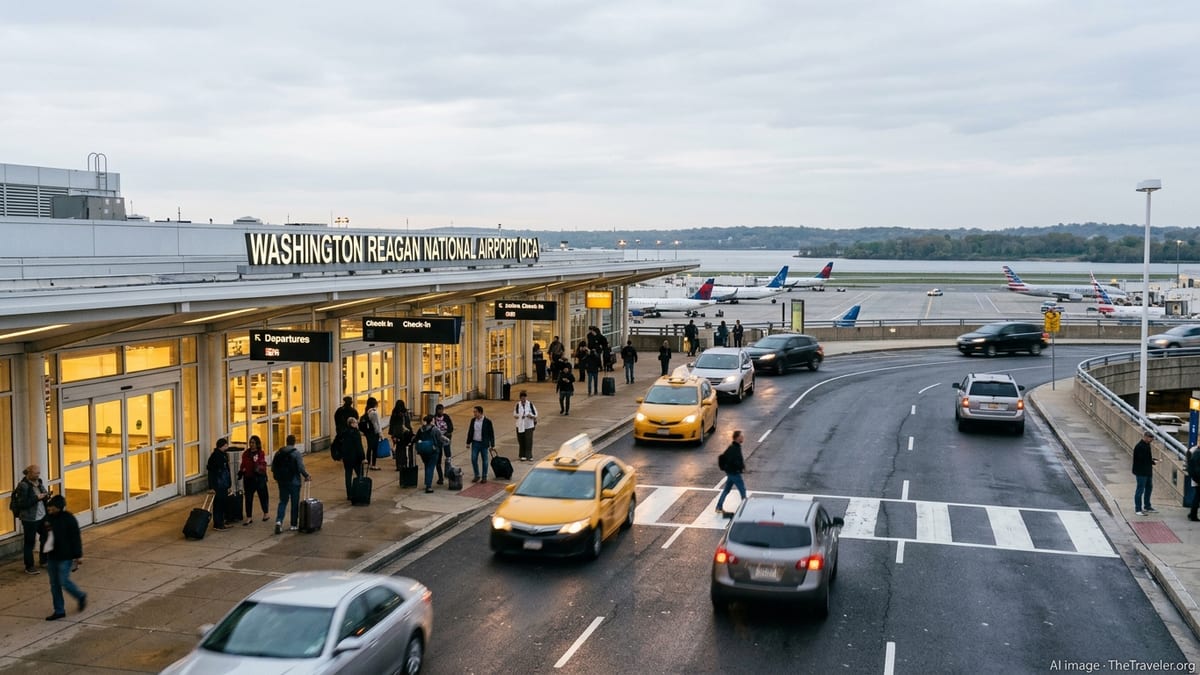
Brief Halt Disrupts Busy Mid-Atlantic Air Corridor
Published coverage indicates that arrivals and departures into Washington Reagan National, Washington Dulles International and Baltimore/Washington International Thurgood Marshall were temporarily paused on Friday after a strong chemical-like smell was reported at the FAA’s Potomac Terminal Radar Approach Control facility, known as Potomac TRACON. The facility, located in Virginia, coordinates approach and departure traffic for the broader capital region, making any disruption there immediately visible across multiple airports.
The interruption, which also affected service to Charlottesville-Albemarle and Richmond International airports, was relatively short-lived, but it briefly slowed one of the East Coast’s most heavily used air corridors. Reports describe controllers vacating portions of the building while the source of the odor was investigated, prompting a precautionary halt to some flight movements until staff could safely return to their positions.
By later in the evening, the ground stop was lifted, and traffic flows gradually began returning to scheduled levels. Airport communication channels cautioned travelers to expect knock-on delays, as aircraft and crew schedules were realigned following the sudden pause in operations.
What Travelers Experienced at Reagan National, Dulles and BWI
Passengers at the three primary DC-area airports experienced a mix of departure holds, extended taxi times and arrival delays as the ground stop took effect. According to airport status updates and airline advisories, some flights bound for the capital region were held at their origin points, while others already en route were metered into the airspace once limited operations resumed.
At the terminals, travelers encountered crowded departure gates and updated departure boards as carriers adjusted schedules. Some flights were delayed, while a smaller number were reportedly canceled when aircraft or crews were displaced by the disruption. For connecting passengers using the Washington region as a hub, even brief interruptions like this one can lead to missed onward flights and the need for rebooking.
Airport operators used social media and alert systems to urge passengers to monitor flight status closely and to stay in contact with their airlines before traveling to the airport. Publicly available information from Baltimore/Washington International indicated that residual delays could continue into the evening, even after the formal ground stop order had ended.
Focus on Potomac TRACON and Air Traffic Safety Protocols
The incident once again placed attention on Potomac TRACON, the specialized radar facility that sequences aircraft in and out of the national capital region. The center handles high volumes of complex traffic, including flights to and from the three major commercial airports as well as smaller regional fields in Virginia and Maryland.
When any potential environmental or safety concern is identified inside such a facility, standard protocols emphasize caution. Controllers may be relocated within the building, operations may be scaled back, or flights may be temporarily stopped while conditions are assessed. Reports on this latest event indicate that precautionary measures were taken until the odor issue was resolved and staff could resume normal duties.
Published coverage notes that a similar smell-related problem at the same facility earlier this month led to another short-lived ground stop. In that earlier case, transportation officials publicly linked the odor to an overheated circuit component that was subsequently replaced, and operations fully resumed after emergency responders determined there was no ongoing hazard to personnel.
Ripple Effects Across the Northeast Travel Network
Even a brief pause in traffic around the nation’s capital can have wider implications for air travel along the Eastern Seaboard. The Washington region sits at a crossroads for flights connecting the Southeast, Mid-Atlantic and Northeast, and delays at Reagan National, Dulles and BWI can propagate to airports hundreds of miles away.
According to operational updates referenced in national media, some New York area offices warned travelers that flights bound for Washington could face significant evening delays. Airlines often respond to such localized constraints by holding departures, adjusting routings or swapping aircraft, all of which can cascade through their networks.
For travelers, that means that even if their specific flight is not directly subject to a ground stop, it can still be affected by the knock-on impact of earlier disruptions. Missed connections, shorter layovers and later-than-planned arrivals are all common consequences when a major control facility or hub airport experiences an unplanned slowdown.
Advice for Travelers Heading to the DC Region
The latest episode serves as a reminder that airline operations remain highly sensitive to disruptions at key control facilities as well as at the airports themselves. While events involving odors or technical anomalies are relatively rare, they demonstrate how quickly the system can shift from normal operations to precautionary restrictions.
Travel industry guidance consistently recommends that passengers flying into or out of busy metro regions such as Washington build some flexibility into their plans. Monitoring airline apps and airport status pages on the day of travel, opting into text alerts, and allowing extra time for connections can help mitigate the stress of unforeseen delays.
Travelers booked on evening flights, when schedules are already tightly packed, may be particularly vulnerable to residual delays after a ground stop. Once a disturbance has cleared, it can still take several hours for operations to rebalance, especially if aircraft and crew have ended up out of position.
For now, publicly available information shows that traffic at Reagan National, Dulles and BWI has resumed, with only scattered delays reported. The latest incident is likely to renew attention on infrastructure resilience at critical FAA facilities, and on the contingency plans that keep one of the country’s busiest airspaces moving when unexpected problems arise.