

Iowa is often pictured as a state where every journey starts with a set of car keys, but visitors and residents increasingly have viable options for getting around without driving. Intercity buses, airport shuttles, regional public transit and Amtrak routes now knit together many of Iowa’s cities and college towns, and with a bit of advance planning, it is possible to plan an Iowa itinerary that relies far more on timetables than on parking lots. This guide walks through the main ground transportation options for car-free and car-light travel across the state, highlighting where they work well, where gaps remain and how to stitch multiple modes together for smoother journeys.
Understanding Iowa’s Intercity Bus Network Today
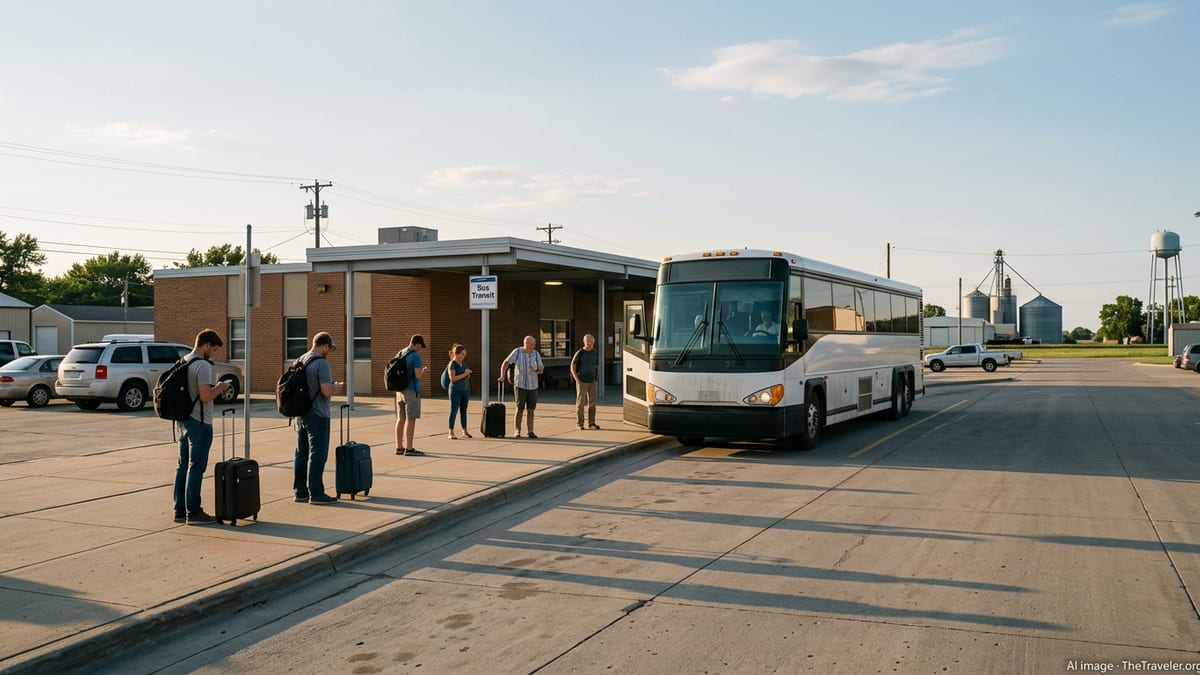
Intercity bus service remains one of the most important tools for car-free travel across Iowa, connecting cities that are not served by passenger rail and offering affordable links to neighboring states. The landscape is evolving, however, and travelers who relied on legacy companies will find a different picture in 2026 than even a few years ago. Burlington Trailways, long a fixture in Iowa, ended its intercity bus operations in 2025, leaving other carriers and regional partners to pick up demand. As a result, it is more important than ever to confirm which company actually operates a given route when you are booking tickets, even if you are using familiar booking platforms.
Jefferson Lines is now the most visible branded intercity carrier serving many Iowa corridors. The company runs routes across the central United States and lists stops in multiple Iowa cities, generally linking them to hubs such as Minneapolis, Omaha, Chicago and other regional centers. Schedules tend to be optimized for long-distance through passengers rather than purely local trips, so departure times may be early in the morning or late at night. Travelers should expect limited frequencies on many Iowa segments and plan around one or two departures per day rather than a turn-up-and-go model.
In practice, much of Iowa’s remaining intercity bus service operates through a web of partnerships. A ticket bought from a large national brand may place you on a coach operated by another regional company or vice versa. This can be helpful in expanding the network of possible destinations, but it can also cause confusion at smaller stops where branding on the bus may not match the logo on your ticket. When you book, always print or download your ticket, note the operating carrier and check the exact pickup point, which might be a gas station, park-and-ride lot or college campus rather than a traditional downtown bus depot.
For car-free travelers, the practical takeaway is that intercity buses still provide a functional backbone for reaching Iowa from neighboring states and moving between several key cities within Iowa. However, these services work best when combined with local transit, shuttles or rideshares for the first and last few miles of your journey. Flexibility, careful reading of schedules and some tolerance for odd travel hours are crucial to making the most of the current bus network.
Amtrak Across Iowa: Where Trains Fit In
Passenger rail in Iowa is modest in scope, but for the corridors it serves, Amtrak can be a comfortable and scenic alternative to the highway. According to recent Amtrak state fact sheets, Iowa is currently served by two long-distance routes that pass through the state on their way between Chicago and the West. These routes stop at a small number of Iowa stations, which together account for tens of thousands of passenger boardings and alightings per year, a meaningful but still relatively small share of overall travel in the state.
Key Amtrak stations in Iowa include Burlington and Mount Pleasant, which are served by the California Zephyr, and Fort Madison, which provides access to the Southwest Chief. Other active stations typically include Osceola and Ottumwa, both common choices for visitors headed to central Iowa or points farther west. These trains usually offer one daily departure in each direction, with schedules timed primarily around Chicago connections rather than purely local Iowa needs. That means you will need to plan your trip carefully around set train times, particularly if you are transferring to buses or shuttles at either end.
Facilities at Iowa’s Amtrak stations vary from modest shelters to fully enclosed depots. Burlington’s station is located near the Mississippi River and is integrated with local transit, giving passengers the option to connect to city buses for onward travel. Fort Madison’s stop has been relocated back to its historic downtown depot after an extensive restoration, improving walkability to local services and lodging. Some smaller stations may have unstaffed platforms with limited amenities, so it is wise to bring essentials, arrive early and confirm whether checked baggage service is available on your specific train and station pairing.
For car-free travelers, Amtrak works best as a long-distance spine connecting Iowa to Chicago, Denver and points beyond, with local and regional services handling shorter segments. If your itinerary focuses on eastern Iowa or you are open to overnight train travel, incorporating Amtrak can significantly reduce driving. However, the limited number of stations and departures means that trains are not yet a full substitute for intercity buses or cars. In many cases, the most efficient plan will use rail for the longest legs, then switch to regional buses or shuttles to reach smaller communities.
Airport Shuttles and Intercity Links Without a Car
Airports in Iowa have become important hubs for ground transportation, especially for travelers arriving from other parts of the United States who prefer not to rent a car. The Des Moines International Airport offers a mix of transportation options, including taxis, app-based ride-hailing services and shuttles that circulate between the terminal and nearby hotels. Some services run on fixed loops with frequent departures, while others are operated directly by hotels and may require you to call ahead or use a courtesy phone in the arrivals area. Because availability and operating hours can change, especially for smaller hotel shuttles, checking with your accommodation before you land is a smart step.
The Eastern Iowa Airport near Cedar Rapids serves as a regional gateway for communities like Iowa City, Coralville and the wider Corridor region. Dedicated shuttle companies operate regular services between the airport and nearby cities, often with advance reservations and set pickup points. In addition, new services are emerging to link more distant communities to major airports. For example, a recently announced shuttle is set to connect Dubuque with the Eastern Iowa Airport in Cedar Rapids, with multiple daily departures and prebooked seats, signaling a growing recognition that many travelers want a reliable, shared alternative to solo driving.
For university towns such as Ames and Fairfield, airport transportation is especially important during academic breaks and large events. Iowa State University students commonly rely on a mix of intercity buses and airport shuttles when traveling to and from Des Moines International Airport. In southeast Iowa, Maharishi International University coordinates airport pickups for its students at regional airports on a prearranged basis. These specialized services are not always visible in general travel searches, so university and college transportation pages can be valuable resources if your trip centers on a campus.
Travelers should note that while shared shuttles can be cost-effective and convenient, they do require more planning than simply hailing a cab at the curb. Many companies ask for reservations at least a day in advance, particularly for early morning departures or late arrivals. Some operate on fixed timetables that do not align with every flight. Building extra time into your schedule and confirming details such as meeting points, luggage allowances and payment methods will help avoid last-minute stress and ensure a smooth, car-free transfer.
Regional and Rural Transit: Filling in the Gaps
Beyond the intercity routes and airport shuttles, Iowa has a quiet but extensive network of regional transit agencies that provide crucial mobility, particularly in rural counties. The Iowa Department of Transportation designates public transit systems across the state and publishes resources that map out coverage areas and contact details. These agencies operate a mix of fixed-route buses in larger cities and demand-response or dial-a-ride services in smaller towns and rural townships. Although they are primarily designed for local residents, visitors can often use them as well, provided they understand how to book and what to expect.
One example is Region 8 Regional Transit Authority, which serves communities in Delaware, Dubuque and Jackson Counties. The agency focuses on accessible, demand-response transportation for the general public, including older adults and people with disabilities, using lift-equipped vehicles and trained drivers. Riders typically call ahead to schedule a trip, sometimes a day or more in advance, and fares are structured to remain affordable for everyday use. Similar agencies operate in other parts of Iowa, offering rides to medical appointments, shopping areas, workplaces and community centers, and in some cases linking to intercity bus stops or Amtrak stations.
In the Corridor area around Cedar Rapids and Iowa City, regional providers have developed rural dial-a-ride services that cover multiple counties. These services can pick you up at a farm, small town or suburban edge and bring you into a nearby city, often at set times that align loosely with work shifts or major appointments. While they are not designed for fast intercity travel, they are invaluable for the last leg of a journey when you are staying somewhere far from regular bus routes. They can also make it possible to reach tourist sites or trailheads outside city centers without needing your own car.
For visitors, the main challenge is that rural and regional transit information is not always aggregated in a single, easy-to-use trip planner. Instead, travelers may need to identify the relevant agency based on the county they are visiting, then call or check local websites for details. Once you do, however, you will often find patient staff ready to explain options and help you design a workable plan. If you are planning a car-free trip that extends beyond Iowa’s major cities, contacting the local regional transit agency early in your planning process can help you understand what is realistic and where you might need to adjust your expectations or arrange a taxi or rideshare.
Car-Free Within Cities: Local Buses, Rideshare and Walking
Within Iowa’s cities, car-free travel is more straightforward, thanks to local bus systems, compact downtowns and growing availability of rideshare services. Des Moines, the state capital, operates a bus network that serves the urban core and key neighborhoods, including routes that connect to major institutions and shopping districts. The city’s buses offer a relatively affordable way to navigate the metro area without renting a car, though frequency can vary by route and evening and weekend service may be more limited. Planning around the main service hours will make it easier to rely on buses for most of your daily movements.
College towns like Iowa City, Ames and Cedar Falls often have particularly user-friendly transit systems, reflecting student demand for affordable and frequent service. Buses in these communities typically connect campuses with downtown areas, residential neighborhoods and shopping centers, and may run late into the evening during the academic year. For travelers, these networks make it realistic to stay near a campus or in the central business district and use buses for almost all local trips, supplementing them with walking or occasional short rideshare journeys for late-night returns.
Ride-hailing services are active in many Iowa cities, especially around airports and downtowns. While coverage in very small towns can be patchy, medium-sized cities usually have enough drivers on the road for you to secure a ride in a reasonable time, particularly during the day and early evening. Traditional taxi companies still operate in select locations, often focusing on airport transfers and hotel pickups. Combining local buses for predictable, recurring trips with rideshares for early-morning flights or late-night arrivals can offer a cost-effective, flexible approach that avoids the need for a rental car.
Finally, many Iowa downtowns remain walkable on a human scale. Historic cores in cities such as Dubuque, Cedar Rapids, Iowa City and Davenport feature dense clusters of restaurants, cultural venues and riverfront attractions within a compact grid. Sidewalks, crosswalks and traffic-calmed streets are common, and riverfront or campus-adjacent trails provide pleasant alternatives to busy traffic corridors. If you choose lodging within walking distance of the areas you most want to explore, you can often cover much of your city time on foot, using transit only to bridge longer distances or reach outlying neighborhoods.
Planning a Car-Free Iowa Itinerary
Building a car-free itinerary in Iowa requires more advance planning than in larger regions with dense rail or subway networks, but with realistic expectations and flexible timing, it can be rewarding. The first step is to define your anchor points: which cities or towns will serve as your primary bases. Locations with both intercity connections and strong local transit, such as Iowa City, Des Moines, Cedar Rapids, Ames or Dubuque, make good choices. From these hubs, you can layer in side trips by bus, shuttle or regional transit, returning to the same base at night rather than moving hotels every day.
Next, identify your long-distance legs and match them to the most practical mode. If you are coming from Chicago or Denver and your main destinations lie along Amtrak routes, using the train for the inter-state portion of your journey can be both comfortable and scenic. If your focus is on central or northern Iowa, intercity buses may align better with your goals. For intrastate trips, such as moving between Des Moines and Cedar Rapids or between Cedar Rapids and Iowa City, shuttles and regional buses, when available, will usually beat taxis on price and logistics over longer distances.
Once you have your major segments sketched out, you can fill in the local details with city buses, walks and rideshares. It can be helpful to think in terms of time blocks rather than rigid hourly schedules. For example, you might assign one half-day for intercity travel, accepting a long midday bus ride, and another half-day for local exploration on foot. This reduces stress if a bus or train is delayed and gives you breathing room to adapt. Building in extra time around transfers, especially when moving between modes at airports or small bus stops, is particularly important in Iowa, where some services operate only once or twice daily.
Because service patterns and operators can change from year to year, always confirm the latest details close to your departure date. State and local transportation agencies, airport ground transportation pages, university transit offices and hotel front desks are all useful sources for up-to-date information on shuttles and local options. When in doubt, a quick phone call or email can clarify whether a particular shuttle still runs, what days it operates and how much it costs. This pragmatic, information-focused approach will help you avoid surprises and ensure that your car-free Iowa adventure unfolds smoothly.
The Takeaway
Iowa may never be mistaken for a rail-rich European country or a major coastal metropolis, but it offers more options for ground transportation without a car than many travelers assume. Intercity buses, Amtrak routes, airport shuttles and an intricate web of regional transit agencies collectively create a network that can support thoughtful, car-free travel across much of the state. While schedules may be infrequent and some connections imperfect, the building blocks are there for travelers who are willing to plan ahead and remain flexible.
The key is to think in layers. Use trains or long-distance buses for the biggest jumps across the map, rely on airport shuttles and regional transit for medium-range links and then turn to local buses, walking and rideshares for everyday movement within cities. By choosing hubs with good transit, verifying current schedules and maintaining realistic expectations about travel times, you can experience Iowa’s cities, campuses, riverfronts and rolling countryside without renting a car. In the process, you may discover a quieter, more deliberate style of travel that fits the pace of the state itself.
FAQ
Q1. Can I visit Iowa without renting a car at all?
Yes, it is possible, especially if you focus on cities like Des Moines, Iowa City, Cedar Rapids, Ames or Dubuque and are comfortable combining intercity buses or Amtrak with local transit, shuttles, walking and rideshares.
Q2. Which Iowa cities are best for car-free travelers?
Cities with both intercity links and solid local transit work best, including Des Moines, Iowa City, Cedar Rapids, Ames, Dubuque and some college towns where buses and walkable downtowns make daily movement straightforward.
Q3. Does Iowa have statewide intercity bus coverage?
Coverage is partial rather than statewide. Key corridors between larger cities and connections to neighboring states are generally available, but many smaller towns do not have direct intercity bus service and rely on regional transit instead.
Q4. Is there passenger rail service throughout Iowa?
No. Amtrak operates a limited number of routes and stations in Iowa, primarily in the eastern and southern parts of the state. Trains are excellent for certain corridors but are not a complete substitute for buses or cars.
Q5. How reliable are airport shuttles in Iowa?
Airport shuttles are generally reliable but often require advance reservations and follow fixed timetables. It is best to check current schedules, book early and allow extra time for connections, especially for early or late flights.
Q6. Can visitors use rural dial-a-ride services?
In many cases, yes. Rural and regional transit agencies often accept any member of the public, including visitors, but rides usually must be booked in advance and may follow set windows of operation rather than on-demand service.
Q7. Are ride-hailing services available across the entire state?
Ride-hailing is common in medium and larger Iowa cities, particularly near airports and downtowns, but coverage in very small towns and remote rural areas can be limited, so you should not rely on it as your only option there.
Q8. How far in advance should I plan a car-free trip in Iowa?
Planning a few weeks in advance is wise, especially if your itinerary depends on intercity buses, Amtrak or shuttles that operate only once or twice a day. Closer to departure, reconfirm key legs in case of schedule changes.
Q9. Are Iowa’s local buses accessible for travelers with disabilities?
Most urban and regional transit agencies in Iowa operate accessible vehicles and provide assistance for riders with disabilities, but specific features vary, so it is best to review accessibility information or contact the agency directly before traveling.
Q10. What is the biggest challenge of car-free travel in Iowa?
The main challenge is limited frequency and geographic coverage compared with more densely populated regions. Successful car-free travel in Iowa hinges on careful timing, realistic expectations and a willingness to be flexible with routes and schedules.