

More news on this day
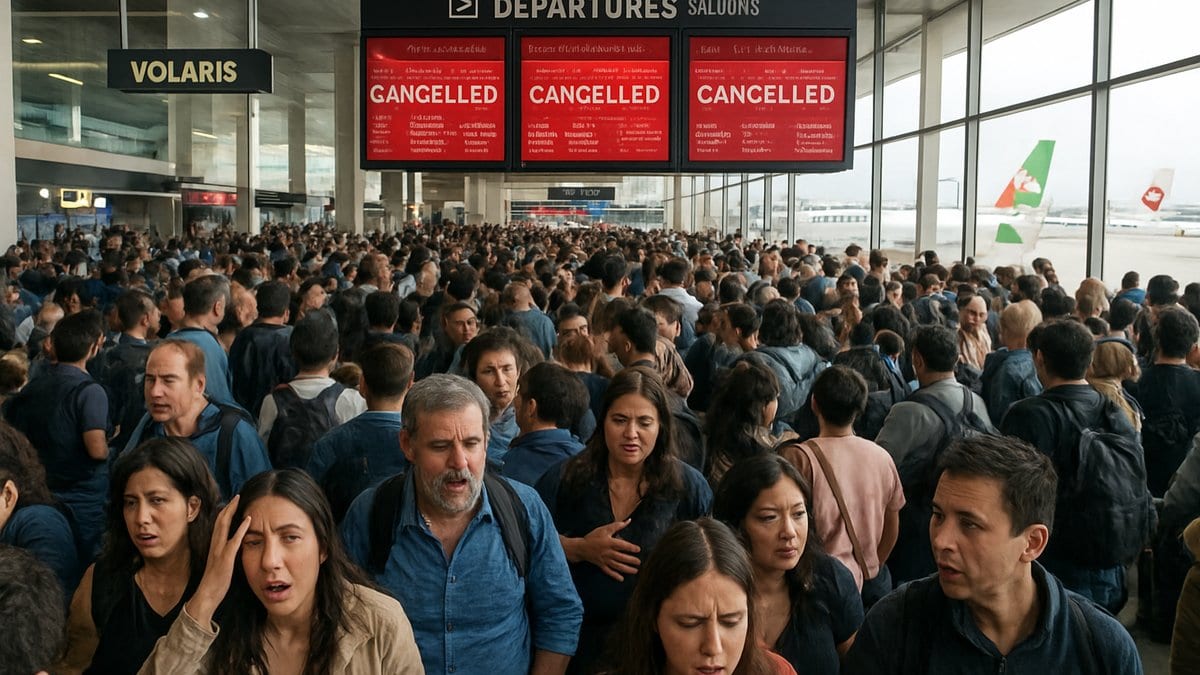
Mass groundings of aircraft at Volaris and VivaAerobus have thrown Mexico’s low cost air network into disarray, leaving passengers scrambling for alternatives and raising fresh concerns about the resilience of the country’s aviation system.
Get the latest news straight to your inbox!
Groundings Hit Core of Mexico’s Domestic Connectivity
The widespread grounding of aircraft at Volaris and VivaAerobus is reverberating across Mexico’s domestic and regional market, where the two carriers account for a large share of point to point connectivity between secondary cities. Publicly available traffic data and fleet information show that both airlines operate extensive networks built around high density Airbus narrowbodies, serving dozens of routes where no other carrier offers nonstop service.
Reports from affected airports indicate that cancellations and severe delays have concentrated on these thinner routes, effectively paralyzing travel in parts of northern and southeastern Mexico. Travelers who would normally rely on quick low cost hops between regional hubs are being forced onto long detours through Mexico City or onto buses covering journeys of 10 hours or more.
Aviation analysts note that Mexico’s market has become increasingly dependent on these ultra low cost operators over the past decade. As legacy carriers such as Aeroméxico focused more on long haul and higher yielding trunk routes, Volaris and VivaAerobus expanded aggressively into provincial markets, positioning themselves as essential transport providers rather than purely discretionary leisure brands.
The sudden loss of capacity from both airlines at the same time is therefore having a system wide effect that goes beyond inconveniencing holidaymakers. Business travel, family visits and even medical trips that depend on regional air links are all being disrupted, with some routes effectively losing all service overnight.
Passengers Face Cancellations, Long Queues and Limited Rebooking Options
Travelers across Mexico report a wave of short notice cancellations, rolling delays and congested customer service channels as the two low cost carriers grapple with grounded fleets. Social media posts from Mexico City, Monterrey, Guadalajara and tourist gateways such as Cancún and Tijuana describe long lines at check in counters, with staff struggling to rebook passengers on already full flights.
According to published coverage, call centers and mobile apps for both airlines have experienced intermittent outages under the strain, complicating efforts by passengers to manage their itineraries remotely. In some cases, travelers report receiving cancellation notices only after arriving at the airport, leaving little time to arrange alternatives on other airlines or by bus.
The disruption is particularly acute for cross border travelers using low cost links between Mexican cities and destinations in the United States and Central America. With aircraft grounded, route maps that once offered dense coverage of visiting friends and relatives traffic have abruptly thinned, and remaining seats on other carriers are reportedly selling at elevated last minute fares.
Consumer advocates point out that many affected travelers booked with minimal frills or promotional fares that provide limited flexibility. While Mexican passenger protection rules outline compensation and assistance obligations in certain disruption scenarios, the simultaneous grounding at two major carriers is testing how effectively those protections function when system capacity is constrained.
Regulatory Scrutiny and Safety Oversight Under the Spotlight
The wave of groundings has pushed Mexico’s aviation regulators back into the spotlight, as observers ask how technical, operational or compliance issues could grow severe enough to sideline large portions of two major fleets. Publicly available information on recent audits and international assessments indicates that Mexico’s civil aviation oversight has faced periods of pressure and external review in recent years.
Industry analysts note that any grounding on this scale typically reflects the intersection of several factors, including maintenance scheduling, spare parts availability, and the pace of fleet renewal. Both Volaris and VivaAerobus have pursued rapid growth strategies centered on Airbus A320 family aircraft, placing large orders to modernize and expand their operations. That strategy has helped keep average fleet ages relatively low, but it has also increased reliance on a single aircraft family at a time when global supply chains remain fragile.
According to specialist aviation media, regulators in Mexico and key foreign markets have already been monitoring the country’s carriers in relation to issues such as slot allocation, international route authorizations and operational reliability. The current wave of aircraft groundings is likely to intensify that scrutiny, particularly where cross border services are involved and bilateral aviation agreements come into play.
While there is no publicly available indication of systemic safety failures, the disruption is fueling debate over whether regulatory resources have kept pace with the rapid expansion of low cost capacity. Questions are also being raised about how oversight bodies can better anticipate and mitigate cascading operational risks before they lead to widespread cancellations.
Economic Consequences for Tourism, Trade and Regional Development
Beyond the immediate travel chaos, the paralysis in Mexico’s low cost air network is beginning to carry measurable economic consequences. Tourism operators report rising last minute cancellations and rebookings as visitors struggle to reach coastal resorts and colonial cities that depend heavily on domestic airlift from Volaris and VivaAerobus.
Business groups in manufacturing and services hubs warn that the sudden loss of reliable air links is complicating corporate travel, supply chain coordination and investment promotion efforts. Cities that leveraged new low cost routes to attract factories, call centers and technology operations now face the prospect of being perceived as less accessible, at least in the short term.
Economists point out that air connectivity has been a key pillar of Mexico’s strategy to distribute growth beyond the capital. Point to point services connecting mid sized cities have encouraged weekend tourism, conference hosting and cross regional commerce. When those links are abruptly interrupted, local hotels, restaurants, ground transport providers and ancillary services feel the impact almost immediately.
There are also potential knock on effects for airport operators, many of which structured expansion plans around projected traffic growth from low cost carriers. With aircraft grounded and schedules cut back, fee revenues and non aeronautical income at affected terminals could fall short of expectations, complicating infrastructure upgrade timelines ahead of events such as the 2026 World Cup.
Prospects for Recovery and a More Resilient Network
Attention is now turning to how quickly Volaris and VivaAerobus can return grounded aircraft to service and restore confidence in their schedules. Industry commentary suggests that a phased reintroduction of capacity is more likely than a rapid snapback, as the carriers work through inspections, maintenance checks and revised operational plans.
In the interim, other Mexican and foreign airlines may selectively step in to fill gaps on high demand routes, but observers note that no single operator has the spare capacity to replicate the combined footprint of the two low cost carriers. That reality is prompting fresh discussion about network resilience and whether Mexico’s domestic market has become overly reliant on a small number of high growth players.
Policy specialists argue that greater diversification of carriers and closer coordination between aviation and ground transport planning could help cushion the impact of future shocks. Enhanced contingency planning at key airports, clearer communication protocols during large scale disruptions, and targeted support for underserved regions are among the measures being debated.
For travelers, the current disruption serves as a reminder of the trade offs embedded in ultra low cost air travel. While competitive fares have transformed mobility for millions within Mexico, the grounding of large portions of the Volaris and VivaAerobus fleets illustrates how quickly that affordability dividend can be eroded when operational fragilities surface across the system at once.