

More news on this day
Travelers at Washington Dulles International Airport are facing a fresh wave of disruption after five international and transborder flights operated by United Airlines, Icelandair and Jazz were grounded, triggering a chain reaction of delays across major hubs including Amsterdam, Reykjavik, Montreal, Frankfurt and Munich.
Get the latest news straight to your inbox!
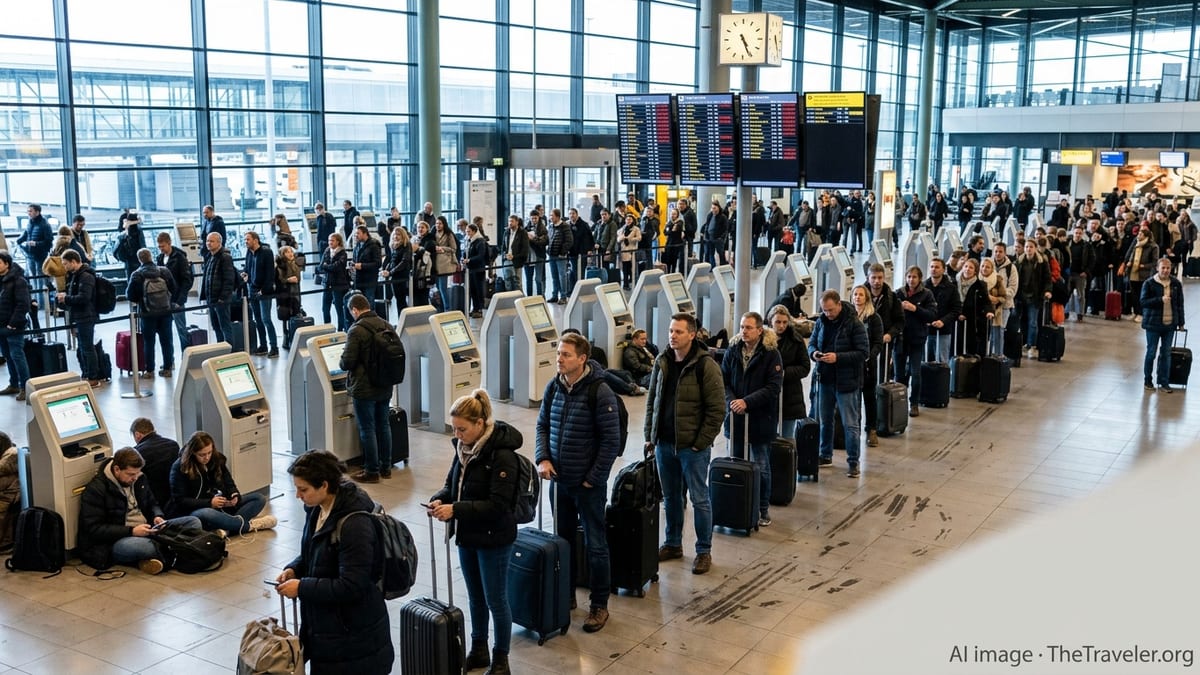
Ground Stops at Dulles Spark a New Wave of Disruption
Publicly available operational data and aviation media coverage indicate that Washington Dulles has again emerged as a flashpoint for air travel disruption, with a small cluster of grounded departures producing outsized consequences for long haul and regional networks. The latest disturbance centers on five flights involving United, Icelandair and Jazz, affecting links between the US capital region and key connecting hubs in Europe and Canada.
Reports describe a scenario in which a limited number of cancellations and extended ground delays at Dulles quickly multiplied into missed connections and rolling schedule changes on both sides of the Atlantic. Live tracking dashboards reviewed on April 6, 2026 show elevated levels of disruption at the airport compared with typical weekend conditions, echoing a pattern highlighted in recent disruption analyses that rank Washington area airports among frequent pinch points when weather or staffing pressures emerge.
While the precise combination of operational, technical and weather factors behind the grounded flights has not been fully detailed in public sources, recent coverage of major airline outages and control system constraints underlines how quickly a bottleneck at a single hub can complicate aircraft rotations and crew planning. For carriers like United that rely on Dulles as a transatlantic gateway, even a handful of out of sequence aircraft can have network wide effects.
Travel industry monitoring sites note that passengers on affected flights from Dulles to Amsterdam, Reykjavik, Montreal, Frankfurt and Munich are encountering a mix of outright cancellations, multi hour delays and rerouting via alternative hubs. These issues add to a broader backdrop of elevated disruption levels across North American and European aviation in early 2026, driven by strong demand, tight capacity and recurrent localized weather events.
Amsterdam, Reykjavik and Montreal Feel the Knock On Effects
The impact at destination and onward hub airports is particularly visible at Amsterdam Schiphol, Reykjavik area airports and Montreal, all of which play important roles as transfer points for transatlantic and regional traffic. Recent reporting focused on Amsterdam documents several hundred delays and dozens of cancellations in a single day, underscoring how sensitive the Dutch hub remains to any imbalances in aircraft arrivals and departures.
Reykjavik and Keflavik, where Icelandair concentrates much of its connecting traffic between North America and Europe, have also experienced regular bouts of disruption in recent months. Travel trade coverage from Iceland has highlighted days with more than one hundred cancellations and additional delays across multiple carriers when storms or operational constraints hit, demonstrating how quickly services can unravel in a relatively small but heavily trafficked market.
Montreal has faced similar pressures as a key transborder and transatlantic node for Canadian and US airlines. Official air traffic summaries from recent months show strong volumes on routes linking Montreal with US hubs, including Washington Dulles, as well as onward connections to Europe. When a Dulles based regional operator such as Jazz experiences ground delays or cancellations, the effects can cascade through Montreal’s bank of arrivals and departures, forcing rebookings and missed onward flights for travelers heading deeper into Canada or to European destinations.
Across these hubs, consumer facing flight trackers on April 6 list clusters of late running services and schedule changes that align with the timing of the Dulles disruption. Travel forums and social media posts from passengers describe extended waits at gates, reissued boarding passes and overnight stays, illustrating the human dimension behind the operational statistics.
Frankfurt and Munich Connections Strained as Long Haul Banks Back Up
Frankfurt and Munich, two of Europe’s busiest long haul gateways, are also seeing knock on consequences from the grounded departures at Dulles. Both airports host dense banks of transatlantic flights, including United services that interline with European partners. When US departures fail to leave on time, scheduled arrival slots into these tightly choreographed hubs are missed and aircraft rotations are disrupted.
Published disruption reports reviewing transatlantic traffic in 2025 already flagged the Washington Dulles to Frankfurt route as having a relatively high share of delayed passengers. That historical context helps explain how the latest irregular operations can have an outsized effect on connection reliability for travelers relying on Frankfurt as a springboard to destinations across Europe, the Middle East and Africa.
Munich, which in recent years has grown as both a leisure and business gateway, faces similar pressure. Flight schedule data shows a robust mix of services linking Munich with North American cities, including Washington area airports, meaning that any grounded departures in the US can reverberate into late evening and early morning arrival waves in southern Germany. For passengers, this can translate into missed first wave departures to secondary European cities and longer layovers while rebookings are processed.
Live monitoring on April 6 indicates that while Frankfurt and Munich are not experiencing systemwide meltdown conditions, targeted clusters of delays and aircraft swaps are evident around North America bound departure banks. These pockets of disruption align with the Dulles grounded flights and confirm how even a modest number of problem sectors can ripple across complex long haul networks.
Why Five Flights Matter in a Strained Global Network
The scale of the disruption raises a natural question for travelers: how can issues with just five flights cause widespread delays across multiple continents. Aviation analysts point to the high level of interdependence in modern hub and spoke systems, where a single aircraft may be scheduled to operate several consecutive long haul and short haul legs, often with tight ground turnaround times.
In this context, a grounded aircraft at Dulles intended to operate a transatlantic sector to Amsterdam or Frankfurt may delay not only that flight, but also the aircraft’s next duties in Europe and its eventual return to North America. Crew duty limits further complicate the picture, since extended ground delays can push pilots and cabin crews beyond allowable working hours, requiring last minute substitutions or cancellations.
The effect can be even more pronounced for niche routes such as Washington to Reykjavik, where frequencies are lower and there may be only one direct flight per day in each direction. Public schedule information for Icelandair illustrates how individual aircraft are often tightly scheduled on North Atlantic rotations, leaving little slack if a departure is grounded. In such cases, hundreds of passengers can find themselves without a same day alternative, particularly outside of peak summer periods.
Regional services operated by carriers like Jazz between Dulles and Canadian cities add another layer of complexity. These flights often feed larger transatlantic departures, meaning a delay or cancellation at the regional level can lead to a cascade of missed long haul connections. For travelers, the distinction between mainline and regional operators may be invisible, but the operational constraints on each segment can compound in times of stress.
What Stranded Travelers Are Facing and How They Can Respond
For passengers caught in the latest Dulles related disruption, the immediate reality is one of uncertainty, queues and difficult decisions about whether to wait, reroute or abandon travel entirely. Publicly available information from airline customer service policies and government consumer guidance outlines a range of potential support measures, including meal vouchers, hotel accommodation and rebooking on later flights, though eligibility often depends on the cause of the disruption and the jurisdiction under which the ticket falls.
In the European Union and associated markets, air passenger rights regulations can provide specific entitlements in cases where long delays or cancellations are deemed within an airline’s control. Consumer groups regularly advise travelers to document boarding passes, delay notifications and receipts for reasonable expenses when disruptions occur on flights to or from European airports such as Amsterdam, Frankfurt, Munich or Reykjavik, since these records can support later compensation claims.
In North America, compensation frameworks are more fragmented, but transportation authorities maintain complaint channels and publish comparative data on airline performance. Recent air travel consumer reports list multiple long tarmac delays involving major US and Canadian carriers, underscoring ongoing scrutiny of how disruptions are managed. Travelers affected by the Dulles grounded flights may wish to review carrier specific policies and, where appropriate, file formal complaints if they believe commitments were not honored.
Travel planners emphasize that in an era of frequent disruption, building additional buffer time into itineraries, favoring earlier departures where possible and closely monitoring flight status through official channels can reduce some of the risk. However, the events surrounding the grounded flights at Washington Dulles demonstrate that even well planned journeys remain vulnerable when a few key sectors fail to get off the ground, sending shockwaves through an already stretched global air travel system.