

More news on this day
Grounded and heavily delayed flights at Nashville International Airport are rippling across airline networks this week, compounding weather and staffing pressures that continue to strain air travel throughout North America.
Get the latest news straight to your inbox!
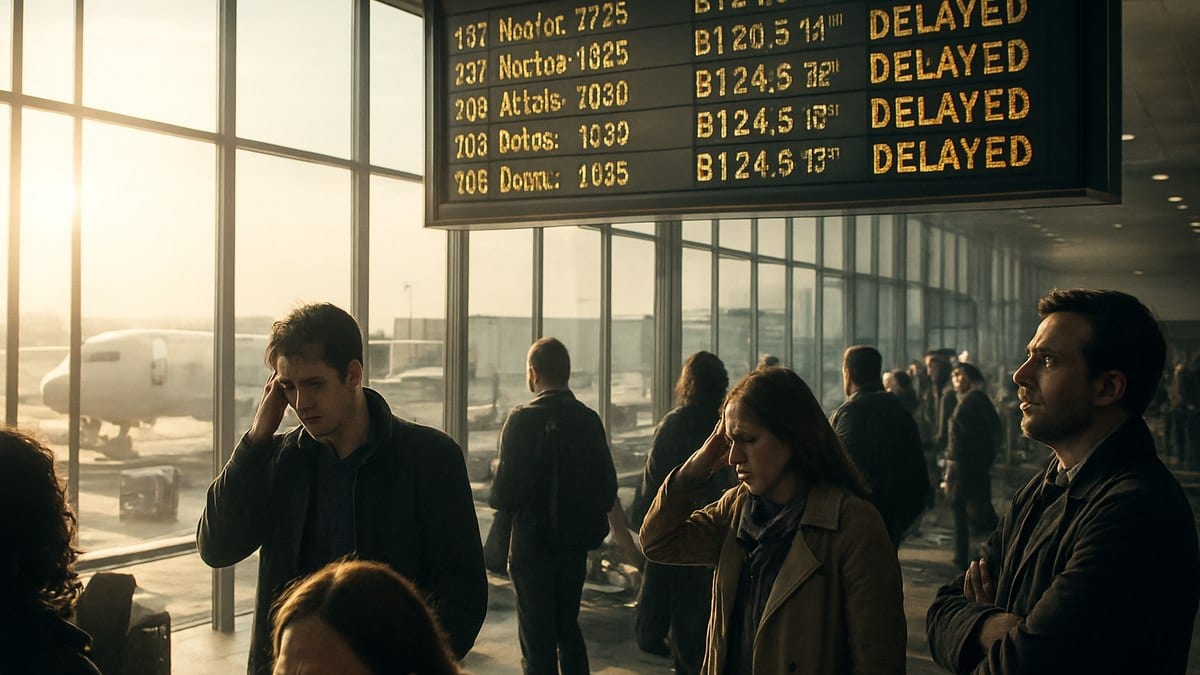
Ground Stop at a Growing Midcontinent Hub
Publicly available flight tracking data and industry coverage indicate that Nashville International Airport, also known by its code BNA, has experienced a fresh round of arrival and departure restrictions, including a period of grounded flights. The measures have slowed movements through what has become one of the fastest‑growing midcontinent hubs in the United States.
Reports drawing on aggregated schedule data show elevated levels of delays and a smaller number of outright cancellations, with dozens of affected departures and arrivals clustered into peak daytime hours. For passengers, that has translated into missed connections, extended waits on crowded concourses, and aircraft held at gates or on taxiways while traffic flows are metered.
The disruption follows a year in which BNA has seen significant construction and expansion activity, alongside rising passenger volumes. Planning documents from the Metropolitan Nashville Airport Authority highlight ongoing apron and terminal work designed to accommodate a larger fleet mix and more connecting traffic, underscoring how a facility in transition can become vulnerable when operational capacity tightens unexpectedly.
While the latest event is centered on Nashville, its timing within an already busy spring travel period has heightened the impact. With airlines operating fuller schedules and leaner buffers, even a single mid‑sized hub encountering ground restrictions can create outsized ripple effects across the continent.
Ripple Effects Across North American Routes
Analysis of recent operational data suggests that the slowdown in Nashville has not been confined to Tennessee. Because BNA functions as both an origin and a through‑point for domestic and transborder itineraries, delays at the airport have propagated into routes linking cities such as Chicago, Toronto, New York, Dallas, and several leisure destinations in Florida and the Caribbean.
Published coverage referencing FlightAware and similar databases describes how aircraft and crews scheduled to pass through Nashville have been forced into rolling delays. When an outbound flight from BNA departs late, the aircraft may arrive behind schedule at its next station, compressing turn times or causing subsequent sectors to push back later than planned. Over the course of a day, those incremental pushes can evolve into broad regional disruption.
Interline and codeshare arrangements have added another layer of complexity. When a Nashville‑originating passenger is booked to connect in a major hub such as Atlanta, Chicago, or Dallas for onward travel to Canada or Mexico, a missed connection can lead to rebookings, overnight stays, and further strain on already full flights. Network models commonly used by airlines to manage these events show that even modest ground delays at a spoke or secondary hub can reverberate through dozens of city pairs.
Reports from consumer rights organizations tracking compensation claims also point to a rise in complaints linked to multi‑leg journeys that included Nashville as one of the stops. While the numerical impact at BNA may be smaller than at mega‑hubs, the cascading nature of modern airline scheduling means that disruptions there can still be felt hundreds or even thousands of miles away.
Weather, Staffing and Infrastructure Under Scrutiny
The latest problems at Nashville arrive against a backdrop of broader stress factors across North American aviation. Over recent weeks, severe storms and high winds have battered multiple U.S. regions, disrupting thousands of flights at major airports and leaving airlines with limited resilience to absorb additional shocks at smaller or mid‑sized hubs.
At the same time, trade and policy publications highlight persistent staffing challenges in air traffic control facilities, including terminal radar approach controls that manage arrival and departure flows around busy airports. Federal workforce data referenced in aviation policy analysis points to recurring traffic management initiatives at several key facilities, as controller headcounts struggle to keep pace with rising demand.
Nashville’s own airspace and ground operations are also being reshaped by construction and modernization. Board materials from the local airport authority detail ongoing work on terminal aprons and taxiways aimed at meeting updated Federal Aviation Administration design criteria for a changing aircraft fleet mix. While the reports emphasize long‑term capacity benefits, any major airfield project can introduce short‑term operating constraints when combined with adverse weather or staffing limitations.
Taken together, these factors illustrate how the Nashville disruption is not an isolated incident but part of a larger pattern confronting North American aviation. A tightly coupled system is being asked to handle record or near‑record passenger volumes under conditions where weather, workforce and infrastructure pressures often converge.
Travelers Face Compounded Disruptions
For passengers on the ground, the operational nuances behind a ground stop or arrival metering program translate into a more immediate experience of uncertainty and fatigue. Recent reporting on U.S. flight operations has documented travelers enduring long lines at check‑in counters, repeated gate changes, and hours‑long waits for rebooked itineraries after missing tightly timed connections.
In Nashville, travelers caught up in the latest disruption have faced similar challenges. Published accounts describe passengers sitting on aircraft awaiting departure slots, others queueing at customer service desks to secure new routings, and some choosing to rent cars and drive when alternate flights could not be confirmed the same day. These decisions, repeated at scale, add to road congestion and shift the pressure onto other parts of the transport system.
Consumer advocacy groups note that spring 2026 has already seen elevated levels of delay and cancellation activity across the United States and Canada, meaning many affected passengers are encountering disruptions for the second or third time in a matter of months. That repetition erodes confidence in the reliability of air travel and encourages more conservative trip planning, including longer connection windows and additional buffer days for critical journeys.
In response, airlines have been adjusting schedules, trimming some frequencies, and building more slack into turnaround times at particularly constrained hubs. However, publicly available timetables still show an overall upward trend in flights and seats compared with previous years, reflecting strong demand and limiting the flexibility to pull back capacity without sacrificing revenue.
Questions Over Resilience Ahead of Peak Summer
The snarled operations at Nashville International Airport are likely to feed into a broader debate over how resilient the North American air travel network is as it heads toward the peak summer season. Forecasts from aviation trade groups project record or near‑record passenger volumes for U.S. carriers between late spring and early autumn, leaving limited room for operational missteps.
Analysts cited in recent aviation sector coverage have warned that without accelerated progress on staffing, modernization, and airspace optimization, episodic disruptions may become a defining feature of the travel landscape rather than an exception. Ground stops, extended metering programs, and rolling delays at facilities like Nashville could therefore be viewed as early indicators of stress points that might intensify under heavier summer traffic.
Policy discussions are also turning toward the role of technology and data in managing capacity constraints. Initiatives such as enhanced automation in en route air traffic control, more precise surface movement guidance, and improved sharing of real‑time operational information between airlines and airports are being promoted as ways to smooth flows and reduce the likelihood that a local issue will cascade across an entire region.
For now, the latest wave of grounded and delayed flights at BNA stands as a reminder that even well‑planned journeys remain vulnerable to the complex interplay of weather, workforce, and infrastructure pressures. As North American travelers look ahead to summer, the experience in Nashville is likely to shape both industry planning and passenger expectations around what it takes to keep the continent’s skies moving on time.