

More news on this day
Ground handling workers at Spanish company Groundforce are set to begin an indefinite strike from Monday 30 March at 12 of Spain’s busiest airports, a move that could significantly disrupt Easter holiday traffic for thousands of passengers.
Get the latest news straight to your inbox!
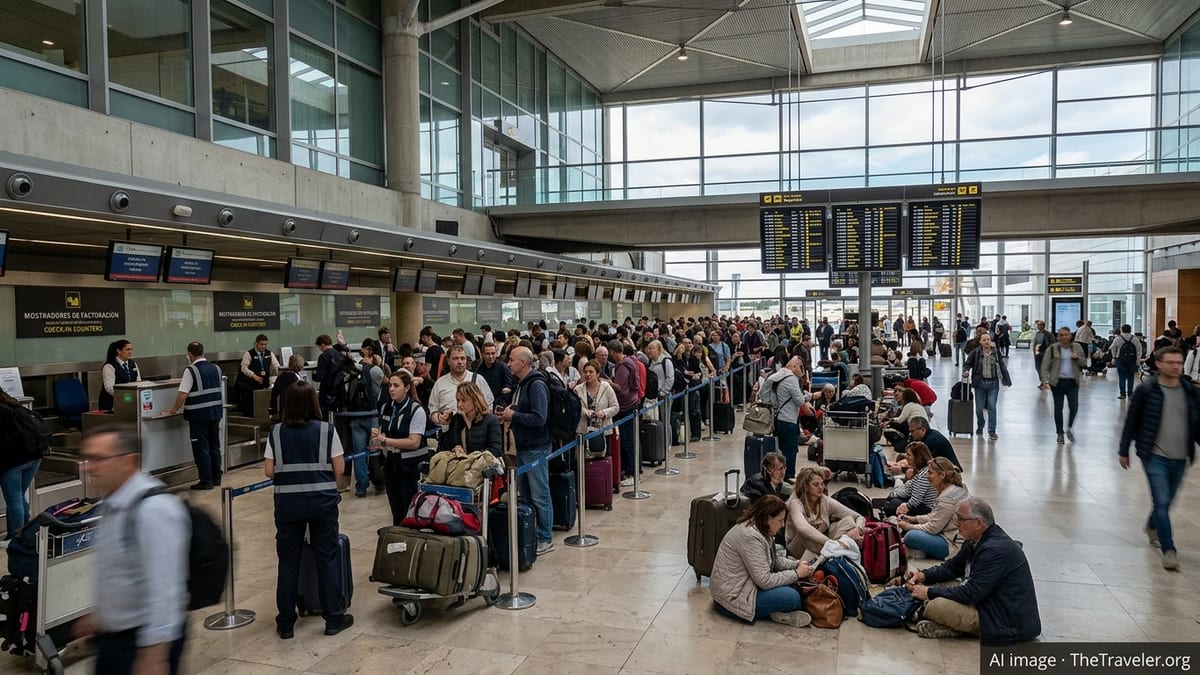
Strike to hit key hubs across Aena network
According to recent coverage in Spanish media, the walkout affects around 3,000 Groundforce employees at airports with some of the highest passenger volumes in the Aena network. The strike has been called at Madrid Barajas, Barcelona El Prat, Alicante, Valencia, Málaga, Bilbao, Palma de Mallorca, Ibiza, Gran Canaria, Tenerife, Lanzarote and Fuerteventura, encompassing both mainland and island gateways.
Groundforce is part of the Globalia group and provides ground handling services such as check in, baggage loading, ramp operations and aircraft assistance for a wide range of airlines. After winning a significant share of Aena’s most recent handling tender, the company increased its presence at large airports, which now magnifies the potential impact of prolonged industrial action during a peak travel period.
The strike has been coordinated by three major sector unions, calling for an open ended stoppage through partial walkouts every day from 30 March until an agreement is reached. The action coincides with Spain’s Semana Santa holidays, traditionally one of the busiest travel weeks of the year for both domestic and international routes.
Reports indicate that a separate strike call remains active at another handling operator, Menzies, in several airports, although that dispute follows a different timetable. The overlap in tensions across multiple ground service providers is adding to concerns about congestion, delays and potential baggage issues over the coming days.
Partial walkouts in three daily time slots
Publicly available information from union announcements shows that the Groundforce stoppages will not take the form of a full 24 hour shutdown. Instead, the strike has been structured around three fixed daily windows. From Monday 30 March, employees are being called to stop work from 05.00 to 07.00, from 11.00 to 17.00 and from 22.00 to 00.00 local time on an indefinite basis.
This pattern is intended to pressure operations at some of the most sensitive phases of the daily schedule. Early morning and late evening slots are critical for first and last wave departures, while the six hour midday block overlaps with the busiest period for intra European and domestic rotations. Even with minimum service requirements in place, ground handling bottlenecks in these windows could trigger rolling knock on delays throughout each day.
The strike affects a wide range of tasks, from check in counters and boarding gates to baggage handling and aircraft turnaround. Analysts note that any systematic slowdown in these processes typically has a multiplying effect on airport performance, since aircraft that depart late often arrive late at their next destination, compounding disruptions across route networks.
Aena and airlines are expected to publish contingency information closer to the start date, but experience from past industrial disputes in Spain suggests that passengers could face longer queues, altered flight times, last minute gate changes and sporadic cancellations, particularly at the largest hubs.
Pay dispute and interpretation of collective agreement
Union statements cited in recent national and regional media coverage indicate that the core of the conflict lies in salary updates and how key clauses of the Groundforce collective agreement are being applied. Worker representatives argue that the company is using a restrictive interpretation of certain provisions in a way that effectively blocks agreed wage revisions linked to inflation.
According to these accounts, the disagreement focuses on the interaction of two specific articles of the agreement. One clause provides for pay updates in line with accumulated inflation since 2022, while another sets technical parameters for calculating and implementing those adjustments. Union organisations contend that the company’s reading of the second article is nullifying the effect of the first and eroding workers’ purchasing power in a period of elevated consumer prices.
Groundforce has not publicly detailed its negotiating position in full, but management has defended its compliance with the agreement in previous communications on labour matters. The current dispute follows broader tensions in the Spanish handling sector after Aena’s last major tender process, which led to changes of provider in several airports and raised concerns among staff about job security, seniority rights and working conditions.
Observers note that wage disputes in aviation ground services have become more common across Europe since the pandemic, as companies face higher operating costs and workers seek to recover ground lost to inflation. The Groundforce strike, taking place at the start of a key holiday season, is being closely watched by other airport labour groups and operators.
Travel disruption risks for Easter passengers
For travellers planning to pass through affected Spanish airports from 30 March, the main risks involve flight delays, schedule changes and potential baggage handling backlogs. Industry experience suggests that even when flights operate, processes such as check in, security access coordination with handling staff, boarding and luggage delivery may be slower than usual during strike windows.
Passenger associations and industry commentators are advising travellers to allow extra time at the airport, travel with carry on luggage where possible and monitor airline notifications closely in the days leading up to departure. Flexible itineraries, including longer connection times and readiness for rebooking, may reduce the impact of unforeseen disruptions at major hubs such as Madrid and Barcelona.
The strike could also affect key leisure markets served by airports in the Balearic and Canary Islands, especially Palma de Mallorca, Ibiza, Gran Canaria, Tenerife, Lanzarote and Fuerteventura. These destinations are popular with visitors from the United Kingdom, Germany and other European countries over the Easter break, raising the prospect of congestion and extended waiting times for arriving and departing tourists.
Local tourism bodies are monitoring developments, since any prolonged operational difficulties could affect hotel arrivals and tour schedules. While many travellers are expected to continue with their plans, the perception of instability at gateway airports can influence short notice bookings and travel choices within Spain’s highly competitive holiday market.
What air passengers should watch in the coming days
In the short term, the focus for airlines, airports and passengers is on the outcome of any last minute talks between Groundforce and unions ahead of Monday 30 March. If no compromise is reached, the structure of the strike means that disruption is likely to build progressively rather than manifest as a single day collapse of services.
Travellers using the 12 affected airports are being encouraged by consumer advocates and travel advisors to keep an eye on official communications from their airline and from airport operators over the weekend. Carriers may preemptively adjust schedules, consolidate flights or change ground service arrangements where contracts allow, in order to mitigate the impact of the walkouts.
Observers highlight that Spain has a legal framework for minimum services in essential transport, so some staffing is expected to remain in place even during strike windows. However, the extent of those minimum requirements, and how effectively they can be implemented at complex hubs, will become clear only once the action is under way.
As the indefinite strike unfolds, its duration and intensity will likely depend on the progress of negotiations around pay and working conditions. For now, publicly available information indicates that 30 March will mark the start of a challenging period for ground operations and air travel at many of Spain’s most important airports.