

More news on this day
Mass cancellations of flights from Guiyang Longdongbao International Airport to Beijing, Shanghai and Shenzhen are triggering fresh travel disruption across China just as millions prepare to travel for the Qingming holiday period.
Get the latest news straight to your inbox!
Holiday Rush Meets Fragile Flight Network
The disruption in Guiyang comes at a sensitive moment for China’s aviation system, with travel set to surge for the Qingming Festival from April 4 to 6. Publicly available data and tracking platforms indicate that services on core trunk routes from Guiyang to Beijing, Shanghai and Shenzhen have seen a wave of cancellations and short-notice schedule changes in recent days, compounding pressure on airlines already stretched by earlier storms and air traffic constraints.
Guiyang Longdongbao serves as the primary air gateway to Guizhou province and a growing connector between inland China and major coastal hubs. When flights on the Guiyang to Beijing, Shanghai and Shenzhen axes are cut, onward links to domestic and international services are also affected, leaving passengers across the country coping with missed connections and unexpected overnight stays.
Recent analysis of aviation performance shows that Guiyang has historically struggled with on time operations compared with the largest coastal hubs. In the current environment of tight aircraft utilization and dense peak schedules, even a modest spike in cancellations at Guiyang can quickly ripple through departure banks at Beijing Capital, Shanghai Pudong and Shenzhen Bao’an, transforming local disruption into a broader network event.
The timing is particularly challenging given that spring is already a volatile season for Chinese aviation. Storm systems and low cloud regularly affect large parts of eastern and central China, forcing temporary capacity reductions at busy airports. In this context, the cancellations out of Guiyang are landing on a system that has little slack left to absorb new shocks.
Ripple Effects in Beijing, Shanghai and Shenzhen
Beijing, Shanghai and Shenzhen are among China’s most important aviation hubs and are currently managing their own waves of delays and cancellations linked to severe weather and air traffic restrictions. In recent weeks, published coverage has pointed to hundreds of disrupted flights at major airports including Beijing Capital and Shanghai Pudong, with Shenzhen Bao’an also reporting elevated cancellation rates.
When Guiyang services into these hubs are withdrawn or heavily delayed, the impact is felt well beyond Guizhou. Passengers who planned to connect in Beijing or Shanghai to onward domestic or international flights are finding that missed connections can be difficult to rebook during peak holiday demand. Seat availability is limited, and alternative routings often involve additional stops at secondary airports or overnight layovers that strain accommodation capacity near the terminals.
Operational data from recent flight-tracking snapshots suggests that some scheduled Guiyang departures to Shanghai and Shenzhen are being removed from timetables within 24 hours of departure, rather than days in advance. That pattern leaves travelers with less time to adjust plans, particularly those arriving from smaller inland cities who depend on a single daily departure to reach the coastal hubs.
For airlines, disrupted Guiyang rotations can also complicate aircraft and crew positioning. Aircraft that were meant to feed morning departure waves in Beijing or Shanghai may now arrive late or not at all, forcing last-minute retiming of subsequent flights in already congested airspace.
Weather, Congestion and Systemic Weaknesses
There is no single, officially confirmed cause for the current concentration of cancellations on routes linking Guiyang with China’s largest cities. However, recent reports on nationwide aviation disruptions point to a familiar combination of factors: fast-changing spring weather patterns, air traffic control flow restrictions and tight ground-handling resources at high-volume hubs.
Storm systems moving across eastern and southern China in March triggered large numbers of delays and cancellations at airports such as Shanghai Pudong, Guangzhou and Shenzhen. As operations recovered, airlines have had to juggle aircraft maintenance slots and crew duty-time limits, leaving schedules vulnerable to further shocks. The latest Guiyang-linked cancellations appear to sit within that broader pattern of fragile operational resilience.
Industry analyses of airport on time performance indicate that Guiyang, Beijing, Shanghai and Shenzhen have all faced structural challenges in maintaining punctuality, particularly during summer and spring weather seasons. High traffic density in core corridors, combined with rapidly growing domestic demand, means that any local constraint at one airport can rapidly propagate through the entire system.
Observers note that inland hubs like Guiyang often lack the redundancy of larger coastal megahubs. When ground operations or runway capacity are temporarily reduced, airlines have fewer alternative departure windows or spare aircraft to redeploy, increasing the likelihood that flights to key markets such as Beijing, Shanghai and Shenzhen will be cancelled outright instead of rescheduled within the same day.
Passengers Face Long Queues and Limited Options
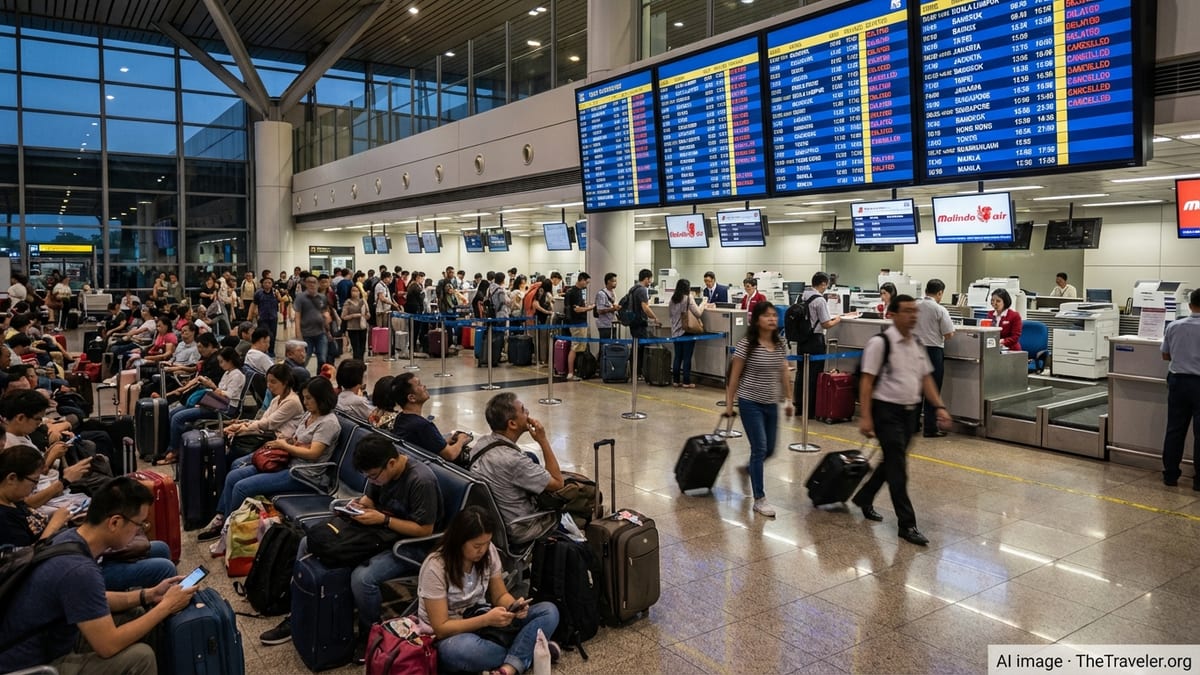
For travelers on the ground, the Guiyang airport disruption is manifesting in crowded departure halls, long airline service queues and uncertainty about when alternative flights will materialize. Social media posts and traveler forums describe passengers waiting hours to be rebooked, with some reporting that the next available seats to Beijing or Shanghai fall days beyond their original travel dates.
With multiple major airports across China experiencing elevated disruption, traditional back up plans are proving less effective. High speed rail remains an option on some corridors, but tickets around Qingming are heavily booked and long-distance routes from Guizhou to Beijing or Shanghai involve significant journey times. Intercity buses and last-minute hotel rooms near airport districts are also in high demand.
Consumer advocates note that passenger rights frameworks for domestic air travel within China remain comparatively limited, especially when disruptions are labeled as weather or air traffic related. Compensation is often modest and largely dependent on carrier policies, leaving many travelers focused on simply finding a way to reach their destination rather than seeking redress.
The combination of limited legal protections and scarce alternative capacity means that travelers affected by cancellations at Guiyang must often stitch together their own solutions, including buying entirely new tickets on different airlines or modes of transport. That dynamic is reinforcing perceptions of a system under strain at a time when domestic tourism is otherwise rebounding strongly.
Questions Over Preparedness Ahead of Peak Summer Season
The latest wave of flight cancellations at Guiyang Longdongbao is prompting renewed scrutiny of how prepared China’s aviation sector is for the coming summer peak, which traditionally brings heavier thunderstorms and even greater demand than the spring holidays. Analysts observing current patterns warn that if relatively modest weather events and localized disruptions can trigger cascading cancellations between Guiyang and the major hubs, more intense summer systems could prove even harder to manage.
Publicly available schedule data shows that airlines have rebuilt much of their domestic capacity to and from Beijing, Shanghai and Shenzhen, while also ramping up international services. That growth has supported China’s broader travel recovery but has also pushed airport infrastructure close to its effective limits during peak hours, particularly where expansion projects lag behind demand.
The Guiyang turmoil illustrates how secondary hubs play a critical role in feeding traffic into the main coastal gateways. When those feeders falter, the impact is quickly visible at check in counters far from Guizhou, as travelers miss connections, ground handling teams scramble to reroute baggage and airport operators attempt to maintain order in congested terminals.
As the current episode unfolds, travel watchers are closely tracking whether airlines adjust schedules on key Guiyang routes, invest in additional spare capacity or alter their contingency planning ahead of the next round of seasonal storms. For passengers, the message is clear: itineraries involving Guiyang, Beijing, Shanghai and Shenzhen in the coming weeks may require extra buffer time and flexible back up plans.