

More news on this day
Gulf Air has opened bookings for a special flight between Dammam in Saudi Arabia and Karachi in Pakistan on March 10, 2026, providing a rare direct travel option as Bahrain’s airspace remains closed and routine services across the Gulf face widespread disruption.
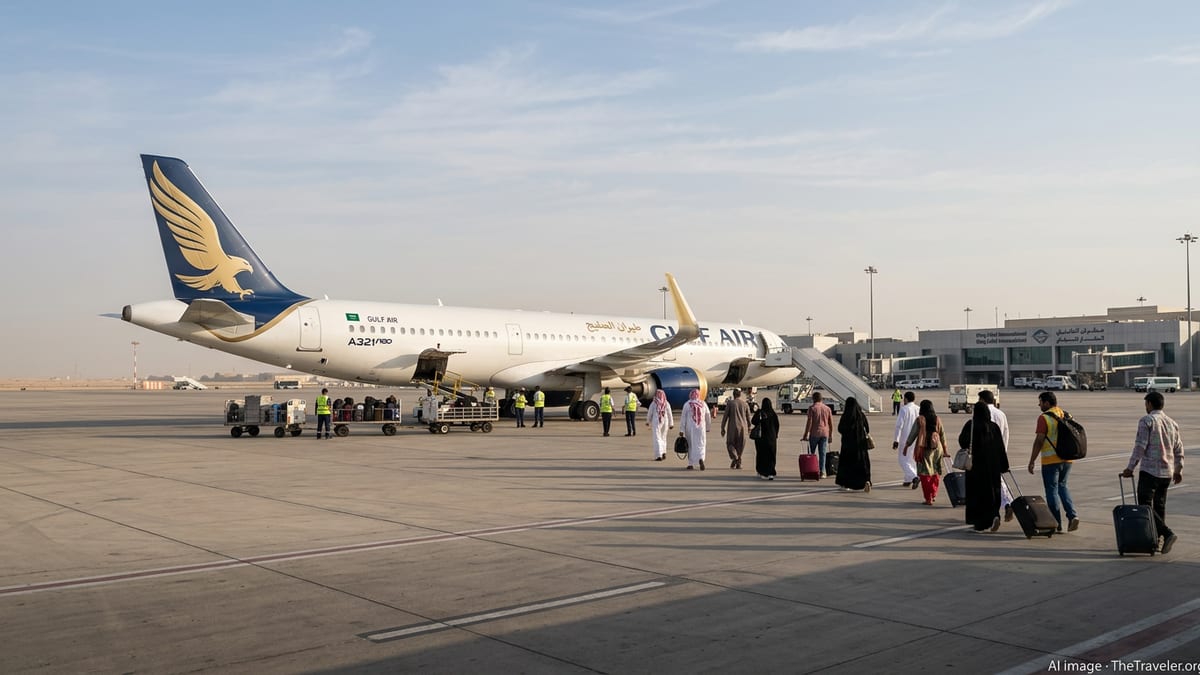
Critical Link as Bahrain Airspace Stays Closed
The national carrier of Bahrain announced that it will operate a one-off service between King Fahd International Airport in Dammam and Jinnah International Airport in Karachi, specifically timed for March 10. The move is designed to give stranded passengers a direct route between Saudi Arabia’s Eastern Province and Pakistan while Bahrain’s own airport remains effectively shut due to regional airspace restrictions.
Authorities in Bahrain have confirmed that all regular commercial operations at Bahrain International Airport remain suspended, following the closure of the kingdom’s airspace amid ongoing regional security tensions. Airlines across the region have been forced to cancel or reroute thousands of flights, with Gulf Air among the hardest hit because of its reliance on Bahrain as a central hub.
The special Dammam to Karachi rotation allows Gulf Air to leverage Saudi Arabia’s open airspace to maintain at least a limited presence in one of its core South Asian markets. It also provides an alternative for passengers who would normally transit through Manama on their way between the Gulf and Pakistan but have been left with few options as major carriers pare back services.
While described as a special flight rather than a full schedule restart, the operation on March 10 underscores how airlines are piecing together workarounds using still-available corridors, even as large swathes of airspace in the Gulf remain restricted or entirely closed.
Seat Allocation and Priority for Stranded Passengers
Gulf Air has not publicly disclosed how many seats will be available on the Dammam–Karachi service, but travel agents in both Saudi Arabia and Pakistan report strong demand as soon as registration opened. Priority is expected to go to passengers whose original Gulf Air itineraries were cancelled after the Bahrain airspace shutdown, particularly those holding tickets between Manama and Karachi or other Pakistani cities.
Industry sources say the airline has been working to rebook affected travelers on a combination of partner airlines and limited special flights, but options remain constrained. With many regional carriers still cancelling services to Bahrain, Doha, Kuwait and parts of Saudi Arabia, the Dammam–Karachi flight represents one of the few additional seats being injected into an overstretched market on a key corridor.
Travel consultants in Dammam say they have been fielding calls from passengers across Saudi Arabia’s Eastern Province who are willing to travel by car for several hours to King Fahd International Airport to secure a seat. For many Pakistani expatriates facing urgent travel for family, medical, or work reasons, the prospect of a direct flight to Karachi, even for a single day, offers a rare lifeline after more than a week of rolling cancellations.
Passengers are being advised to reconfirm their bookings directly with Gulf Air or through accredited agents before traveling to the airport, as schedules across the Gulf remain fluid and subject to late operational changes.
Regional Disruption Shapes Airline Strategies
The decision to mount a special service from Dammam, rather than waiting for Bahrain’s airspace to reopen, reflects broader shifts in airline strategy across the region. Carriers such as Oman Air and SalamAir have announced temporary suspensions on multiple Gulf routes, including Bahrain and Dammam, as they navigate rapidly changing airspace availability and safety assessments.
Major hub airlines have been operating limited or repatriation-focused schedules, often using emergency corridors cleared by civil aviation authorities and avoiding large portions of the lower Gulf. Flight tracking data in recent days has shown complex rerouting patterns, with aircraft flying extended detours to skirt closed or restricted zones, adding time and cost to every operation.
Gulf Air, by contrast, has been largely grounded by the closure of its home airspace, making the Dammam–Karachi initiative particularly significant. By basing a special rotation entirely outside Bahraini skies, the carrier can reassert a limited operational footprint without compromising safety rules or national airspace restrictions.
Aviation analysts say such ad hoc routes may become a temporary feature of the network maps for Gulf airlines if closures persist. Carriers could increasingly rely on neighboring states’ airports, like Dammam in Saudi Arabia or Muscat in Oman, to host selective services designed to move stranded passengers on high-demand links.
What Travelers Between Saudi Arabia and Pakistan Should Know
Travelers aiming to use the March 10 Gulf Air service are being urged to plan for tight security protocols and possible last-minute adjustments. Airports across the region have implemented stricter entry rules, often allowing only those with confirmed tickets and up-to-date flight confirmations into terminal buildings, in order to manage crowding from disrupted itineraries.
Passengers traveling from within Saudi Arabia’s Eastern Province may need additional time to cross road checkpoints near Dammam and to clear heightened security screening at King Fahd International Airport. Travel agents recommend that passengers carry printed or digital proof of rebooked tickets on the special flight, along with any documentation related to their original cancelled Gulf Air reservations.
For passengers originating in Pakistan and seeking to travel in the opposite direction, availability is expected to be similarly tight. Pakistani aviation officials have acknowledged that Karachi has faced a wave of cancellations to Gulf destinations in recent days, leaving both outbound and inbound passengers scrambling to rearrange plans. A one-off special flight is unlikely to meet total demand but may ease the backlog for the most urgent cases.
Travelers are also being encouraged to maintain flexible plans. Given that wider regional airspace policies could change again on short notice, any follow-up flights beyond March 10 would depend on both safety assessments and the evolving stance of Gulf civil aviation authorities.
Uncertain Outlook for Gulf Air’s Wider Network
The Dammam–Karachi operation is widely seen as a test case for Gulf Air’s ability to maintain limited international links while its home base in Bahrain remains effectively isolated. The airline has yet to provide a firm date for the full resumption of scheduled flights, with previous operational updates suggesting that the closure could extend at least through mid-March depending on the security situation.
Industry observers note that prolonged grounding poses serious financial and reputational challenges for any hub-and-spoke carrier. Gulf Air is contending not only with revenue losses from cancelled services, but also with the cost of accommodating stranded passengers and processing refunds or credits for those unwilling or unable to wait for alternative flights.
Looking ahead, aviation analysts suggest that Gulf Air may need to explore more interim solutions similar to the Dammam–Karachi flight if regional airspace closures drag on. Potential options could include additional special services from Saudi or other neighboring countries, targeted at high-demand South Asian and Middle Eastern routes, provided regulatory approvals and safe corridors can be secured.
For now, the March 10 special flight stands out as a rare piece of positive news for travelers caught in a web of cancellations. Whether it becomes a blueprint for further temporary routes, or merely a one-off response to an acute phase of disruption, will depend on how quickly Bahrain’s skies can safely reopen and normal traffic patterns across the Gulf can resume.