

More news on this day
Gulf Air is pushing ahead with plans to expand its Saudi footprint with new nonstop flights from Dammam to London, Mumbai and Bangkok, a move that comes just as widespread Middle East airspace disruptions and reroutings drive up fares and tighten capacity on key Europe and Asia corridors.
Get the latest news straight to your inbox!
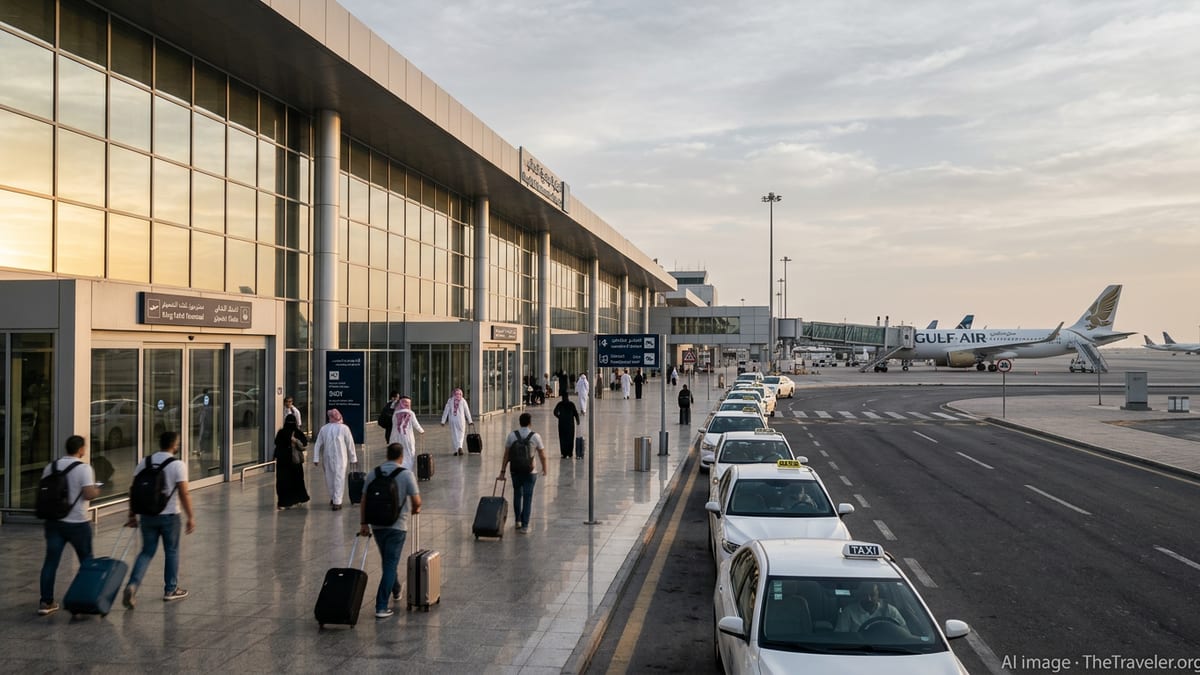
New Saudi Gateway Strategy for a Bahrain-Based Carrier
Publicly available scheduling data and recent industry coverage show Gulf Air sharpening its focus on the Saudi market, where Dammam’s King Fahd International Airport serves both the oil-rich Eastern Province and a fast-growing population of business and leisure travelers. The newly promoted links to London, Mumbai and Bangkok from Dammam position the carrier to capture demand that can no longer rely on predictable connections through traditional Gulf hubs.
The move reflects a broader trend of airlines using secondary or regional gateways to work around operational chokepoints. With Bahrain International Airport, Gulf Air’s main base, affected by heightened security measures and periodic capacity constraints amid the regional crisis, tapping nearby Dammam offers the airline an alternate platform that remains accessible to many of its core passengers.
For Saudi travelers, the new services also reduce the need to backtrack via other Gulf airports at a time when routings are under constant review. Direct long-haul and medium-haul options to three of the region’s most in-demand cities allow travelers to avoid complex multi-stop journeys while maintaining connectivity to Europe, South Asia and Southeast Asia.
Industry analysts note that the timing strengthens Gulf Air’s positioning as a boutique full-service alternative in a crowded Gulf marketplace. By anchoring more capacity in Saudi Arabia, the airline is aligning itself with one of the fastest-growing outbound travel markets in the region even as short-term uncertainty clouds the wider network.
Airspace Crisis Reshapes Routes and Raises Fares
The new Dammam flights land in the middle of a volatile period for commercial aviation in the Gulf. A series of airspace closures and security restrictions across parts of the region since late February 2026 has forced airlines to cancel flights, stretch routings and in some cases ground entire fleets for days at a time.
Travel and aviation trackers report that thousands of flights have been cancelled or rerouted as carriers avoid conflict-adjacent airspace and work around temporary restrictions in Bahrain, Qatar and other Gulf states. Some long-haul services between Europe and Asia are now operating with additional flight time of 90 minutes or more, increasing fuel burn and squeezing already limited capacity.
Fare data compiled by independent fare-watch platforms indicates that prices on many Europe–Asia itineraries routed away from the Gulf have climbed sharply, in some cases tripling compared with pre-crisis levels. Travelers who would normally connect via major Gulf hubs are either delaying trips, seeking alternate routings through Central Asia and North Africa, or paying a significant premium to secure remaining seats.
Against this backdrop, any new nonstop capacity that bypasses the most heavily disrupted hubs is drawing strong attention from both leisure and business travelers. Services linking Dammam directly to London, Mumbai and Bangkok are likely to be particularly attractive to those looking to limit exposure to last-minute schedule upheavals.
What the Dammam Routes Mean for Travelers
For passengers based in Saudi Arabia’s Eastern Province, the expanded Dammam network simplifies access to three major global gateways. London offers connections across the United Kingdom and onward to North America, while Mumbai and Bangkok act as critical links into India and mainland Southeast Asia.
Travel advisors monitoring the situation say that travelers are prioritizing routings that minimize the number of at-risk transit points and avoid airports most exposed to rapidly changing restrictions. Nonstop flights from Dammam reduce the need to rely on hubs where airspace corridors can shift with little notice and where airlines are still working through backlogs from earlier waves of cancellations.
With capacity constrained, travelers holding Saudi residence, business ties to the energy sector, or family links in India and Thailand are being urged by agents to firm up travel plans early. Reports from global distribution systems show that forward bookings on Gulf routes with stable schedules are filling quickly, especially in peak spring and early summer travel periods.
At the same time, passengers are being reminded that schedules remain provisional. Even on newly launched or relaunched routes, flight times and operating days can change as airlines respond to evolving airspace permissions and security assessments. Flexible planning, including allowing extra connection time and monitoring reservation updates, remains important.
Capacity Is Limited and Dynamic Pricing Is Kicking In
Industry monitoring across multiple booking platforms suggests that dynamic pricing is responding swiftly to the airspace crisis. Where alternative nonstop or one-stop options exist that do not rely on the most impacted routes, average economy-class fares have risen steadily day by day, while premium cabins on some departures are selling out entirely.
Dammam’s new links to London, Mumbai and Bangkok are expected to be no exception. As initial promotional fares are absorbed by local demand, yield-management systems are likely to ratchet prices upward on departures that coincide with regional holidays, school breaks and key corporate travel windows.
Travel data firms point out that the combination of diverted traffic, longer routings and higher fuel costs gives airlines little incentive to hold back on fare increases. For travelers who must be in London for business, or in Mumbai or Bangkok to connect to onward regional flights, the cost of waiting can be significant if they postpone booking until closer to departure.
Observers recommend that passengers who find acceptable fares on the new Dammam routes consider locking them in promptly, while also checking the fare rules for options such as date changes or credit vouchers. Many airlines in the region continue to publish limited-time flexibility waivers tied to the evolving crisis, but these policies can be narrowed as conditions stabilize.
How to Plan and Book Safely Amid Ongoing Disruptions
With the situation in Gulf airspace still fluid, travel specialists advise approaching any new booking, including on fresh Dammam services, with a focus on flexibility and contingency planning. That starts with checking the latest travel alerts from airlines and aviation regulators before committing to fixed dates, especially for nonessential trips.
For essential travel, passengers are encouraged to build in buffer time at the start and end of itineraries, in case rerouting or schedule changes add several hours to the journey. Choosing tickets that allow at least one free date change or reissue, even at a modest surcharge, can provide useful insurance if conditions shift again.
Travel insurance policies that include trip interruption and cancellation benefits can also help protect against unexpected disruptions, provided travelers read the terms carefully and understand any exclusions related to conflict or airspace closures. Some insurers have already adjusted coverage in response to recent events, and benefits may vary by market and departure date.
Finally, experts stress the importance of monitoring bookings closely in the days and hours before departure. Airline apps, SMS alerts and email updates remain the fastest way to learn of any last-minute timing changes, aircraft swaps or reroutes affecting Dammam departures. In the current climate, staying informed and acting quickly on new information can make the difference between securing a viable alternative and facing extended delays.