

More news on this day
Gulf Air has introduced special flights from King Fahd International Airport in Dammam to London, Mumbai, and Bangkok, creating an alternative long-haul corridor for passengers while Bahrain’s airspace and Bahrain International Airport remain closed amid a wider regional shutdown.
Get the latest news straight to your inbox!
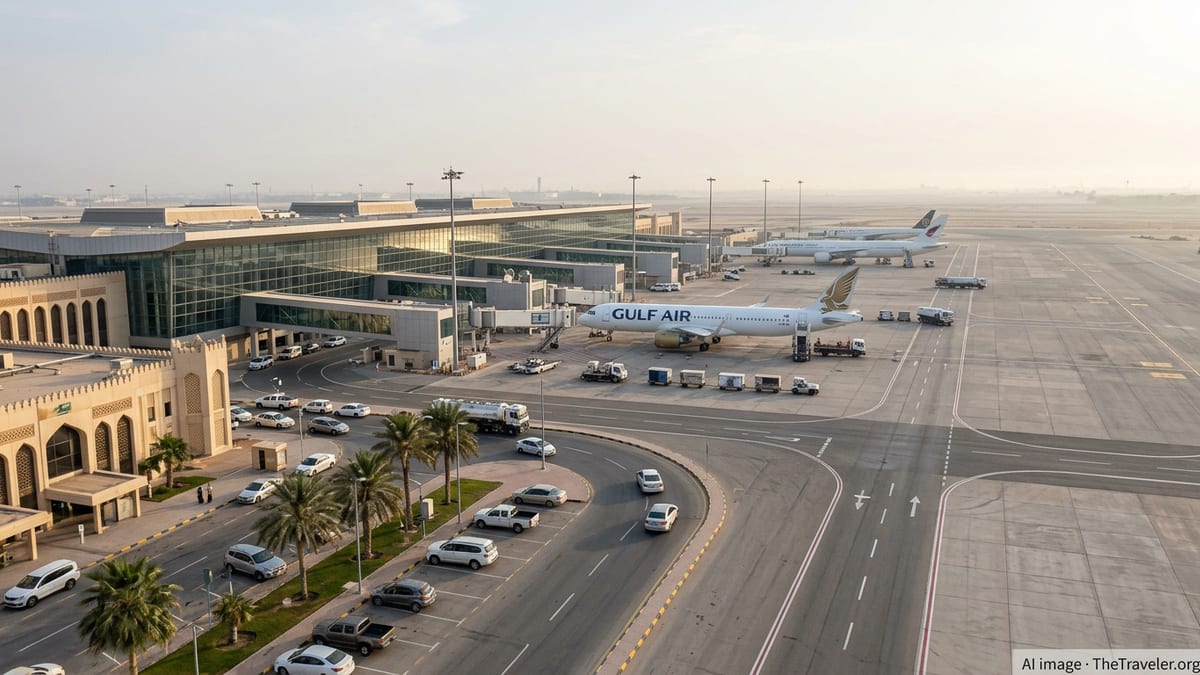
New Temporary Hub in Dammam Amid Regional Airspace Disruptions
Publicly available operational updates indicate that Bahrain’s airspace remains closed as part of an ongoing regional aviation disruption, effectively grounding scheduled services at Gulf Air’s home hub in Manama. With core routes suspended and thousands of passengers stranded across the network, the airline has turned to Saudi Arabia’s Eastern Province to keep some long-haul traffic moving.
King Fahd International Airport in Dammam, which continues to operate under restricted but open Saudi airspace, has emerged as a key staging point. The launch of special Gulf Air flights from Dammam to London, Mumbai, and Bangkok is designed to bypass the closed Bahraini airspace while still serving some of the carrier’s highest-demand city pairs.
These special operations are being framed as a temporary response to an evolving situation rather than a formal shift of the airline’s hub. Schedules and frequencies are subject to change at short notice, and passengers are being urged by published advisories to monitor airline channels and airport communication closely before traveling to the airport.
The move reflects a wider pattern across the Gulf, where carriers are rapidly adjusting routings and sometimes establishing ad hoc links from airports still able to receive international traffic. For Gulf Air, leveraging Dammam’s proximity to Bahrain offers a relatively practical workaround for both regional and expatriate travelers.
London, Mumbai, and Bangkok Prioritized as High-Demand Corridors
The choice of London, Mumbai, and Bangkok as early destinations from Dammam reflects where demand pressure is currently most acute. According to regional media coverage and travel-industry commentary, travelers between Europe, the Indian subcontinent, and Southeast Asia have been among the most affected by the closure of multiple Gulf airspaces.
London serves as a critical gateway for Gulf Air’s Europe-bound passengers, including students, business travelers, and leisure visitors who would normally transit through Bahrain. With many carriers forced to cancel or reroute services over the Gulf, the Dammam to London link is positioned as a vital bridge for those needing to reach the United Kingdom from the wider region.
Mumbai and Bangkok, meanwhile, are central nodes in South and Southeast Asia, where large expatriate populations rely heavily on Gulf connections. The temporary Dammam services are intended to provide at least a limited replacement for the usual Bahrain-linked itineraries, offering options for travelers needing to return home, continue studies, or meet work commitments.
While full timetables and long-term capacity allocations remain fluid, these three destinations collectively cover a substantial proportion of the disrupted traffic that would normally pass through Bahrain. Industry observers suggest that additional cities could be considered if the airspace closure persists and if Saudi airspace access remains stable enough to support further operations.
Passenger Experience: Rerouting, Ground Transfers, and Limited Capacity
For passengers, the shift to special flights from Dammam introduces both new opportunities and fresh logistical challenges. Reports from travelers indicate that many existing bookings routed via Bahrain are being rebooked, refunded, or held open while new options are arranged, often within tight capacity limits as airlines vie for scarce, safe routings around closed airspace.
One of the immediate issues is ground access. Many Gulf Air customers were expecting to depart from or arrive in Bahrain and now face overland transfers to Dammam. The causeway link between Bahrain and Saudi Arabia, combined with road transport options in the Eastern Province, gives some flexibility, but travel times, documentation requirements, and cross-border traffic volumes can introduce delays and uncertainty.
Capacity constraints are another concern. With multiple carriers suspending or cutting back flights across the Gulf region, seats on any remaining long-haul departures are at a premium. Travel forums and social media posts suggest that some passengers are competing for limited availability not only on Gulf Air but also on other airlines able to operate via alternative hubs.
Travel-industry guidance generally encourages passengers to confirm any rerouting directly through official booking channels, keep itineraries as simple as possible, and allow extra time for border procedures and airport processing. Because conditions can change rapidly, same-day schedule checks and flexible plans have become essential for those relying on the new Dammam specials.
Operational and Safety Considerations for the New Services
The launch of special flights from King Fahd International Airport is closely linked to evolving safety and regulatory assessments across Gulf airspace. Publicly shared aviation bulletins covering the wider region note that several neighboring airspaces, including Bahrain, are temporarily closed to civilian traffic, prompting large-scale cancellations and diversions.
Saudi airspace, by contrast, remains partially open, with restrictions in sectors bordering the Gulf. This has allowed selected routes to continue under revised flight plans that avoid sensitive areas. Gulf Air’s decision to operate from Dammam aligns with this pattern, using available corridors while adhering to the constraints set by aviation authorities.
From an operational standpoint, running special departures from an alternative airport requires rapid coordination on ground handling, crew positioning, aircraft parking, and maintenance support. Industry publications describe how carriers in similar situations typically reposition aircraft to open airports, adjust crew rosters, and work with local partners to ensure basic services such as check-in, baggage handling, and transit assistance remain functional.
Given the dynamic nature of the situation, aviation analysts caution that flight timings, routings, and even eligible passenger categories may vary as risk assessments are updated. Travelers are therefore advised, in public-facing advisories, to treat all schedules as provisional and to verify details as close as possible to departure.
What Travelers Should Watch in the Coming Days
Looking ahead, the sustainability of Gulf Air’s special flights from Dammam will largely depend on two variables: the duration of the Bahrain airspace closure and the stability of Saudi airspace access. If Bahrain’s skies reopen, the airline is expected to focus on restoring operations at its home hub, potentially winding down or reshaping the temporary Dammam program.
Conversely, if the regional airspace disruption continues, Dammam could remain an important fallback node, and schedules to London, Mumbai, and Bangkok may be extended or adjusted to cope with ongoing demand. Industry observers note that other carriers are also likely to keep refining their contingency plans, which could influence fare levels, seat availability, and competitive options on overlapping routes.
Travelers watching the situation are paying close attention to official notices from aviation regulators, airport updates, and airline schedule changes. Because of the scale of the disruption, even small adjustments in airspace status can have knock-on effects across multiple countries and airlines, sometimes creating new opportunities to travel or, conversely, triggering further cancellations.
For now, Gulf Air’s Dammam-based specials represent a critical, if limited, lifeline for passengers who need to reach London, Mumbai, or Bangkok despite the closure of Bahrain’s airspace. As conditions evolve, these flights may serve as a template for how airlines in the region adapt when primary hubs are suddenly taken offline.