

More news on this day
Gulf Air has expanded its limited emergency schedule from Dammam, adding London to a short list of high‑demand destinations including Paris, Manila, Frankfurt, Mumbai, Bangkok and Nairobi as Bahrain airspace remains closed and regular operations at its Manama hub stay suspended.
Get the latest news straight to your inbox!
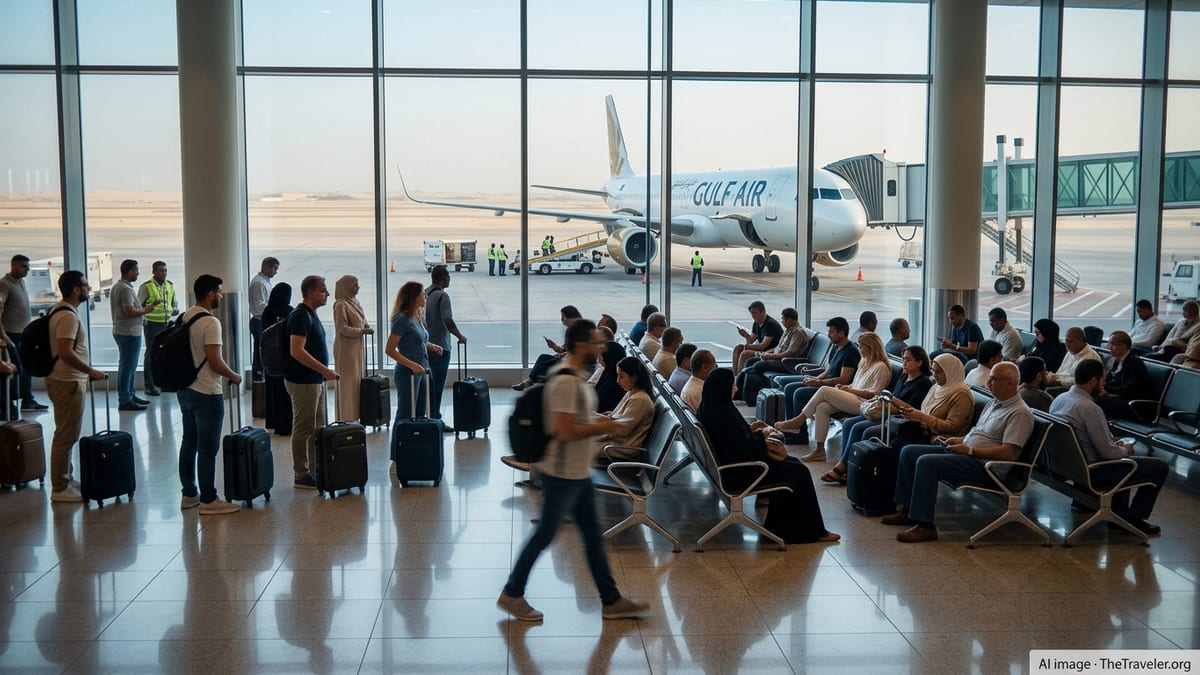
Gulf Air’s Hub Shut, Dammam Becomes Lifeline
Publicly available operational updates show that Bahrain’s airspace remains closed following recent regional escalations, leaving Gulf Air unable to operate through its home base at Bahrain International Airport. Scheduled passenger services to and from Manama are largely suspended, with only tightly controlled exceptions for essential movements.
To keep some passengers moving, the carrier has shifted a portion of its activity across the causeway to Dammam’s King Fahd International Airport in Saudi Arabia. Reports indicate that Dammam is now functioning as a temporary staging point for select Gulf Air departures, marketed primarily as emergency or repatriation options rather than a full commercial restart.
Travel forums and industry monitoring sites describe the situation as fluid, with last‑minute timetable adjustments and frequent changes in seat availability. Travelers holding tickets via Bahrain are being advised by multiple advisories to monitor booking tools closely and to expect involuntary rerouting, long layovers or outright cancellations as the disruption continues.
According to published coverage, this improvised arrangement through Dammam is intended to keep critical long‑haul flows open while regulators and regional aviation bodies assess when Bahrain’s airspace can safely reopen.
London Joins a Small Circle of Emergency Routes
In recent days, London has joined Paris, Manila, Frankfurt, Mumbai, Bangkok and Nairobi on a short roster of Gulf Air routes operating from Dammam under emergency conditions. References across flight‑tracking dashboards and passenger advisories suggest that these destinations were prioritised for their mix of strong demand, sizable expatriate communities and onward connectivity.
The addition of London is being interpreted in online travel communities as a bid to reconnect a key European gateway. Before the airspace shutdown, Gulf Air relied heavily on Bahrain as a hub for Europe–Asia and Europe–India traffic, and London was one of its marquee routes. With Bahrain out of play, a limited number of seats from Dammam is seen as a partial, stop‑gap replacement.
For Asian cities such as Manila, Mumbai and Bangkok, the emergency flights are proving particularly important for residents and workers seeking a way out of the Gulf or onward to other regions. Nairobi and Frankfurt, meanwhile, serve as strategic links for African and continental European itineraries that previously depended on smooth transfers in Manama.
Travel discussion threads suggest that capacity to each of these cities is being capped at relatively low levels, with flights labelled as special services rather than part of a normal published schedule. That is reinforcing the impression that the network remains in crisis mode rather than moving into a structured temporary timetable.
Severe Capacity Constraints and Fast‑Selling Seats
Multiple passenger accounts and booking snapshots point to extremely tight capacity on Gulf Air’s emergency departures from Dammam. Seats on London and Mumbai services in particular appear to sell out quickly whenever new dates or extra sectors are loaded, often within hours, according to travelers sharing their experiences.
Prospective passengers report wide fluctuations in availability by date, with some departures showing no bookable economy inventory while business‑class or higher fare buckets remain open. In several cases, individuals describe checking repeatedly over the course of a day to catch brief windows when additional seats were released or when cancellations freed up space.
Publicly accessible fare displays indicate that pricing on remaining seats can be significantly higher than pre‑disruption levels, reflecting a combination of constrained supply, longer routings and intense last‑minute demand. At the same time, some travelers with existing Bahrain itineraries are being shifted onto Dammam flights at no extra cost as part of involuntary rebooking efforts.
Reports further suggest that many passengers are pursuing parallel strategies, such as holding backup tickets on other carriers via alternative hubs, given the risk that emergency rotations may be pulled or rescheduled at short notice. This behaviour is adding another layer of volatility to already scarce inventory.
Knock‑On Effects for Stranded Travelers
The real‑world impact of the Bahrain airspace closure and constrained Gulf Air schedule is evident in the large number of stranded travelers seeking solutions. Social media posts and travel forum discussions feature individuals attempting to leave the Gulf for work, study or family reasons, but facing a patchwork of options that change daily.
Passengers booked on itineraries via Bahrain are describing a mix of outcomes: some receive rebookings through Dammam on emergency flights to London, Mumbai, Bangkok or other cities, while others report pending refunds or credit offers as their trips are cancelled outright. In cases where tickets were purchased through third‑party agents, the process can be slower and more complicated.
The closure’s timing has compounded the disruption, intersecting with school breaks, expiring visas and contractual work rotations. Publicly available guidance from corporate travel managers and relocation firms emphasises the need to track immigration rules alongside flight options, particularly for those whose residency or entry permissions are tied to specific dates.
Across the affected routes, anecdotal evidence points to families splitting itineraries, sending vulnerable members on the earliest available emergency flights while others wait for later departures or alternative routings. Overnight stays in Dammam and other regional cities are also becoming more common as connecting patterns fracture.
What Passengers Can Expect in the Coming Days
Industry briefings and regional aviation analyses indicate that the outlook for Gulf Air’s operations remains uncertain as long as Bahrain’s airspace is closed. Forecasts suggest that emergency rotations from Dammam to London, Paris, Manila, Frankfurt, Mumbai, Bangkok and Nairobi will continue to be adjusted dynamically in response to security assessments and regulatory clearances.
Travel advisories recommend that passengers with upcoming Gulf Air bookings treat all itineraries involving Bahrain as subject to change, even if tickets currently display confirmed status. Monitoring airline channels, checking reservation details regularly and allowing extra time at airports are being presented as practical measures in this environment.
Experts quoted in open‑source industry commentary note that airlines typically aim to rebuild their hub operations as soon as restrictions ease, but the process can take days or weeks after an airspace reopening. That makes the Dammam emergency schedule a temporary bridge rather than a permanent shift of Gulf Air’s base.
Until a clearer timeline emerges for Bahrain’s airspace, travelers relying on Gulf Air are likely to face a combination of limited availability, higher fares on remaining seats and an elevated risk of last‑minute disruption, particularly on the now‑critical Dammam links to London and the other seven emergency destinations.