

More news on this day
Gulf Air is introducing temporary nonstop flights to Paris and Manila, creating alternative routings for stranded travelers as Bahrain’s airspace closure continues to disrupt normal hub operations across the Gulf.
Get the latest news straight to your inbox!
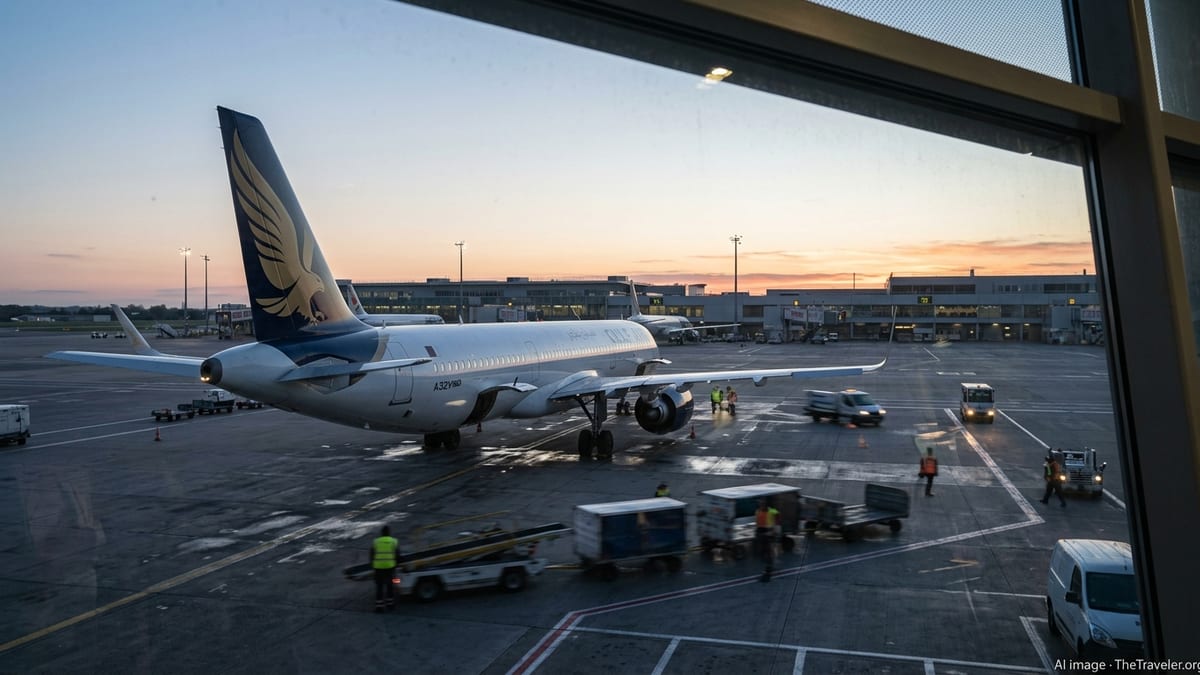
New Point to Point Links as Hub Remains Offline
Publicly available schedule data and industry reports indicate that Gulf Air is preparing limited nonstop services linking Paris and Manila in an effort to maintain connectivity on two of its busiest long haul markets while Bahrain International Airport remains effectively cut off by airspace restrictions. The move marks a notable shift for the Bahrain based flag carrier, which traditionally channels almost all traffic through its Manama hub.
The temporary flights, which are expected to run with reduced frequencies compared with pre closure services, are being structured as point to point operations that bypass Bahraini airspace. Aviation analysts note that this type of contingency pattern has become increasingly common among regional airlines navigating a complex patchwork of closures and military risk zones across the Middle East and Gulf.
According to published coverage of the regional disruption, Bahrain’s airspace remains closed amid a wider series of restrictions affecting multiple Gulf states. With regular Gulf Air services suspended at Bahrain International Airport, the introduction of nonstop flights to Paris and Manila is designed to preserve a minimum level of long haul connectivity for both business travelers and sizeable expatriate communities.
Paris and Manila Chosen for Strategic Demand
Industry observers point to the selection of Paris and Manila as a reflection of both historic demand patterns and current passenger flows. Paris has long been one of Gulf Air’s key European gateways, serving corporate traffic as well as leisure travelers connecting to destinations in Asia and the Indian subcontinent. By preserving a direct link on this corridor, the airline is attempting to retain visibility in a competitive Europe to Asia market even while its primary hub is offline.
Manila, meanwhile, is a critical market for Gulf carriers due to the large Filipino diaspora working across the Gulf Cooperation Council states. Prior to the airspace closure, many passengers used Bahrain as a connecting point between Europe, the Middle East, and the Philippines. Public timetables show that nonstop services between Paris and Manila are intended to capture at least part of this traffic, offering an alternative for travelers who would normally have routed through Manama.
Reports from passenger forums and travel advisories suggest that disrupted Gulf Air customers have been actively seeking options to re route itineraries involving Bahrain. A direct link between Paris and Manila allows the carrier to accommodate some of these travelers on its own metal, rather than ceding traffic entirely to competitors based in Dubai, Doha, or Istanbul.
Workarounds in a Fragmented Regional Airspace
The new services highlight how airlines are attempting to navigate an increasingly fragmented airspace map in the Middle East and surrounding regions. According to recent travel and aviation bulletins, Bahrain’s closure forms part of a wider pattern of restrictions that have impacted air corridors over Iran, Iraq, parts of the Gulf, and the Eastern Mediterranean, forcing long haul flights to divert around no fly zones or suspend operations entirely.
For Gulf Air, whose network is structured around a single hub in Bahrain, the closure has a particularly acute impact. With scheduled operations in and out of Manama largely halted, the carrier’s ability to offer connections has been severely curtailed. Point to point flights such as the temporary Paris and Manila link provide a limited but symbolically important workaround, demonstrating that the airline can still operate select long haul sectors without overflying restricted airspace.
Route planners working with constrained airspace typically seek corridors that balance flight time, fuel burn, and overflight permissions. While exact routings for the Paris Manila services may vary according to daily airspace availability, published flight tracking data for other carriers in the region suggests that longer northerly or southerly detours are now standard practice to avoid conflict zones and closed flight information regions.
Passenger Impact and Rebooking Options
The Bahrain airspace closure has left many Gulf Air customers facing cancellations, last minute changes, and prolonged uncertainty. Tariff bulletins and customer advisories indicate that the airline has introduced flexible rebooking and refund options for affected passengers, including fee waivers and the possibility to shift travel dates where alternative services exist. The launch of direct Paris Manila flights is expected to create an additional re accommodation channel for travelers originally ticketed on itineraries connecting via Manama.
Travel industry updates describe a patchwork of responses across the region, with some Gulf based carriers able to maintain limited operations through their hubs while others have scaled back significantly. In this context, access to a nonstop option between key city pairs can be particularly valuable for passengers seeking to minimize the number of connections and potential points of disruption on long haul journeys.
Consumer advocates are advising travelers to monitor airline apps, airport departure boards, and official aviation notices closely, as schedules remain subject to short notice adjustment. With airspace restrictions evolving in response to security assessments, there is potential for further tweaks to the Paris and Manila operations, including frequency changes or temporary suspensions should risk profiles shift.
Competitive and Network Implications
The decision to launch temporary services between Paris and Manila also carries broader competitive implications. Gulf based rivals have been vying to capture displaced demand from Bahrain and other affected hubs, adjusting schedules and adding capacity where possible. By operating its own bridge between Europe and Southeast Asia, Gulf Air seeks to maintain brand presence and customer loyalty in markets that might otherwise pivot to competitors during an extended disruption.
Network planners note that contingency routes sometimes become test beds for future strategic decisions. If the Paris Manila operation proves commercially viable, it could inform Gulf Air’s longer term thinking about selective point to point flying, complementing its hub and spoke model in Bahrain once airspace restrictions ease. For the moment, however, industry commentary frames the new link as a crisis response rather than a permanent shift in strategy.
With Bahrain’s airspace closure still in effect and no firm public timeline for a full reopening, the airline’s ability to sustain these flights will depend on a combination of regulatory permissions, security assessments, and passenger demand. As the situation evolves, further adjustments to Gulf Air’s interim network are likely, but for travelers between Paris and Manila, the newly announced nonstop option offers a rare piece of positive news in an otherwise challenging season for regional aviation.