

More news on this day
Gulf Air is introducing temporary services to Paris and Manila to help travelers reach key European and Asian gateways while Bahrain’s airspace remains heavily restricted, according to recent operational updates and regional aviation advisories.
Get the latest news straight to your inbox!
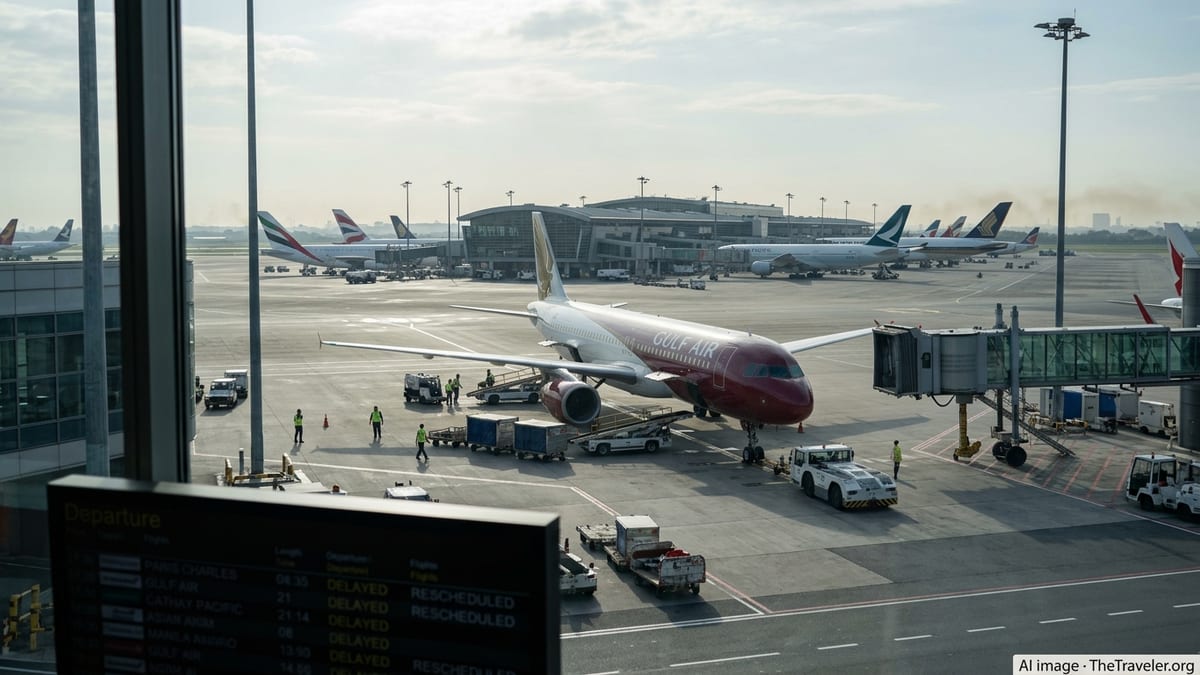
Temporary Routes Aim to Bypass Bahrain Bottleneck
Regional aviation advisories describe Bahrain’s airspace as effectively closed to standard commercial traffic, with Gulf carriers forced to suspend or reroute many flights. In response, Gulf Air is rolling out a limited program of temporary flights linking passengers to major hubs such as Paris and Manila, designed to maintain essential connectivity while its Bahrain-based network is disrupted.
Publicly available information indicates these new services are structured as workarounds to the current bottleneck in Bahrain rather than long term network additions. The flights are expected to operate for a defined window while authorities and regional stakeholders reassess airspace safety and capacity across the Gulf.
Operational summaries shared by travel and aviation trackers suggest Gulf Air is prioritizing routes that connect stranded passengers to onward long haul services. Paris offers extensive transatlantic and intra European links, while Manila provides access to dense traffic flows across Southeast and East Asia, especially for labor, family visit, and leisure markets.
Industry watchers note that similar short term “relief corridors” have been launched by other carriers in the region over recent weeks, often under special permissions and with carefully controlled schedules. Gulf Air’s additional flights to Paris and Manila appear to fit this broader pattern of targeted connectivity during a period of exceptional disruption.
Paris and Manila Chosen as Strategic Gateways
Paris Charles de Gaulle is one of Europe’s busiest intercontinental hubs, and reports indicate that Gulf Air’s temporary flights are timed to feed into existing waves of departures by European and transatlantic airlines. This allows passengers originally booked via Bahrain to continue journeys to North America, North Africa, and other parts of Europe with fewer additional changes.
Manila, meanwhile, is a critical node for travelers moving between the Gulf and the Philippines, as well as for connections deeper into Asia. Travel industry monitoring shows strong ongoing demand along this corridor despite the wider regional airspace turmoil, particularly from expatriate workers and visiting friends and relatives traffic seeking any available route home.
Aviation data services and schedule trackers point out that both Paris and Manila can be reached without crossing the most heavily affected stretches of Gulf airspace, allowing flights to operate along approved alternate tracks. This routing flexibility is central to airline planning at the moment, as carriers constantly recalculate fuel loads, crew duty times, and contingency options around closed or restricted corridors.
By overlaying these temporary routes on existing international networks, Gulf Air can offer passengers a clearer onward path than would be possible if it focused only on short regional hops around the Gulf, where multiple countries continue to maintain strict airspace controls.
How the New Flights Fit Within Ongoing Airspace Restrictions
Recent regional advisories on maritime and aviation conditions describe a patchwork of closures and partial restrictions affecting multiple Gulf states, including Bahrain. According to these summaries, commercial airlines are diverting around closed zones, shifting departure banks, and in some cases using neighboring countries as emergency gateways while primary hubs remain constrained.
Within this environment, temporary flights to Paris and Manila represent a controlled expansion rather than a full restoration of Gulf Air’s pre disruption network. Flight frequencies remain limited, and schedules are subject to change on short notice if regional risk assessments or airspace permissions are updated by the relevant authorities.
Observers emphasize that these services depend on coordinated time slots and air traffic management along the entire route, not only at departure and arrival airports. Any further tightening of restrictions in adjacent airspace, or unexpected congestion in commonly used alternate corridors, could force timetable adjustments or cancellations.
As a result, many aviation tracking platforms and travel advisories currently recommend that passengers monitor their booking status regularly and remain prepared for potential last minute changes, even on routes that appear to be operating normally.
What Affected Travelers Should Expect
Publicly accessible airline notices and passenger forums indicate that those who were originally scheduled to depart from or transit through Bahrain are being offered rebookings onto the new Paris and Manila services where seat availability and route profiles allow. In some cases, travelers are being routed via nearby cities or partner airline hubs to connect with these temporary flights.
Travel industry guidance suggests passengers should allow additional time for connections, particularly when moving between separate tickets or different carriers at major hubs. Some journeys that were previously single stop itineraries may now involve two or more connections, overnight stays, or shifts between airports in the same metropolitan area.
Reports from recent weeks also highlight the importance of checking entry requirements and transit rules at each intermediate point along the journey. Travelers heading to or via Paris and Manila may need to ensure that passports, visas, and health documentation meet the specific criteria for both their transit country and final destination, as border control policies can differ from those in Bahrain.
Insurance providers and consumer travel organizations have been reminding passengers to review policy terms relating to airspace closures and regional instability. Coverage for cancellations, missed connections, or extended stopovers can vary, and understanding these details before departure may help travelers make more informed decisions about rebooking options presented by the airline.
Outlook for Gulf Air Operations in the Coming Weeks
Sector analysts reviewing Gulf operations note that the temporary flights to Paris and Manila are part of a broader pattern of cautious normalization across parts of the region, even as core hubs like Bahrain continue to face significant constraints. Airlines are seeking to rebuild key flows and maintain brand presence in major markets without overcommitting capacity in a still volatile operating environment.
Forecasts from logistics and supply chain bulletins suggest that any substantial easing of airspace restrictions around Bahrain would likely trigger a phased restoration of regular schedules rather than an immediate return to previous frequencies. Carriers are expected to test demand, assess route profitability under new conditions, and maintain some of the alternative gateways they have opened during the disruption.
For Gulf Air, observers will be watching whether the Paris and Manila services remain strictly temporary or evolve into semi permanent additions alongside its traditional Bahrain centric network. The performance of these flights, both operationally and commercially, may influence longer term route planning once the regional airspace picture becomes clearer.
Until then, passengers can expect a dynamic environment in which timetables, routings, and available options may continue to shift with limited notice. The emergence of new links to hubs such as Paris and Manila provides additional pathways for those needing to travel, but also underscores how fluid the situation remains for airlines and travelers across the Gulf region.