

More news on this day
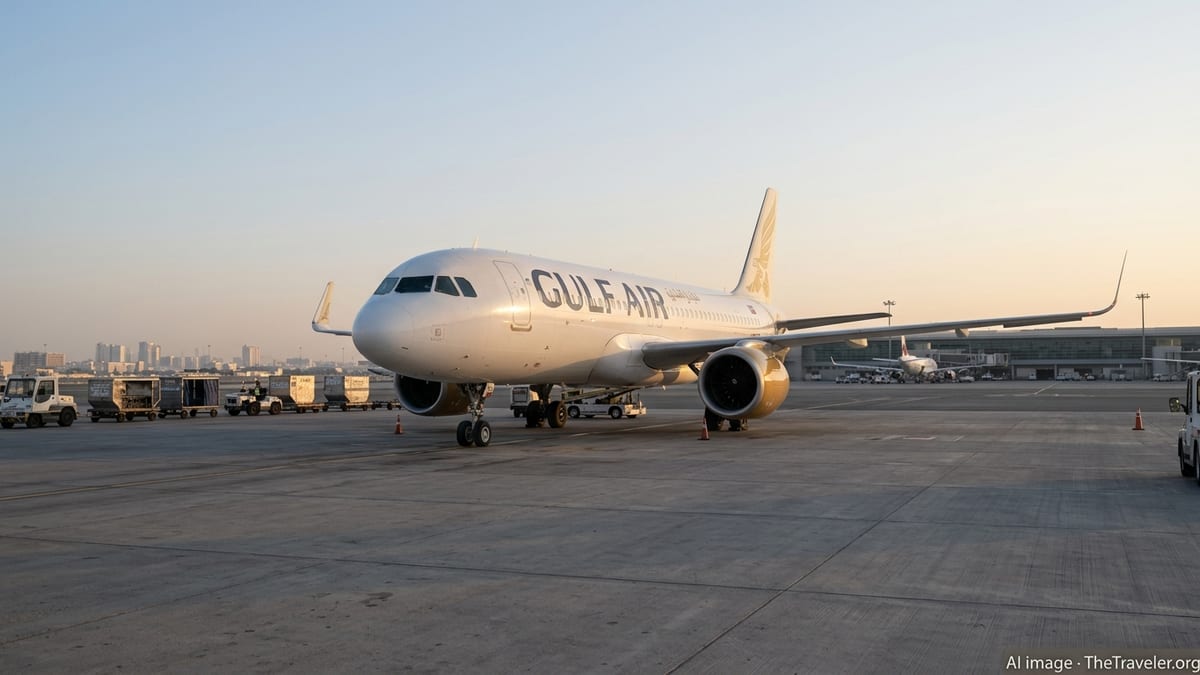
Gulf Air is adding new services to Paris and Manila routed outside Bahrain’s closed airspace, underscoring how Gulf carriers are reconfiguring networks and routings to keep long haul passengers connected as regional skies remain heavily restricted.
Get the latest news straight to your inbox!
New Routes Designed Around a Closed Hub
Publicly available schedules and travel-advisory notices indicate that Gulf Air has begun marketing new connections to Paris Charles de Gaulle and Manila by using alternative gateways and overflight corridors instead of its traditional Bahrain hub. While Bahrain International Airport remains effectively shut to scheduled passenger operations due to the ongoing airspace closure, the airline is working within a patchwork of regional restrictions to restore some long haul connectivity.
Industry tracking of timetable filings shows that the new links are structured as through flights or coordinated connections, typically involving a departure from an alternative Gulf airport followed by a long haul sector to either France or the Philippines. This structure allows the carrier to maintain a presence on strategic intercontinental routes without relying on direct Bahrain overflights.
Aviation briefings on the Middle East airspace situation describe Bahrain’s skies as closed to regular civil traffic under measures imposed by the Bahrain Civil Aviation Affairs, with Gulf Air’s published statements continuing to reference a suspension of normal operations. Against that backdrop, the airline’s move to open workarounds to Paris and Manila signals a shift from pure crisis management to a more proactive network rebuild.
Although Bahrain-originating traffic remains severely constrained, the new arrangements give Gulf Air scope to tap demand from expatriate communities, business travellers and leisure passengers who are able to reach the substitute departure points by road or short regional hops with other carriers, subject to safety and regulatory constraints.
Operational Workarounds via Alternative Gateways
Travel advisories from corporate travel managers and airport operators in the Gulf describe how airlines affected by Bahrain’s closure have been repositioning aircraft and crews to nearby hubs, including Saudi Arabia and the United Arab Emirates. Gulf Air is among the carriers reported to be staging aircraft at airports such as Dammam’s King Fahd International to operate limited services, including special repatriation flights and now selected scheduled links.
These workarounds typically involve routing flights through airspace that remains open under enhanced risk management protocols, making use of corridors validated by regional aviation regulators and air navigation providers. For the new Paris and Manila services, this means longer routings than the direct tracks traditionally used out of Bahrain, as well as more complex flight planning to avoid restricted zones.
Aviation analysts note that such arrangements demand additional fuel, more crew time and careful slot coordination at alternative airports already handling displaced operations from multiple Gulf carriers. The introduction of fresh Paris and Manila capacity under those conditions suggests Gulf Air is confident that demand on the city pairs is strong enough to justify the operational complexity.
Ground handling, maintenance and catering contracts also need rapid reconfiguration when an airline shifts flying away from its home base. Industry reports on the current disruption indicate that Gulf Air, like its regional peers, is relying on a mix of existing outstation suppliers and short notice agreements with new partners to support the re-routed flights.
Impact on Passengers Bound for Europe and Asia
For travellers, the immediate effect of the airspace closure has been widespread cancellations and a reliance on refund or rebooking options. The addition of new Gulf Air services to Paris and Manila routed via alternative gateways offers another limited avenue for passengers who prefer to remain with the Bahraini flag carrier rather than switching to competitors.
Booking information and travel agency advisories indicate that many passengers will still need to make their own way by land or regional air links to the temporary departure airports. This adds time and cost compared with pre-closure itineraries via Bahrain, but for some travellers it may be the only practical way to maintain previously planned journeys or reach family overseas.
Reports from passenger forums suggest that the complexity of rebooked itineraries, combined with rapidly changing flight times and routings, is prompting many travellers to rely heavily on airline apps, social media feeds and email alerts. Gulf Air’s decision to reintroduce Paris and Manila connectivity, even in a modified form, may provide slightly more predictability for those with pressing travel needs to Europe and Southeast Asia.
However, capacity on the work-around flights is likely to be constrained by aircraft availability and crew duty limits, meaning that not all disrupted passengers can be accommodated immediately. Travel industry commentators expect waitlists and rolling rebooking to remain common until more of the regional airspace network stabilises.
Strategic Importance of Paris and Manila for Gulf Air
Paris and Manila have long been considered strategically important markets for Gulf carriers because they link Europe and Southeast Asia to Middle Eastern business centres and expatriate communities. For Gulf Air, maintaining a presence in these cities during a period of hub disruption helps protect valuable traffic flows and brand visibility.
Published coverage of Gulf aviation highlights the role of Paris as both a premium corporate destination and a major connecting point into continental Europe, including secondary French cities via high speed rail and domestic flights. Even a reduced schedule into Charles de Gaulle allows Gulf Air to keep participating in this wider European feed, supporting its relevance to corporate travel buyers and tour operators.
Manila, meanwhile, serves a large and growing population of Filipino nationals working across the Gulf region. Travel research consistently shows resilient demand on Middle East Philippines routes, driven by labour mobility and family visits rather than purely discretionary tourism. By sustaining links to Manila, Gulf Air can retain a share of this structurally strong traffic segment despite the temporary loss of Bahrain as a transit hub.
Analysts also point out that continuing to operate in core long haul markets can support future partnership discussions, including potential codeshares or interline agreements, once regional airspace patterns normalise. An uninterrupted presence in Paris and Manila, even at reduced scale, may help Gulf Air secure advantageous positions in any future alliances or joint ventures.
Uncertain Timeline for Full Restoration of Bahrain Connectivity
Security assessments and industry advisories describe the broader Middle East airspace picture as fluid, with Bahrain among several states operating under enhanced restrictions following military activity in the region. There is no firm public timeline for a full reopening of Bahraini skies to routine commercial traffic, and operators are planning on the basis that disruptions could persist.
In that context, Gulf Air’s decision to push ahead with new Paris and Manila services via alternative routings reflects a broader shift among regional airlines from short term crisis response to medium term adaptation. Rather than waiting for a complete return to pre closure patterns, carriers are selectively rebuilding parts of their networks where demand is deepest and viable corridors exist.
Travel management companies advise corporate clients and leisure passengers to treat any new flights originating from alternative Gulf gateways as subject to change, given the potential for further adjustments to airspace rules. Schedules may be updated frequently, and routings to and from Paris and Manila could evolve as additional corridors open or close.
For now, the emergence of these new Gulf Air connections illustrates how airlines are attempting to overcome one of the region’s most challenging airspace disruptions in recent years. The eventual restoration of full operations at Bahrain International Airport would likely see these temporary solutions re-evaluated, but until that point they provide a limited, yet symbolically significant, bridge between the grounded hub and two of the carrier’s most important long haul markets.