

More news on this day
Gulf Air is set to transform its passenger experience after signing a landmark agreement with SpaceX’s Starlink to roll out free, high-speed Wi‑Fi across its entire fleet from mid‑2026, positioning Bahrain’s flag carrier at the forefront of a regional race to upgrade in-flight connectivity.
Landmark Deal Signals a New Era for Gulf Air
The agreement, signed in Bahrain between Gulf Air chief executive Martin Gauss and Starlink Aviation executives, will see Starlink’s low Earth orbit satellite technology introduced first on the airline’s Airbus A320 family aircraft from mid‑2026. The national carrier plans a phased installation that will ultimately cover its mixed fleet of Boeing 787 Dreamliners and Airbus narrowbodies serving more than 50 destinations.
The Starlink service will be complimentary for all passengers from boarding to arrival, regardless of cabin class or fare type. That commitment sets Gulf Air apart from many global competitors that still charge for full-flight connectivity or reserve the fastest speeds for premium cabins.
For Bahrain, the deal is being framed as part of a wider digital transformation push. Officials say the move aligns with national strategies to build advanced technology infrastructure and strengthen the kingdom’s status as an aviation and tourism hub for the Gulf.
Industry observers note that the partnership also reflects a broader shift in passenger expectations, as travelers increasingly regard reliable, fast connectivity as integral to the flight experience rather than an optional add-on.
What Starlink Will Mean for Passengers in 2026
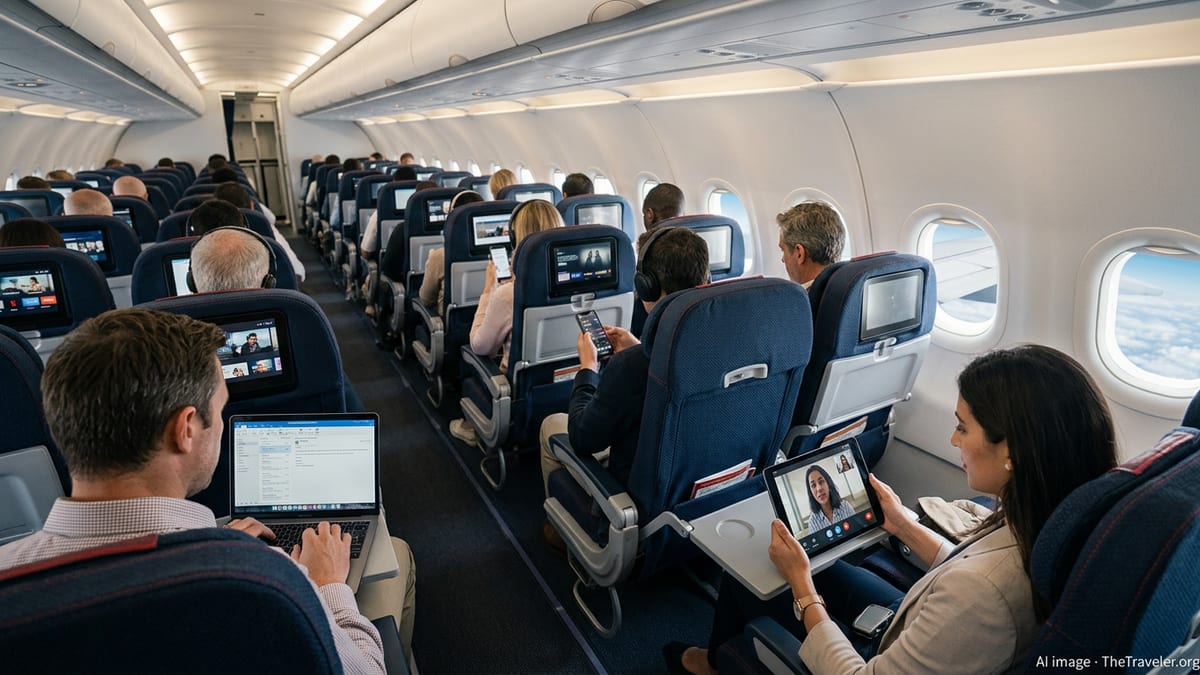
Starlink’s low Earth orbit network is designed to deliver high bandwidth and low latency at cruising altitude, enabling activities that have long been frustrating or impossible on conventional satellite systems. Gulf Air passengers are expected to be able to stream video in high definition, join video calls, play online games, upload large files, and browse social media at speeds more akin to home broadband.
The airline intends to offer a seamless connection from gate to gate, with Wi‑Fi available as soon as passengers board and remaining active until they leave the aircraft. That always-on model is aimed at business travelers who want to keep working without interruption, as well as leisure passengers who want entertainment options beyond the seatback screen.
Cabin crew are also set to benefit from the new connectivity. Gulf Air plans to use the high-speed link to support real-time cabin applications, from digital menus and personalized service to better disruption management when delays or diversions occur. Operational teams on the ground will gain richer data flows from aircraft, supporting predictive maintenance and more efficient scheduling.
While detailed technical specifications have not been disclosed, comparable Starlink airline deployments have been advertised with per-aircraft capacities of several hundred megabits per second, enough to support a full cabin of active users without the steep slowdowns associated with older systems.
Gulf Carrier Competition Heats Up Around the Connected Cabin
Gulf Air’s announcement comes as leading Middle Eastern airlines accelerate their own inflight connectivity upgrades. Qatar Airways has already equipped a large portion of its widebody fleet with Starlink, offering free Wi‑Fi on long-haul routes. Emirates has outlined plans to fit its extensive Boeing 777 and Airbus A380 fleet with Starlink-based systems over the next two years, targeting completion by mid‑2027.
This rapid adoption reflects intense competition among Gulf carriers to differentiate on service. For years, airlines in the region have invested heavily in lounges, premium cabins, and onboard dining. High-performance connectivity is now emerging as the next battleground, with free, fast Wi‑Fi increasingly used as a headline benefit in marketing campaigns.
Analysts say Gulf Air’s decision to move early on a fleetwide, all-class Starlink deployment should help the Bahraini carrier stand out against larger rivals. While its network and fleet are smaller, a strong digital proposition could make the airline more attractive for both point-to-point traffic and regional connections through Bahrain.
The broader trend also underlines Starlink’s rapid ascent as a preferred technology partner in commercial aviation, where airlines are seeking alternatives to legacy geostationary satellite providers that struggle to meet modern bandwidth expectations.
From Cabin Comfort to National Strategy
Beyond individual passenger benefits, Gulf Air’s Starlink rollout is being linked to Bahrain’s long-term economic ambitions. Officials and airline leaders have highlighted how widespread, high-quality onboard connectivity supports the growth of sectors such as finance, technology, and tourism, all of which rely on global mobility and real-time communication.
By ensuring that travelers can work productively throughout their journeys, policymakers hope to strengthen the appeal of Bahrain as a base for regional headquarters and remote professionals who travel frequently across the Middle East, Europe, and Asia. Tourism authorities also see an opportunity to market the kingdom as a convenient, well-connected gateway for stopovers and short breaks.
For Gulf Air, the investment in advanced connectivity complements recent fleet renewal and service upgrades that helped it earn a Five-Star Major Airline rating from industry evaluators for 2026. The carrier has added new aircraft, refreshed cabin interiors, and updated its brand positioning to emphasize both heritage and modernity.
Executives describe Starlink Wi‑Fi as the missing digital layer that will tie those efforts together, enabling more personalized service, data-driven decision-making, and real-time engagement with customers before, during, and after their flights.
Rollout Timeline and What Travelers Should Expect Next
The first Gulf Air aircraft fitted with Starlink equipment, an Airbus A320, is scheduled to enter commercial service by mid‑2026 following certification and testing. Installations will then proceed progressively across the fleet, coordinated with regular maintenance checks to minimize downtime.
During the transition period, some Gulf Air flights will feature the new Starlink service while others continue to operate with existing or no connectivity. The airline is expected to communicate aircraft and route updates as the rollout advances, allowing travelers who prioritize connectivity to select Starlink-equipped services when possible.
Once the program is complete, every Gulf Air flight is slated to offer the same free, high-speed Wi‑Fi throughout the cabin. Passengers will typically connect by joining the onboard network and accepting simple terms of use, without paywalls or complex login procedures.
For frequent travelers across the Gulf region, the shift could mark a decisive break from the era of patchy, expensive inflight internet. As Gulf Air and its regional peers race to bring Starlink online, the expectation of being fully connected at 35,000 feet is rapidly turning from a premium perk into a standard feature of modern air travel.